

btn_subscribe-top
btn_give-a-gift
btn_login
btn_signup
btn_rss

Archive

From issue: Memos to the President Elect (Fall 2008)

Panorama: Our Hemisphere from all Directions

Stay up-to-date with the latest trends and events from around the hemisphere with AQ's Panorama. Each issue, AQ packs its bags and offers readers travel tips on a new Americas destination.

In this issue:
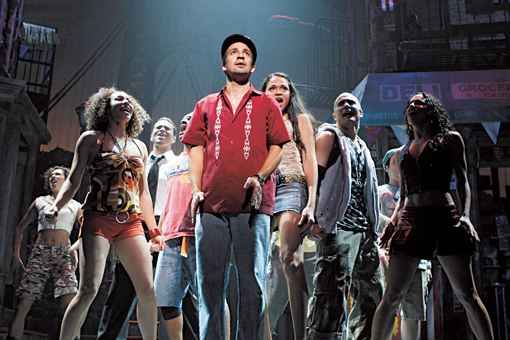
Photograph by Joan Marcus
  • In the Heights Dazzles Broadway

    Adapting is never easy. This is the lesson from In the Heights, a hit Broadway musical that debuted this spring. Night after night, packed theaters are witness to three days in the life of a New York City immigrant neighborhood. The production has picked up four Tony Awards, along with numerous other nominations.

    The story is set in Washington Heights, an area of upper Manhattan where almost 75 percent of the population is Hispanic—mainly of Cuban, Dominican and Puerto Rican descent. Lin-Manuel Miranda, the show’s 28-year-old star and creator, wrote it while attending Wesleyan University, during a time when he “missed the bodegas” of his hometown barrio.

    His authentic portrayal gives audiences a glimpse of a world where cultures come together in the melting pot of American life. The score fuses salsa, merengue, hip-hop, and soul music. To emphasize the point, fire escapes on the set are draped with Dominican, Puerto Rican and Mexican flags. The younger generation, who dances to this musical mélange in the play, may not understand the lyrics but still consider the songs part of their fused culture. Other traditions have changed as well. Neighborhood residents grab their café con leche at a local bodega rather than wile away hours at an outdoor café.

    Characters embody the struggles of a world caught between the cultures they left behind and the one being created in their new home: a man dreaming of Caribbean beaches, waiting for the day he can return, and the grandmother who still believes that all is resolved with paciencia y fé. Like immigrants everywhere, they invent a new home and create new identities, defined not so much by geography but by choice.

    To read more, subscribe and receive an instant digital copy of the latest issue. Already a digital subscriber? Log in now.


  • Fall 2008 Travel - Ten Things to Do: Los Angeles

    Sun, surf and traffic. Los Angeles is known for Hollywood glitz as much as for its smog and tangle of freeways. But visitors with a taste for exploration should move beyond the stereotypes to experience the city’s unique rhythm and style. Opportunities abound for outdoor adventure, for interesting cultural experiences, and for savoring some of the country’s best ethnic food.

    Here are three of our top 10 picks for the city. Check out the other choices in the Fall 2008 Americas Quarterly.

    1. Grab Tamales and Mexican artesenías The pedestrian section of Olvera Street, known as El Pueblo de Los Angeles, is home to the city’s historic Mexican community. Here, you’ll be transplanted from downtown LA to a small-town mercado.

    2. Listen to Holiday Sounds The Hollywood Bowl offers year-round outdoor entertainment. Pack a picnic and catch the Los Angeles Philharmonic or any number of popular rock bands. Christmas concerts begin on December 16.

    3. Explore the Getty Villa Modelled after a First-Century Roman residence, this magnificent museum and cultural center boast amazing views as well as world-renowned artwork. On Fridays, lectures and free concerts are available at the outdoor amphitheatre. Museum entrance is complimentary but reservations are required.

    To read more, subscribe and receive an instant digital copy of the latest issue. Already a digital subscriber? Log in now.


  • Central America’s Youth Leaders

    Central America has come a long way since the civil wars of the 1980s. A new generation has come of age, growing up in a region that is at peace but confronting new challenges of crime, security, poverty, and inequality. Last May, 24 of Central America’s best and brightest—ranging in age from 17 to 36—gathered in Antigua, Guatemala, to create a leadership network that would work toward cooperative, cross-border solutions to address regional challenges. The Lideres del Presente conference brought together mentors and experts from Central America and abroad to discuss youth violence, disaster relief and civic youth engagement, among other topics. Organized by a group of Tufts University graduates and the Project on Justice in Times of Transition, the conference was funded by the FRIDE Foundation and the DARA Foundation. The young leaders are now working together to implement their action plans and commitments, and are expected to regroup in Panama in 2009.

    In the Fall 2008 print edition, AQ highlights some of the new leaders that came to Antigua.

    To read more, subscribe and receive an instant digital copy of the latest issue. Already a digital subscriber? Log in now.


  • The Right Stuff

    Human rights activists and scholars are turning to a new research source in the hemisphere. In its first five years, SUR– International Journal on Human Rights has grown to become the region’s premier journal in human rights. One of its distinguishing features, according to managing editor Juana Kweitel, is its goal of fostering “dialogue between different regions of the Americas.”

    The biannual journal draws material from the 130-plus members of the Brazil-based Sur – Human Rights University Network, which also happens to be its publisher. That has enabled it to tackle issues beyond the traditional scope of a human-rights publication. In its latest issue, for example, SUR features a special section on access to medicine. Content is free and available online in English, Spanish and Portuguese. Read it at: www.surjournal.org.

    To read more, subscribe and receive an instant digital copy of the latest issue. Already a digital subscriber? Log in now.


Subscribe

Web Exclusives

Loading...


Loading...

Subscribe!