btn_subscribe-top
btn_give-a-gift
btn_login
btn_signup
btn_rss

Innovators/Innovations

Some of our hemisphere’s emerging leaders in politics, business, civil society, and the arts.

In this issue:

Arts Innovator: Edmar Castañeda, United States

Lina Salazar

*Read a transcript of AQ's interview with Edmar Castañeda below.

Edmar Castañeda can boast not just one, but two accomplishments that most musicians only dream of. The 33-year-old Colombian harpist has introduced international audiences to a distinctly South American musical style—joropo—and he has broken new ground in jazz. Castañeda is first and foremost a performer of joropo, also known as música llanera for the plains (llanos) on which it was originally played. Joropo resembles the waltz and combines Iberian music from the 17th and 18th centuries with African and Indigenous rhythms native to the Orinoco basin. He is also a New York jazz musician who plays the harp—an unconventional instrument in a genre traditionally defined by the piano, brass and woodwind instruments.

Castañeda grew up in Bogotá. When he was six years old, his mother enrolled him and his sister in a dance institute, where he learned the joropo dance. His father also taught him to play the harp and the cuatro guitar. But Castañeda’s musical pursuits would have ended there if not for another family member. “My aunt had a harp at home and I always went to her place and begged her to let me play it,” he recalls. One day, impressed by Castañeda’s playing, she gave him the instrument.

At the age of 16, Castañeda moved to New York, where he was first introduced to jazz. “I was attracted to it because it’s very similar to llanera music,” he says. “They don’t sound the same but in both genres you improvise.”

Castañeda cites Chick Corea and Charlie Parker as his major influences, but he likes to listen to a variety of musicians, including Astor Piazzolla, Igor Stravinsky and Frederic Chopin.

While playing harp solos at a restaurant—a gig he got to make money while studying music at Five Towns College in Dix Hills, New York—Castañeda practiced and experimented with different sounds and techniques. During that time, he created what he considers his signature style—playing the melody and bass simultaneously. “With my left hand I play the bass and the groove, and with my right hand I play the melody and harmony,” he explains. “If you close your eyes you can hear two or three instruments playing at the same time.”

When he was 20, Edmar began attending improvisational jam sessions, or descargas, in New York City. He often went to see Nelson González, a renowned Puerto Rican tres guitar player, and once offered to sit in during a performance. Though González was skeptical, thinking the harp was too big for the stage and would be out of place in a descarga, the performance was a success.

After that, Edmar’s career took off. Today, he has even designed his own harp—complete with an engraved “EC Llanera” logo—which is produced and sold by the French company Camac Harps.

Castañeda’s albums are a mélange of genres, instruments and cultures that draw upon the diverse work of individuals he has met in the U.S.—including his wife Andrea, a paisa (a native of Antioquia province in northwest Colombia), whom he married one month after they met at a musical tertulia session in Queens, New York. Edmar’s first album, Cuarto de Colores- (2005), was inspired by the colors in Andrea’s bedroom. It combines typical joropo sounds—evoking the galloping pace of a runaway horse—the essential beats of flamenco and mambo and the harmonious disorder of jazz. Cuarto was followed by Entre Cuerdas (2009), which explores interactions between the trombone, drums and harp, and on which Andrea—a poet and daughter of traditional Colombian troubadours (troveros)—sings over the instruments.

In his most recent album, Double Portion, which was released in December 2011, Castañeda plays with Gonzalo Rubalcaba, a piano player from Cuba; Hamilton de Holanda, a Brazilian mandolin player; and Miguel Zenón, a new saxophone player from Puerto Rico. Though he says joropo is at the root of everything he does, he calls the mix of instruments and players on Double Portion “the perfect seasoning for my Colombian plate.”


AQ Interview: Colombian Harpist Edmar Castañeda

Interview by Lina Salazar (Redacted transcript)

AQ: What is your background, and when did you start playing music?

EC: I’m from Bogotá, Colombia. I was born in March 1978, and both of my parents are from Bogotá.

I started playing the harp when I was 13. Actually, at 7, I started learning to dance the joropo with my sister. That’s where I was first introduced to the harp and fell in love with it. My dad’s a harpist too, and an educator—he taught me to play the cuatro guitar. But I was very poor in Colombia, and I never had the opportunity to have a harp—until I was 13. My aunt had a harp, and I used to go to her place and say, “Let me play, let me play.” She did, and then one day, she just said, “Take it,” and I [didn’t think twice].

At 16 I moved to New York. My dad came two years before—he was separated from my mom since I was little—and then he brought my sister and me here so we could have better opportunities. It was in New York that I first heard jazz. I was attracted to it because it’s very similar to llanera music; they don’t sound the same but in both genres you improvise. Then in college, I studied trumpet and jazz. I received my Bachelors degree in music from Five Towns College, a private school for music in Long Island.

AQ: Who were your main influences?

EC: Some of my influences are Chick Corea and Charlie Parker. But I always listen to different musicians such as Astor Piazzolla, Lucho Bermudez, Paco de Lucía, Stravinsky, and Chopin.

AQ: What happened after you graduated?

EC:  I graduated from college as a trumpet performer, but I never stopped playing the harp; instead, I translated what I learned in the trumpet to the harp. I wanted to get the feeling of playing with a big band, of improvising, so I started attending jam sessions—descargas. There was a place called Nell’s that I used to go to a lot.

Often I went to see Nelson González. Once, I asked him if I could sit in with his band and play. He asked me what I played, and when I told him the harp, he asked if I had anything smaller. But we just tried it out, and people loved it, so I started coming every week. Then I met Paquito de Rivera, and he has been like a godfather to me.

AQ: How did you form your band, and when did you decide to combine joropo and jazz?

EC: Well, I started playing with different people, looking for different elements to complement my harp and jazz background. And joropo is at the root of everything I do—even if I play salsa, I put some joropo in. But I use samba, too, and African elements. I found a drummer and a trombone player, and that’s how the original trio started six years ago. I recorded my first album Cuarto de Colores, which was inspired by my wife’s colored bedroom. Then came Entre Cuerdas, released in 2009, where I play in a trio of trombone, drums and harp.

One of my best experiences was playing in Poland. I played with Marcus Miller, a great bass player…it was amazing. There was a crowd of 15,000 people there.

My upcoming album, Double Portion, is a solo album.  I play both the Colombian harp and the classical harp, used in orchestra concerts. I have a couple of special guests—Gonzalo Rubalcaba, a piano player from Cuba; Hamilton de Holanda, a Brazilian mandolin player; and Miguel Zenón, a new saxophone player from Puerto Rico. It’s a mix of Latin American musicians—the perfect sazón for my Colombian plate.

AQ: Your wife sings in your most recent album, Entre Cuerdas. When did you meet her and how did she end up working with you?

EC: I met my wife at a jam session in Queens—a sort of tertulia, with different musicians, poets, etc. After 20 days or a month, we got married; I just knew she was the one. We’ve been married for seven years and have two kids, Zamir and Zeudi.

She’s from Medellín—her family members are troveros. We started working together right away. We combined her poetry and talent with my ideas. Working with her is the most amazing thing. I love it because we share very special moments, and also it makes your message stronger. Her voice is very powerful—you can hear her passion.

AQ: What has been most difficult in your musical career?

EC: Everything has just been a process. When I was in college, I had a gig every day at a restaurant playing solo harp, so that was for me a kind of harp school. They let me do whatever I wanted, so that’s how I learned. I was a solo harpist, so I had to learn to play the different kinds of music that people wanted to hear.  That’s how I created my style of playing the bass with the harp: I play the bass and groove with my left hand, and play the melody and harmonies with my right…If you close your eyes, it sounds like 2 or 3 instruments playing at the same time.

AQ: What’s your inspiration? Is there a message that you try to communicate in your music?

EC: God and my family are my inspiration; it’s a gift from God to be able to play the harp. I believe that music can change lives and I pray that through those strings people get in touch with the love of God. I believe that when you obey and follow God he always gives you a “double portion” of blessings…that’s why my album is called Double Portion.

AQ: Do you feel connected to your Colombian identity when you play?

EC: Yes, definitely. Everywhere I go I invite people to visit our country. The times I’ve visited Colombia with the band the musicians have fallen in love with the country and the country has fallen in love with our music. I’ve played in Colombia four or five times—in different cities such as Villavicencio, the home of llanera music.

AQ: What are your future projects?

EC: 2011 was a very busy year. I want to take a bit of a break. Currently I’m writing a symphony piece for orchestra and harp using llanera music. I’m also planning to record an album with a big band—and I’m getting married by church with my wife!


Business Innovator: Buscalibros, Chile

Matthew Aho

When they want to buy or sell an obscure book, most U.S. consumers go to major online retailers like Amazon or eBay, which offer millions of book titles and a graphic interface that makes browsing and buying quick and easy. But for bibliophiles in Latin America, finding books in Spanish—especially ones published in the region—is more complicated.

As a college student on a budget in Santiago, Chile, Eduardo Stekel had trouble finding books for his classes. Noticing that his classmates had similar difficulties, in 2007 the industrial civil engineering and transportation student at the Pontificia Universidad Católica de Chile created Buscalibros (Searches for Books), a small-scale, online marketplace for buying and selling used books.

Stekel initially operated Buscalibros out of his home, generating minor profits through commissions and advertisements. He struggled to earn the trust of local vendors and publishing houses and had to pay for most shipments up front, in cash. Stekel recruited Ricardo Wurgaft, the former strategic development manager at Banchile Inversiones, to shore up the company’s business model as its general manager. “The company grew organically,” says Wurgaft, as the two used profits to buy an office, expand the collection to new books, and begin marketing across Chile.

Seven years later, with a selection of 3 million books total, Buscalibros has unified Latin America’s previously segmented book market. Half of its 80,000 customers come to the site to browse Latin American bestsellers or foreign ones translated into Spanish, while the other half are looking for specific titles they couldn’t find at their local bookstore or on competing websites. Boris Kraizel, the founder of GiveCard (which introduced prepaid gift cards to the Chilean retail market) became the company’s operations manager in 2010. He says he often receives e-mails from customers that say, “I’ve been looking for this book for five years, and I finally found it on your website.”

Buscalibros now has offices and country-specific websites in Chile, Mexico, Spain, the U.S., and Argentina, as well as websites for Colombia and Venezuela. Supplier departments build relationships with local publishing houses and bookstores—the company has 400 such clients across the Americas—and work to expand the catalogue.

Though Buscalibros’ customers often buy products from outside their own country, Kraizel says the company’s goal is to make the buyer and seller feel “like they are down the street from one another.”

Achieving that kind of intimacy presented a unique set of challenges, including diverse currencies, varying levels of infrastructure and often byzantine customs regulations. Clients can pay for their order using one of six currencies and one of nine payment options—from Western Union and PayPal to credit and bank card services. There are no hidden fees. And through partnerships with major shipping companies and small courier services, Buscalibros covers the delivery cost and taxes on all purchases and ensures that products get through customs seamlessly.

Buscalibros’ websites receive a combined 1.3 million hits per month and posted $2 million in profits for 2011—double the revenue earned in 2010. The company uses social media like Facebook and Twitter to increase brand awareness and attract customers from as far away as Japan. The site also recently started a blog, where visitors get information on upcoming books, authors and literature events. And last year the team launched Buscalibre.com, a sister site that sells everything from electronics to household goods.

Buscalibros also boasts 100,000 Spanish-language e-books, the largest catalogue on the web. While the trio—whose tastes range from business nonfiction to Dostoyevsky novels—recognize the medium’s growing popularity, Kraizel feels certain that “books in print will never die out.”


Civics Innovator: Pivot Legal, Canada (slideshow available)

Matthew Aho

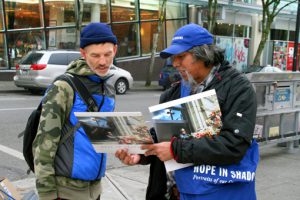
See below for photos of Vancouver's Downtown Eastside community from the Pivot Legal/Hope in Shadows annual photography contest.

Pivot Legal Society is not your ordinary public interest law firm. The Vancouver-based nonprofit organization with a staff of seven focuses on a single troubled neighborhood—the Downtown Eastside (DTES), an impoverished and marginalized community of 15,000. Employing strategic litigation to achieve legal reform and social impact, Pivot Legal takes a decidedly progressive approach to the issues that most affect local residents. The DTES was once the transit, commercial and cultural center of Canada’s largest West Coast city, but is now home to a disproportionate number of displaced First Nations people, individuals with mental health issues, drug addicts, sex workers, and women fleeing violence. “We take a really radical position on some very controversial issues,” says Katrina Pacey, Pivot Legal’s litigation director.

Pivot Legal was founded in 2000 by John Richardson, then a recent law graduate working for an environmental advocacy group in the DTES, to campaign against what community residents felt were the most egregious violations of their rights. The organization focused initially on police harassment and lack of police accountability, and later added violence against sex workers, homelessness, inadequate health services, drug policy, and justice for youth to its list of campaigns. It successfully sparked a formal audit of the police complaints process in British Columbia, won a suit against the city of Vancouver for failing to enforce a bylaw guaranteeing the upkeep of affordable housing units, and collected affidavits from nearly 100 sex workers as evidence in a constitutional challenge to prostitution laws.

Pivot Legal has been particularly active in the area of federal drug policy. It advocates treating drug addiction in Canada as a public health issue rather than a crime, and has defended needle exchange programs, health contact centers for drug users and supervised injection sites. Though it did not provide direct legal counsel on the case, Pivot Legal helped secure a Supreme Court victory in 2011 defending the right of InSite, the first and only supervised drug injection facility in North America, to keep its doors open in the DTES.

“The InSite decision was a huge win for us,” explains Pacey. “It entrenches a constitutional right to supervised injection facilities in communities where there is a population of drug users.” Pivot Legal hopes the decision will pave the way for similar services across Canada and the U.S., and plans to continue advancing the drug policy conversation. Based on the results of a recent study, it has begun focusing on new heroin-assisted therapy for patients with opium addictions.

Another very visible arm of Pivot Legal’s work is the Hope in Shadows program, which began in 2003. Every summer, Pivot Legal staff and volunteers hand out 200 disposable cameras for DTES residents to document their community. Of the 4,000 photographs submitted, approximately 40 are enlarged and exhibited, and 12 selected via community-wide vote for the Hope in Shadows calendar. The calendar raises money as well as awareness—Pacey refers to Hope in Shadows as “a huge relationship builder” for Pivot Legal—and also serves as an employment tool. About 200 DTES residents receive training in basic sales and marketing and a street vendor’s license to sell the calendars. In 2010, vendors earned $135,000 altogether (a $10 profit per $20 calendar).

“It’s not just about the money,” says Paul Ryan, program director for Hope in Shadows. “It’s the confidence and the self-esteem that people get [that helps them] go up to the next stage in their life.” And, adds Pacey, it provides an opportunity for the broader DTES community “to engage with people they would otherwise walk past as panhandlers on the street.”

Pivot Legal is not slowing down. With additional campaigns to decriminalize adult prostitution, reform the child protection system and establish a constitutional right to housing—all at the federal level—the organization’s docket remains full. “We are so not done with the work we originally set out to do,” says Pacey.

All photos courtesy of the Pivot Legal Society.


Politics Innovator: Sebastián Acha, Paraguay

Matthew Aho

More than two-thirds of Paraguayans are under the age of 30. For National Deputy Sebastián Acha, that’s both an opportunity and a challenge. He believes his country’s technologically aware and young population, combined with a growing economy, can turn Paraguay into a regional model for agricultural development, educational innovation and political transparency. In fact, the 2018 presidential hopeful is building his political credentials on that belief.

Acha, 35, is a leading member of Paraguay’s new generation. He became Paraguay’s youngest deputy when he was first elected to Congress in 2003 from a party he helped create, Partido Patria Querida (Our Beloved Nation Party–PPQ). With his second-term victory in 2008, he remains one of the youngest diputados in Paraguay’s history. And he is determined to change Paraguayan politics.

Acha is currently leading an effort to enable voters to elect members of Congress directly, rather than by party list. A bill pending in Congress would “unlock” the listas sábanas (closed lists) in parliamentary elections, increasing transparency and the incentive to vote. The PPQ has compiled over 74,000 signatures supporting the bill, and as of the end of 2011, the initiative was still being debated in the Chamber of Deputies.

Acha has a record of driving political change. He previously collaborated on the automatic electoral registration law, which establishes a procedure for automatically registering a Paraguayan citizen to vote when he or she turns 18—replacing the former time-consuming and bureaucratic process in which citizens had to sign up manually. The law will potentially add 400,000 new voters to the political system. (Although voting is compulsory in Paraguay, many eligible voters had not registered before the law was enacted at the beginning of 2012.)

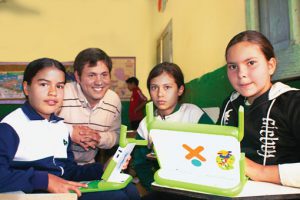
According to Acha, automatic voter registration will save Paraguay’s government an estimated $45 million in the next year by eliminating 17,000 temporary voter registration jobs. Acha has proposed investing the savings in the Paraguayan branch of One Laptop per Child (OLPC), a U.S.-based nonprofit organization with an eponymous mission and operations worldwide.

“We need to invest not just in education,” Acha says, “but in the implementation of ICTs [information and communication technologies]” that make education relevant to the twenty-first century.

Acha was inspired to enter party politics while he was a law student at the Universidad Nacional de Asunción. In 2000 he helped found the organization Tierra Nueva (New Land) to increase agricultural productivity and diversify crops in the mostly rural department of San Pedro. He recalls meeting families who lacked access to finance and public credit, and observing how “politicians bought and forgot [the rural poor] with ease.”

The young deputy believes one key to exploiting those opportunities is digital inclusion. Outside his congressional duties, he has worked closely with OLPC and its in-country implementing organization, Paraguay Educa (Paraguay Educates), to develop a Center for Digital Culture—a Silicon Valley of sorts—in the city of Caacupé, about 35 miles east of Asunción. The center seeks to become a hub for national and international IT education in Paraguay’s first “digital city.” Caacupé today boasts 100 percent digital access, thanks to OLPC’s installation of Internet and electrical infrastructure in 37 schools.

Hoping to use the savings generated by automatic voter registration, and garnering the support of his PPQ colleagues, Acha believes he can replicate that success nationwide.


Connect with AQ


Twitter YouTube Itunes App Store


Issues in Depth: President Obama's travel to Mexico, Costa Rica

AQ's coverage and post-trip analysis of the President's May 2-4 visit.

» Read more.


WEB EXCLUSIVES

Most Popular

MOST POPULAR ON AQ ONLINE

  • Most Viewed
  • Past:
  • 1 day
  • 1 week
  • 1 month
  • 1 year

NOW ON AS/COA ONLINE

Loading...

AQ MEDIA PARTNER

Loading...