

![]() |
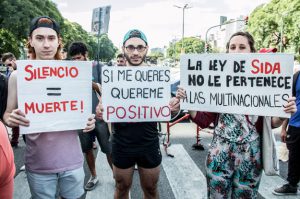
Argentina’s Chamber of Deputies, the lower house of Congress, yesterday approved nationwide public smoking bans and strict advertising regulations for tobacco companies—by a vote of 181-0 with one abstention. The vote echoes a bill already ratified by the Argentine Senate in August 2010, and a similar law in the Buenos Aires municipality in effect since October 2006.
Going forward, smoking will be prohibited in enclosed public spaces such as bars, restaurants, theaters, nightclubs, and covered stadiums. Smoking, however, will still be permitted in parks, public squares and open-air stadiums. In addition, tobacco companies must include warning labels on their product packaging. They will also be banned from using deceptive marketing terms for their cigarettes such as “light” and “soft.”
The new law is expected to yield significant public health benefits. Government statistics indicate that 15 to 20 percent of Argentine pregnant women smoke throughout their pregnancy—one of the highest nationwide rates in the world. Roughly one-third of adults in Argentina smoke tobacco; Argentine government data shows that tobacco-related diseases lead to roughly 40,000 deaths annually.
Health minister Juan Manzur lauded the breakthrough, saying that “at last Argentina has a national law controlling tobacco, which puts limits on a habit that sadly many citizens have, and which is highly toxic.” Uruguay and Brazil passed similar nationwide bans, which Manzur claims have “shown excellent results.”
![]() |
Doubts have begun surfacing this week in Haiti about the viability of holding national elections on schedule on November 28 as the country grapples with an ongoing cholera epidemic, which has already claimed over 300 lives. While electoral officials including Pierre-Louis Opont, director general of Haiti's Provisional Electoral Council, insist that polls will open as planned, at least one presidential candidate has said that if the outbreak reaches national proportions, the polls should be postponed.
The deputy director of the Pan American Health Organization noted yesterday that 500 new cases of cholera have been confirmed in the northern part of the country and World Health Organization officials have alerted the Haitian government to brace for the possibility of the disease spreading to Port-au-Prince, in which case the country would witness a severe epidemic.
Although some observers are skeptical that the presence of the disease could affect the national elections next month, current President René Préval has also recently voiced fears that voters could potentially contract the disease at the polls. Others have warned that potential voters may stay home on election day out of fear.
The United Nations peacekeeping force in Haiti says it can guarantee security during the elections, but low levels of public confidence in the electoral process, lingering post-earthquake disarray and, now, cholera may prove insurmountable obstacles to successful national elections.
![]() |
Health officials in Haiti today confirmed that a first-in-decades outbreak of cholera has struck in the Lower Artibonite region just north of Port-au-Prince. So far doctors report the disease has killed around 140 people, and another 1,526 people are infected.
Imogen Wall, the UN humanitarian spokeswoman in Haiti said this morning that "This is a situation that's developed very quickly. It's only been 48 hours and we've already got 138 deaths confirmed." The response to the outbreak has thus far been led by a number of international aid organizations whose primary goal is to save those stricken with the disease and prevent further infections by providing purified water.
Cholera is transmitted though contaminated water and causes violent vomiting and diarrhea. It can kill healthy adults in a matter of hours by causing severe dehydration and is particularly fatal for children.
The Haitian government has not yet issued an official statement on the outbreak.
![]() |
Puerto Rican government authorities have declared a public health emergency following the deaths of 10 people from dengue fever. The emergency declaration will result doctors’ receiving a course in the detection and treatment of the disease. A public awareness campaign is also being ramped up to prevent further spread of the disease.
Dengue infections are on pace to break historic records. The total number of deaths attributable to the disease may reach 32 so far this year in Puerto Rico, outpacing the previous high mark of 19 deaths and over 11,000 cases of diagnosed dengue in 1998. Total suspected cases of dengue this year have already totaled over 12,000.
Actions by both patients and doctors have been blamed for the increase in fatalities with officials noting that doctors have not been providing appropriate follow-up care, while patients have insisted on leaving hospitals while still infected with the disease or not seeking immediate help. Chief epidemiologist Carmen de la Seda calls the problem serious, but she has thus far rejected claims that the epidemic is out of control.
![]() |
The death of a 14-year-old boy with Down syndrome on July 26 signals a fresh outbreak of bubonic plague in Peru, Minister of Health Oscar Ugarte revealed this week. A total of 33 cases have been linked to the disease, which so far has been limited to the northern province of Ascope.
Bubonic plague is spread by rats and other rodents, which are abundant in sugar cane plantations where, according to the health ministry, the newest epidemic started. The disease itself is transmitted by flea bites. Doctors working with the U.S. Naval Medical Research Center Detachment have also identified four cases of pneumonic plague, which can be transmitted through the air.
The government has shipped six metric tons of Carbaryl, an insecticide, to the region to head off the disease’s continued spread. It is also fumigating homes and ports in the region, and blocking shipments from the north to Lima. The last time an epidemic of the plague swept through Peru, in 1994, 1,104 people were infected and 35 died.
![]() |
The early arrival of sub-freezing temperatures in Peru’s southern highlands has brought severe cases of hypothermia, pneumonia and other respiratory diseases, leading to the deaths of 246 children.
Every year, dozens of children, especially those under 5 years, succumb to cold-related illnesses in rural Peru’s mountain communities. But this year’s early winter temperatures have provoked a major spike in fatalities, up 40 percent from last year. Experts are blaming climate change for the March onset of extreme cold, snow, hail, and strong winds that usually don’t strike the region until June.
The government declared a state of emergency in the affected regions, but critics complain that the cold conditions are predictable and that the deaths could have been avoided. Oscar Ugarte, Peru’s minister of health, has said that blame lies with regional officials who have failed to distribute resources, rather than with the central government.
Non-governmental organizations have stepped up efforts to rush donated clothes and equipment to the affected regions. Local press reported on Monday that the organization Solaris Peru has delivered 24 tons of clothes to 1,290 families in its first week of operations.
AQ's coverage and post-trip analysis of the President's May 2-4 visit.