

btn_subscribe-top
btn_give-a-gift
btn_login
btn_signup
btn_rss
  • Moving Beyond Copenhagen

    December 21, 2009

    by Ruxandra Guidi

    For the past couple of months, we've seen a one-of-a-kind rush in the media to cover stories on deforestation, climate change and carbon markets ahead of the climate conference in Copenhagen (COP15). It was about time that these issues joined the mainstream: for most Americans, the need to lower global carbon emissions had been a distant and elusive reality. Most of us have failed to consider our country's climate debt and, as individuals, we've felt powerless besides making the choice to ride our bikes to work or drive hybrid cars. Needless to say, this view doesn't even consider the growing number of Americans who are overall skeptical of the concept of climate change.

    But getting back to Copenhagen: it's important to remember that the massive meeting in Denmark wasn't in and of itself the solution. A recent story on NPR put COP15's dysfunctional politicking into a clever perspective: "If you're having trouble understanding why the Copenhagen talks are making such slow progress, try imagining having 193 children in your family," the story went. "And every little decision has to be reached by consensus. You'd be lucky to get through breakfast."

    The challenge of instituting a new global climate agreement for 2012 was obviously no small feat. But considering the gravity of global warming, especially for developing countries in East Asia, Africa and Latin America, it has been frustrating to witness the impasse in the negotiations from afar. After two weeks of talks, heated debates and street protests, COP15 kept the issues on the headlines but accomplished little. Instead of delivering a strong binding agreement and a commitment to reduce carbon emissions and deforestation, the participants went home over the weekend "taking note" of the need for a pact.

    So what's next? Bill McKibben, founder of the activist portal 350.org, isn't optimistic. He says the meeting in Copenhagen "marked the beginning of the end of the UN. We've never taken it seriously for war and peace, and now carbon and global warming are off the table."

    Read More

    Tags: Copenhagen climate conference, Deforestation, Global Warming, United Nations

  • Zero-Deforestation Goal Sought in World Forestry Congress Talks in Buenos Aires

    October 20, 2009

    by AQ Online

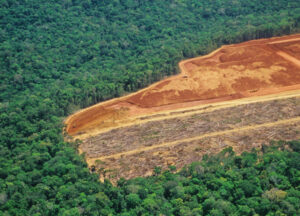
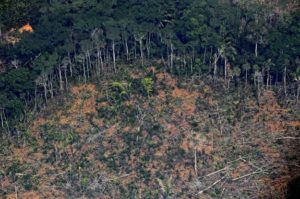
    Argentina, Brazil and Paraguay are working toward a proposal that, by 2020, would completely eliminate deforestation of the Atlantic forest basin. After centuries of agricultural development 93 percent of the forest, which originally covered over 193,000 square miles, has been destroyed. The negotiations follow comments earlier this month from Luiz Alberto Figueiredo Machado, Brazil’s lead climate negotiator, that his country intends to dramatically reduce deforestation in the Amazon rain forest within the same timeframe.

    Discussions in Latin America on climate change have blossomed in recent months, in preparation for December’s UN climate change conference in Copenhagen. Rodney Taylor of the World Wildlife Federation has said that a “zero deforestation” goal would require the establishment of strict limits on logging in protected areas, government support for environmentally responsible companies and efforts to educate communities throughout the region. 

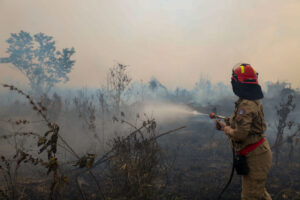
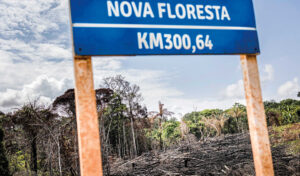
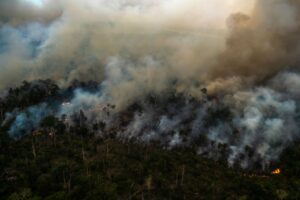
    Despite emitting significantly less carbon than China and the United States, countries like Brazil are major contributors to global warming through deforestation. In nature, trees act as sinks, absorbing carbon and turning it into oxygen. What’s more, when certain trees are cut down, major new emissions are released. Thus, the clearing of forests not only undermines carbon absorption, but also creates new emissions. The clearing of trees is responsible for an estimated 20 percent of global carbon emissions.  This has led climate change activists to back plans based on the concept of Reducing Emissions from Deforestation and Forest Degradation—known by their acronym REDD. Such proposals would cut emissions of carbon dioxide gas in Brazil alone by 4.8 billion tons annually.

    Read more on the environment in the most recent issue of Americas Quarterly.

    Tags: Brazil, Carbon emissions, Climate change, Deforestation, UN Climate Change Conference in Copenhagen

  • Can Brazil Save the World from Climate Change?

    June 18, 2009

    by Eric Farnsworth

    What if Brazil held a key to saving the world from destroying itself through an inexorable process of man-made global climate change?  Far-fetched?  Perhaps.  Then again, perhaps not.  Having just returned from exploring energy issues in Brazil with experts from the policy, government and the private sectors, I’ve come back with some hard truths that must be addressed, and a better understanding of the role that Brazil can play in energy and climate change issues, but only if we get the market signals right

    First, there’s no doubt that global energy demand will grow as incomes and populations increase.  There is just no getting around the fact that energy demand could double—that’s right, double—by 2050. That’s only 40 years from now.  Think of how quickly the last 40 years have gone, and understand that this is really not that far off.  

    That means current energy sources will be under significant strain to meet this growing demand.  Alternative sources that are clean, plentiful and efficiently produced and delivered will be essential to develop and widely employ even as traditional fuels remain critically important for the foreseeable future. And in our drive to satisfy energy needs, the environment will be increasingly impacted, no matter what we do.  The question will be whether we can find ways to mitigate the impact through conservation, energy efficiency and properly pricing the cost of energy, including the externalities created by energy usage.  

    Read More

    Tags: Brazil, Deforestation, energy, Environment


Subscribe

Web Exclusives

Loading...


Loading...

Subscribe!