

![]() |
Top stories this week are likely to include: Rios Montt convicted of genocide; Venezuelan military to fight insecurity; Panama announces continued electricity rationing; FIFA expresses concerns over Brazil’s World Cup stadium; and China’s vice president travels to Venezuela.
Rios Montt found guilty: On Friday, a three-judge tribunal sentenced the 86-year-old former dictator of Guatemala, Efrain Rios Montt to 80 years in prison. Rios Montt was convicted of genocide for ordering the deaths of nearly 2,000 people of the Ixil Maya ethnic group between 1982 and 1983. He is expected to appeal the court’s decision, a process that promises to drag on a trial that, over the course of two months, has been beset by numerous delays. The conviction is seen as a victory not only for Guatemalans who endured the violence, but also for international human rights more broadly. It marks the first time a former head of state had been found guilty of genocide by a court in his or her own country. A hearing on Monday will focus on compensation for the victims.
Venezuela’s military deployed to fight crime: Today, some 3,000 military troops will deploy to the streets in several neighborhoods throughout Venezuela as part of President Nicolás Maduro’s efforts to tackle the country’s daunting and rising crime rate. Venezuela has the highest number of homicides per capita in Latin America and polls during the recent presidential election revealed that insecurity tops the list of citizen concerns. Troops will be concentrated in the municipalities of Sucre and Baruta—both areas dominated by opposition supporters and, according to the government, two of the most dangerous regions of the country. Critics say the move violates the constitution, but Maduro maintains that the troops are necessary to protect the Venezuelan people.
Strict electricity rationing to remain in place in Panama: On Sunday, Panama’s government announced that most of the restrictions on electricity use that went into place last week will continue until further notice. The rationing, which curtailed business hours and drastically limited the use of electricity-intensive devices, comes amid a severe drought that has dried up the water sources that power the country’s hydroelectric plants. While other restrictions will remain—and in some cases tighten—schools, which were closed last Wednesday to Friday, will reopen today. However, the government has instructed schools to keep the air conditioning off and to use lights sparingly. Over the course of the week, the government will monitor energy supply and modify restrictions as necessary.
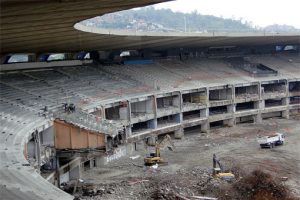
FIFA warns Brazil about construction timeframe: As Brazil prepares to host the World Cup in 2014, FIFA, the games’ governing body, issued a warning about delays in the construction of six soccer stadiums. FIFA’s concern came after as second test at the Maracanã stadium was cancelled due to unpreparedness. The Maracanã stadium, along with the others in Cuiabá, Manaus, Natal, Curitiba, Porto Alegre, and São Paulo must be handed over to FIFA and tested twice by December, according to FIFA. Yet, the current timeline is that the stadiums are unlikely to be completed before February or March.
Vice President of China travels to Venezuela: China’s vice president, Li Yuanchao, arrived in Venezuela on Sunday, beginning a four-day visit focused on deepening the bilateral relationship and establishing alliances with the new administration of President Nicolás Maduro. On Monday, Li will participate in a memorial to former President Hugo Chávez, followed by a series of meetings over the course of the week with Venezuelan leaders, including the minister of science and technology. Li hopes to prioritize educational and technology exchanges between the two countries. He will also meet with the ministers of energy and economy, President of Petróleos de Venezuela Rafael Ramírez, and National Assembly President Diosdado Cabello, among others. The two countries are expected to sign accords on issues such as oil and mining. Li will then travel to Argentina on May 16.
![]() |
Top stories this week are likely to include: debate continues on IACHR reforms; U.S. Supreme Court considers gay marriage; Bolivia takes Chile to court; Argentina wants UN discussion on Falklands/Malvinas; Indigenous groups protest World Cup construction.
Debate over IACHR Reforms to Continue: In a marathon extraordinary session on Friday, the General Assembly of the OAS resolved to continue discussing reforms to the Inter-American Commission on Human Rights (IACHR) that were proposed two years ago by Ecuador, Venezuela, Bolivia, and Nicaragua. Though external funding for the IACHR will be allowed to continue in the meantime, the reforms could mean eventually eliminating external funding for the regional human rights body and restricting the circumstances in which the commission can issue precautionary measures to protect victims.
U.S. Supreme Court Considers California's Prop 8 and DOMA: The U.S. Supreme Court will consider two high-profile cases on same-sex marriage this week. The court will convene Tuesday to consider the constitutionality of California's Proposition 8, a law banning same-sex marriage after California state courts had recognized gay marriage earlier in 2008. On Wednesday, the court will also consider the federal Defense of Marriage Act, which was signed into law in 1996 to deny federal benefits to gay and lesbian couples. The court’s decisions could overturn gay-marriage bans in 29 U.S. states.
Bolivia and Chile Dispute Escalates: Bolivian President Evo Morales said Saturday that Bolivia would take Chile to the International Court of Justice in the Hague in "coming days" to sue over Bolivia's lost access to the sea. Bolivia has been landlocked since the 1879-1884 War of the Pacific, but the issue has remained important in modern Bolivian politics. In a radio interview Sunday, Morales said that as long as Sebastián Piñera is president of Chile, he doesn't anticipate holding any further dialogue with Chile to negotiate a solution to the dispute.
Argentina to discuss the Falklands/Malvinas with the UN: Argentine Foreign Minister Héctor Timerman is expected to meet with UN General Secretary Ban Ki-Moon in New York early this week to request that the UN organize a dialogue with the United Kingdom over the political status of the disputed Falklands/Malvinas Islands. Argentina and more than 20 neighboring countries have said that the referendum held by islanders on March 10 and 11 is invalid. Voters overwhelmingly declared the islands a British Overseas Territory.
Brazilian Indigenous Groups Protest World Cup Displacement: Rio de Janeiro police in riot gear stormed a former museum occupied by Indigenous protesters on Friday, firing tear gas and pepper spray after an hours-long negotiation to convince protesters to abandon the building, which had been marked for demolition for the 2014 World Cup. The Indian Museum has been an important refuge for Indigenous Brazilians even after the museum was closed in 1977. On Friday, protesters were reportedly in the process of abandoning the building when the police entered, but the police say that the protesters started a fire inside. Human rights activists and public officials have denounced the police response.
![]() |
The United States Under-23 Men’s National Soccer Team failed to qualify for the 2012 London Olympic Games on Monday, after tying El Salvador in a must-win match in Nashville, Tennessee. A victory would have advanced the Americans to the semifinal round of the Confederation of North, Central American and Caribbean Association Football (CONCACAF) regional qualifying tournament, but an injury-time goal from Salvadoran striker Jaime Alas in the 94th minute ended the U.S. Olympic hopes.
The Americans were hoping to bounce back from a rare 2-0 defeat at the hands of Canada on Saturday and appeared to have the advantage against El Salvador early on when Terrence Boyd scored after only 61 seconds. But El Salvador, with the support of half the 7,889 fans in attendance, came from behind twice to secure a tie and claim the top spot in Group A. La Azul y Blanco will face second-place Canada on March 31 in Kansas City, and a victory would earn the Central American nation its first Olympic berth since 1968.
With the World Cup defeat to Ghana still fresh in the minds of American soccer fans, elimination from the Olympics is yet another disappointing performance for a team striving to prove itself on the world stage. “I’m sorry for the fans,” said U.S. Under-23 Coach Caleb Porter, “and I’m sorry for U.S. Soccer, that we didn’t get the job done.” The loss also hurts the Americans’ chances looking forward to the 2014 World Cup in Brazil. The rising stars of the Under-23 team, some of who will become part of the U.S. World Cup squad in 2014, are missing out on a rare opportunity to represent their country in international competition.
![]() |
The news that Brazil has overtaken Britain to become the world's sixth largest economic power is being touted as a sign that that the longtime "country of the future" has finally arrived. While the celebrations have been somewhat muted by concerns over slowing GDP growth and the country's still-heavy dependence on high energy and food prices, Brazil is heading into the coming global showcases of both the 2014 World Cup and the 2016 Summer Olympics with more than its usual swagger.
But this emerging economic prominence is raising the question of just what kind of actor Brazil will be on the world stage. In the past 20 years, Brazil has become well known for turning crisis situations into geopolitical opportunities, becoming a leading voice in international forums devoted to AIDS, poverty, and even the environment. And now, it is doing it again with a challenge that Brazilians understand all too well: a debt crisis.
Only this time, it's Europe in need of a helping hand, not the former Portuguese colony in Latin America. At an EU-Brazil summit held in Brussels last October, President Dilma Rousseff told European leaders, who had asked for assistance: "You can rely and count on us." As an initial strategy, Rousseff and her finance minister, Guido Mantega, considered using their foreign exchange reserves—estimated at $352 billion—to purchase debt through treasury bonds. However, after consulting with her BRIC colleagues at a meeting in Washington last November, Brazil decided that buying EU bonds would be too financially risky, and proposed instead to indirectly assist Europe by donating an estimated $10 billion to the International Monetary Fund.
![]() |
What does AQ Online expect to be the anticipated headline grabbers for the week of March 5-9, 2012? The top-five stories include: Joe Biden’s Latin America tour; FIFA’s criticism of Brazil; Hugo Chávez’ health recovery; new presidential polls in Mexico; and the UN making further preparations for Rio+20.
1) Biden in Mexico and Honduras: U.S. Vice President Joe Biden arrived yesterday in Mexico, where he holds meetings today in Mexico City with Mexican President Felipe Calderón and the three presidential candidates for the July 2012 election. According to Tony Blinken, national security advisor to the vice president, Biden and Calderón will discuss a wide range of bilateral issues “in the spirit of equal partnership, mutual respect and shared responsibility.” Tomorrow morning, Biden travels to Honduras to meet privately with President Porfirio Lobo, and then will have lunch with the presidents of Honduras, Guatemala, El Salvador, Costa Rica, and Panama. Much of Biden’s visit will center around the violence surrounding narcotics trafficking through Central America.
Although Blinken said that the meeting in Honduras “provides an opportunity to reaffirm the United States' strong support for the tremendous leadership President Lobo has displayed in advancing national reconciliation and democratic and constitutional order,” AQ Editor-in-Chief Christopher Sabatini posits, “almost three years after the coup, Honduras has deteriorated politically and socially—and the region has largely walked away from it.”
2) Brazil-FIFA Row: After FIFA Secretary-General Jerome Valcke criticized on Friday Brazil’s lack of preparedness for the 2014 World Cup, specifically its lack of infrastructure and delayed construction timetables, Brazilian Sports Minister Aldo Rebelo has refused to communicate directly with Valcke. Rebelo called Valcke’s remarks—specifically that Brazil needs a “kick in the backside”—offensive and unacceptable. Expect this contention to further increase as the June 2014 kickoff date approaches, but more recently as Valcke lands in Brazil in the coming days.
3) Chávez in Recovery: The revelation by Venezuelan President Hugo Chávez that the lesion he had surgically removed in Cuba was indeed a malignant tumor has fueled speculation about his long-term health outlook before and after the October 7 presidential contest against Henrique Capriles Radonski. According to Christopher Sabatini, “unfortunately, the president has refused to be transparent about his condition in the past” and that his admission of the malignant tumor “still raises a number of questions including the prognosis for his recovery, his treatment and some alternative plan should his condition take a turn for the worse.”
![]() |
Thousands of Brazilian federal troops surrounded the state legislature building in the northeastern city of Salvador on Monday as tensions mounted over a week-long strike by the city’s police force. Approximately 3,500 troops are currently being deployed to Salvador to deal with the 4,000 police officers and their families—including 300 children—that have been occupying the government building since last Tuesday. The police are demanding a 50 percent wage increase and better working conditions.
Crime has soared in Salvador since the strikes began, resulting in widespread looting and over 83 murders—up 129 percent from the previous week. Bahia Governer Jaques Wagner condemned the situation, saying "A group of police using reprehensible methods, spreading fear among the population, caused disturbances in some parts of the state.” But strike leader Marcos Prisco warned yesterday that "if the army storms the building there could be a catastrophe,” referring to the large number of civilians participating in the protest. One strike leader was arrested for taking control of more than a dozen police vehicles, and warrants have been issued for 11 other strike leaders.
Salvador is Brazil’s third largest city and home to one of the country’s largest Carnival celebrations that begin in just two weeks. The city will also host several games during the 2014 World Cup. In an effort to address concerns over transportation capacity surrounding the upcoming World Cup, the Brazilian government moved to privatize operations at three of its major airports yesterday. But the ongoing standoff in Salvador shows that violence and insecurity issues continue to loom over Brazil’s hosting duties.
![]() |
Brazil’s Supreme Federal Court announced yesterday that it will investigate claims that Orlando Silva, Brazil’s sports minister, embezzled millions of dollars in public funds. The court has demanded that Silva and his ministry hand over relevant documents within 10 days.
The allegations took form when the influential Brazilian magazine Veja published a report earlier this month in which a former military office accused Silva of embezzlement from a government program that promotes sports for low-income youth. The kickbacks, in turn, were purportedly dumped into the coffers of Silva’s party, Partido Comunista Brasileiro (Brazilian Communist Party), which belongs to President Dilma Rousseff’s coalition.
This charge of corruption comes at a particularly sensitive time as Brazil steps up preparations for the 2014 FIFA World Cup. The event kicks off in less than 1,000 days and the responsibilities for its smooth operation fall under Silva’s portfolio. This is not the first setback as Brazil plans for the mega-event; last month, a federal judge ordered a halt to construction of a new terminal at São Paulo-Guaralhos International Airport because Infraero, Brazil’s airport authority, did not institute a formal bidding process for the contract. Also, in July, Alfredo Nascimento, then-minister of transportation, resigned from office due to alleged corruption although he denied culpability.
Since Rousseff took office in January 2011, Nascimento and other cabinet officials—the chief of staff, minister of agriculture and minister of tourism—have been forced to resign. Nevertheless, Rouseff enjoys a 71 percent popularity rating.
![]() |
In an effort to jumpstart preparations for hosting the 2014 World Cup, the government of Brazil yesterday announced a series of tough new rules for companies involved in civil aviation infrastructure projects. According to the executive secretary of the Department of Civil Aviation, Cleverson Aroeira, firms that do not meet their contractual deadlines for expanding airports, such as São Paulo’s Guarulhos and Viracopos airports, and Brasilia’s Presidente Juscelino Kubitschek aiport could face fines totaling up to $87 million.
Earlier this year, Brazil announced its intention to collaborate with the private sector to help modernize airports in time for 2014. But the state-owned airport company, Infraero, which currently runs most major airports, still intends to weigh in on strategic issues. Ifraero has faced growing pressure to meet construction deadlines.
Reports earlier this year that Brazil’s World Cup preparations are severely behind schedule led the Federation of International Football Association (FIFA)—soccer’s global governing body—to formally inquire about the status of all major infrastructure projects. The Brazilian government has over the past year repeatedly offered assurances that all necessary projects would be ready on time.
![]() |
Brazilian President Dilma Rousseff kicks off a week-long European tour in Brussels today and tomorrow, where she will address the Fifth EU-Brazil Summit. Key items on the agenda are the Euro debt crisis and the EU-Mercosur free-trade agreement (FTA).
Specifically, Rousseff is expected to announce that Brazil will not be contributing to the European Financial Stability Facility, as was once discussed among the BRICS (Brazil, Russia, India, China, South Africa) bloc of advanced emerging economies. Also, as she did in her opening address to the United Nations last month, Rousseff will make the case for greater inclusion among developing nations in global growth schemes, and her opposition to economic policies among groups of developed countries—like the EU—that she considers protectionist.
Rousseff also seeks to advance dialogue on the EU-Mercosur FTA, where negotiations had been stalled for years but have progressed quickly since being re-launched in 2010. However, key sticking points remain, including recent measures by Brazil to raise import tariffs on cars and European concerns of losing market share in its agricultural industry—given Brazil’s strong farming sector. A deal is anticipated to be signed in 2012.
Rousseff will also discuss Brazil’s preparations for the 2014 World Cup with FIFA President Sepp Blatter while in Brussels. She will then continue to Bulgaria to visit her father’s homeland, and then conclude her visit in Turkey, a key ally in the Muslim world.
![]() |
In a setback to Brazil’s preparations for the 2014 World Cup, Federal Judge Louise Vilela Filgueiras Borer ordered an immediate halt to the construction of a third terminal at São Paulo’s main international airport. São Paulo-Guarulhos International Airport, which was recently ranked the worst in Latin America, was undergoing a renovation to double the airport’s capacity in advance of the World Cup as well as the 2016 Olympic Games.
Judge Filgueiras said the state airport authority Empresa Brasileira de Infraestrutura Aeroportuária, or Infraero, jettisoned a formal bidding process for the project and awarded the contract to Delta Constructions. In her ruling, Filgueiras wrote that the move represented a worrying precedent in Brazil—one which ignored regulations in the interest of finishing a project as soon as possible. The project was estimated to cost 1.2 billion reais ($700 million).
An April 2011 report from the Instituto de Pesquisa Econômica Aplicada (Institute for Applied Economic Research, or Ipea) warned that 10 of the 13 Brazilian airport terminals being upgraded throughout the country were not on track for completion by the start of the World Cup in June 2014. President Dilma Rousseff is now evaluating an option to rely on temporary, warehouse-like modules to accommodate the expected passenger influx for the Cup.
This is not the first setback for Brazil’s transportation authorities. In July, Alfredo Nascimento, former minister of transportation, resigned on allegations of corruption for so-called “irregularities” in the granting of contracts.
AQ's coverage and post-trip analysis of the President's May 2-4 visit.

