

![]() |
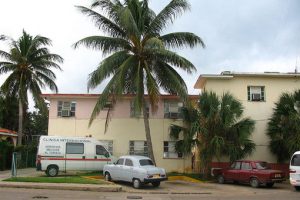
A cholera outbreak in southeastern Cuba has killed three people and infected an additional 53 people, according to a Cuban Health Ministry release published by the Communist Party newspaper Granma on Tuesday. The outbreak of Vibrio cholerea was centered on Manzanillo, a coastal town of 130,000 residents in Granma province. A number of contaminated drinking wells were cited as the source of the infection, according to the Health Ministry statement.
The disease killed three elderly adults, ages 95, 70 and 66; all of whom had records of chronic illness. In total, 1,000 Cubans who exhibited cholera symptoms, namely severe diarrhea and other gastrointestinal illness, have received medical attention. "The Manzanillo outbreak is controlled and the number of cases are dropping as a result of the sanitary, hygienic and anti-epidemic measures being taken,” said the Ministry on Tuesday.
The Ministry of Health’s report made no mention of the concurrent cholera outbreak in neighboring Haiti, which has killed over 7,000 people. But hundreds of medical professionals from Granma province have been deployed to Haiti to provide treatment over the past two years, which could provide leads to the source of the Cuban outbreak.
![]() |
Last week, a United Nations Security Council delegation visited Haiti to assess the 10,500-member peacekeeping force, known as the UN Stabilization Mission in Haiti or MINUSTAH. The visit was to assess security needs in Haiti before the UN Security Council makes a decision about whether to reduce the number of forces stationed in the country.
In a complete departure from past assessment missions, this trip included minimal assessment of actual peacekeeping, the reason MINUSTAH was sent to Haiti in the first place. Instead, the Security Council focused primarily on two major afflictions caused by MINUSTAH: Their admitted introduction of cholera to Haiti and corresponding failure to respond adequately despite ongoing death and illness, as well as reports of sexual abuse by peacekeeping troops, some of which were even recorded on film. Both of these crimes, very distinct in nature, have made it nearly impossible for the UN peacekeeping mission to be successful in its mandate to “keep the peace,” if there is even a peace to keep. Indeed, if anything, MINUSTAH is responsible for much of the unrest and instability.
Recent protests in Haiti have largely focused on the problems brought by the peacekeepers. Not surprisingly, the Security Council visit last week brought on a new wave of such protests—one of the ways Haitian people have expressed their ongoing frustration with the UN “occupiers” as they are called. One in ten MINUSTAH peacekeepers worldwide are currently stationed in a country the size of Massachusetts, a country where there is no war. Even so, the UN continues to spend more than $2 million a day on the peacekeeping operation. In my own conversations with MINUSTAH personnel, they expressed boredom and difficulty communicating with Haitians, but never mentioned war or peace. They admitted that it is unclear how much security forces can do for Haiti. Haitians, for their part, are calling for justice. They are demanding accountability. They know the UN is responsible for so much pain they have suffered, and they are asking for compensation.
![]() |
The United Nations announced yesterday that it is investigating two cases of sexual exploitation of children allegedly committed by UN police personnel in Haiti. One case involves the UN Police (UNPOL) in Port-au-Prince, while the other implicates one or more members of the Formed Police Unit (FPU) in the northern city of Gonaives.
UN Spokesperson Martin Nesirky said that the Stabilization Mission in Haiti (MINUSTAH) alerted UN headquarters of the allegations last week. “The United Nations is outraged by these allegations and takes its responsibility to deal with them extremely seriously,” said Nesirky in a statement. The UN has not disclosed the nationalities of the police officers in question, but confirmed that they have been removed from duty while under investigation.
Since peacekeepers first arrived in Haiti 2004 to restore order following the ouster of former President Jean-Bertrand Aristide, the UN has had a sometimes tense relationship with the local population. Last September, five Uruguayan peacekeepers were recalled after being accused of sexually abusing a Haitian man at a UN base, while recording the incident on a cellphone. Four months earlier, an independent UN panel concluded that the Cholera epidemic that infected 344,000 Haitians and killed over 6,000 likely originated from poor sanitation by Nepalese peacekeepers stationed in Mirebalais. Both incidents resulted in protests and clashes between protesters and UN and Haitian police.
In an effort to ebb anti-UN sentiment in Haiti, the Security Council decided last October to withdraw 3,000 troops from the Caribbean nation, returning the force to pre-earthquake levels. Still, President Michel Martelly maintains that UN troops are a necessary presence in Haiti until the country’s police force—or a new military—can ensure security.
![]() |
At least one Haitian was killed in a clash with UN peacekeepers on the outskirts of Cap Haitien, Haiti, on Tuesday. The man was shot amid mass protests in response to the rapidly spreading Cholera epidemic that has killed more than 1,000 people and which many Haitians believe was spread by the mostly Nepalese UN forces. Haitians protesters in Cap Haitien and Hinche reportedly threw stones and set up burning barricades to which the UN troops responded by firing tear gas. According to the UN, the protestor who was shot had first fired at a UN soldier, who fired back in self defense.
The protesters were demanding the departure of peacekeepers and the end of the MINUSTAH stabilization mission, which has been a presence in Haiti since 2004. However, the confirmation of Cholera cases in Port-au-Prince and all of Haiti’s 10 provinces is largely responsible for the unrest. As Haiti nears the one-year anniversary of the devastating earthquake, many of its social services are provided, not by the government, but by the multitude of non-governmental organizations that are currently on the ground. Given the damaged and largely decentralized health care system, access to adequate care is still scarce.
Though fear and anger surrounding Cholera is no doubt the primary agitator behind this week’s protests, the UN believes violence and political manipulation surrounding the presidential elections could also be responsible. The Haitian elections commission may choose to postpone the elections, scheduled for November 28, given the heightened risk of Cholera contamination and Haitian people’s reluctance to leave their homes to vote.
![]() |
From the Americas Society/Council of the Americas. AS/COA Online's news brief examines the major—as well as some of the overlooked—events and stories occurring across the Americas. Check back every Wednesday for the weekly roundup.
Sign up to receive the Weekly Roundup via email.
What the U.S. Midterms Mean for Immigration, Hemispheric Policy
AQ’s Jason Marczak writes in the Americas Quarterly blog that Republican congressional victories in the November 2 U.S. mid-term vote could spell setbacks for progress on comprehensive immigration reform. “[I]f the Pledge to America—the Republicans’ legislative agenda unveiled in September—is any indication, the new House leadership’s immigration focus will be on issues of border enforcement, immigration law enforcement and strengthening visa security," writes Marczak. "Plans do not include any focus on creating a path toward legalization of the 11 million undocumented immigrants currently living in the shadows.” In terms of foreign policy, COA Vice President Eric Farnsworth writes in the National Journal’s national security blog to expect a “harder line” with the Republican House, including a reversal on easing restrictions against Cuba, a stronger position against Venezuelan President Hugo Chávez, and less efforts to stop the flow of illicit arms into Mexico.
![]() |
From the Americas Society/Council of the Americas. AS/COA Online's news brief examines the major—as well as some of the overlooked—events and stories occurring across the Americas. Check back every Wednesday for the weekly roundup.
Sign up to receive the Weekly Roundup via email.
Former President of Argentina Dies Suddenly
Néstor Kirchner, who served as the president of Argentina from 2003 to 2007, died after suffering a heart attack on October 27. A former governor from the Patagonian State of Santa Cruz, Kirchner won high approval ratings for steering his country through troubled waters to economic growth in the wake of a 2001 financial crisis. In 2005 his government negotiated the restructuring of the country’s $81 billion in bond debts and on December 15 of that year, he announced that Argentina would pay off its remaining $9.8 billion debt to the IMF. Despite his popularity, he chose not to seek reelection, yet played an active role as an advisor to his wife and successor, Cristina Fernández de Kirchner. There was broad speculation that he would run for president again in 2011. The Christian Science Monitor describes Kirchner as a “Latin American statesman” and quotes ruling party congressman Juan Carlos Dante Gullo as saying, “This will leave a huge hole in Argentine politics.” Clárin.com explores Kirchner’s life as a powerbroker and carries ongoing coverage.
Read an AS/COA Online article about Kirchner’s political career.
AQ's coverage and post-trip analysis of the President's May 2-4 visit.