
![]() |

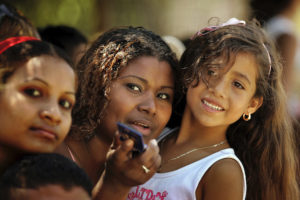
While most of the world knows about Brazil’s burgeoning economic strength, much fewer people are fully aware of the country’s multiethnic diversity. This celebration is on full display in the state of Bahia and its capital of Salvador: the nucleus of Afro-Brazilian culture. Here are some examples of Salvador’s unique qualities. All photos courtesy of Fafá Araújo. All captions courtesy of Paulo Rogério.
![]() |

Please find the original text below, submitted in Portuguese.
It may be one of the most culturally and ethnically diverse countries in the world, but Brazil has still not been awakened to its full tourism potential. As Brazil attempts to lure travelers ahead of the 2014 and 2016 “mega events”—the FIFA World Cup and Olympic Games, respectively—Brazil must devise a strategic vision for tourism. Here, authorities would be wise to look to the Afro-Brazilian population.
Brazil welcomed 5.4 million tourists last year. This is certainly laudable, but given that Paris attracted 5.2 million tourists in the same time period, it is clear that Brazil has room for improvement. Fortunately, Brazil’s tourism promotion authority, Empresa Brasileira de Turismo (Brazilian Tourism Company, or Embratur), is taking note.
Embratur began 2012 with a series of actions to bolster Brazil’s tourism image abroad—with the ultimate goal to receive 10 million visitors annually by 2020. According to organizers for the World Cup, Embratur will target 17 priority markets this year: Argentina, Bolivia, Canada, Chile, Colombia, France, Germany, Italy, Mexico, the Netherlands, Paraguay, Peru, Portugal, Spain, United Kingdom, United States, and Uruguay.
Increased promotional campaigns will yield some success, but these advertisements should also highlight the rich Afro-Brazilian culture and religions; otherwise this success will remain limited.
I find that tourists who come to Brazil have been encouraged most by word of mouth. There is not enough awareness among other black populations in the world about Brazil’s significant black population. The African-American community in the United States is one clear example. With purchasing power totaling roughly $1 trillion, this demographic can certainly bring much needed tourism dollars to Afro-Brazilian areas and businesses.
The truth is that there are numerous attractions in Brazil: music, gastronomy, history, fashion, festivals, concerts, and of course the people themselves. Highlighting all the diverse ethnicities in Brazil—including the Afro-Brazilian community—could pique global interest, and this message of ethnic tourism has the potential to also generate employment opportunities. The black community still suffers from high unemployment as we know, so any government action to incorporate input from the business sector and civil society organizations will go a long way toward generating income for thousands of people across the country.
There are many highlights of Afro-Brazilian culture: hundreds of quilombolas, samba groups, and afoxé-playing musicians. There could be religious tours completely designed around Afro-descendant religions, or perhaps ecotourism packages around Afro-Brazilians who live in nature reserves. These are just a few ideas—but Afro-Brazilians need the support of the public and private sectors.
Brazil is preparing intensely for the 2014 World Cup and 2016 Olympic Games; this will undoubtedly mean more contracts for Brazilian companies and more opportunities to attract foreign tourists and investors. But even in 2012, there is not enough integration of Afro-Brazilians in the effort, nor are there substantial investments in training workers or subsidizing businesses.
Brazil needs to wake up and tap into its tourism potential. This is a matter of cultivating a strategic vision and putting up the investment dollars to sustain it. If Brazil doesn’t do this, Afro-Brazilians will continue to remain excluded in society.
A segunda nação negra do mundo, e um dos países com maior diversidade cultural do mundo, ainda não despertou para o potencial turístico que possui. Por ano, o país deixa de arrecadar milhões e incluir um enorme número de pessoas por falta de visão estratégica e investimento na atração de pessoas interessadas na história e cultura afro-brasileira.
Que o Brasil é um país de cenários exuberantes, riqueza natural e gente hospitaleira todos sabem. Porém, os fatos comprovam que o Brasil não explora as suas possibilidade turísticas como deveria. Em 2011 o país comemorou a a marca 5,4 milhões de turistas. Porém, somente a Torre Eiffel, na França, recebe 5,2 milhões por ano, o deixa óbvio que o Brasil precisa promover melhor seus destinos no exterior.
A Empresa Brasiliera de Turismo (Embratur) iniciou o ano de 2012 com um pacote de ações para melhorar a imagem do Brasil como destino turístico no exterior e alcançar um aumento do turistas, visando a meta de dez milhões de visitantes em 2020. Segundo o Portal da Copa 2014, a Embratur focará suas ações em 17 mercados prioritários, em 2012, são eles: Argentina, Chile, Colômbia, Paraguai, Peru, Uruguai, Alemanha, Espanha, Estados Unidos, França, Reino Unido, Itália, Holanda, Portugal, Bolívia, Canadá e México.
Se o plano realmente for efetivado será um avanço, porém o que se vê até então é um desconhecimento sobre a cultura, religiosidade e situação social brasileira no exterior. Um exemplo é a comunidade afro-americana que movimenta aproximadamente 1 trilhão de dólares por ano e, em geral, desconhece a realidade dos negros brasileiros. Não se vê nos veículos de comunicação destinados a essa comunidade nos EUA nenhum tipo de publicidade ou ação, o mesmo acontece na Europa, África e outras partes do mundo. Os turistas que chegam ao Brasil seguem ainda motivados pelo marketing boca-a-boca e não dispõem de um cuidado especial e uma infraestrutura favorável a esse tipo de turismo voltado ao aspecto cultural e histórico.
Por outro lado, as atrações são inúmeras. Música, culinária, história, moda, festas populares, shows e o próprio povo são ativos que poderiam gerar um fluxo contínuo de turistas de todo o mundo interessados na história da comunidade negra brasileira.
Fomentar o turismo étnico é gerar oportunidades. A comunidade negra no Brasil, como se sabe, ainda sofre pelo alto indicie de desemprego e falta de oportunidades, portanto uma ação do governo envolvendo o setor empresarial e organizações sociais poderia certamente gerar emprego e renda para milhares de pessoas em todo o país. São centenas de comunidades quilombolas que podem receber turistas pelo país, grupos de samba, afoxé e blocos afros que podem aumentar o número festas, grupos afro-religiosos que podem falar sobre suas crenças, sem contar com as comunidades situadas em reservas naturais que podem oferecer pacotes de ecoturismo, com destinos únicos no mundo.
Os chamados Megaeventos, como a Copa do Mundo e Jogos Olímpicos, estão próximos e até agora não há uma ação clara do governo brasileiro face a inclusão de roteiros afros no leque de opções dos visitantes do exterior ao Brasil. Além disso, não há um investimento em qualificação profissional ou financiamento para negócios desse segmento.
O Brasil precisa acordar e explorar todo o seu potencial turístico para incluir sua população. É uma questão de estratégia e de investimento a longo prazo. Ou acordamos para isso, ou os afro-brasileiros perderão mais uma vez o bonde da história.
![]() |

Yesterday Colombia’s congress approved an anti-discrimination bill that levies prison sentences of one to three years for acts of discrimination on the basis of race, ethnicity, gender, religion, political belief, or sexual orientation. The bill, Ley 08 in the Senate and Ley 165 in the House of Representatives, was authored by Senator Carlos Baena of the Partido Mira. It now awaits a signature from President Juan Manuel Santos.
Passage of the bill is considered a landmark victory for Colombia’s minorities, including Afro-Colombians, Indigenous populations, and LGBT groups, and had the backing of many NGOs supporting greater rights for these traditionally excluded populations. According to the 2005 Colombian census, 10.5 percent of the Colombian population self-identifies as “black, mulatto, or of African descent.” The Comisión Intersectorial Afrocolombiana reports that 80 percent of Afro-Colombians live below the line of extreme poverty.
During legislative consideration, observers debated whether jail time was the most effective form of punishment. Some, including the former Deputy Attorney General Francisco José Sintura, argued that prison sentences were excessive and opted for other means like education. The bill also received criticism—and its passage delayed—for not specifying what constitutes an act of discrimination. Before yesterday’s final vote, however, Partido Mira refined the bill’s language to define six circumstances that could be considered discriminatory under the law, including physical assault, employment discrimination and refusal of admittance to movie theaters, bars, etc.
In a statement, Senator Baena said that the new law will “settle a historic debt with the Afro-Colombian population that continues to face racism.” Baena added that “the Afro-Colombian role is essential to the economic, social and political reality of our country.”
Colombia is a focus country for the Americas Society Social Inclusion Program.
![]() |
Yesterday Colombia’s congress approved an anti-discrimination bill that levies prison sentences of one to three years for acts of discrimination on the basis of race, ethnicity, gender, religion, political belief, or sexual orientation. The bill, Ley 08 in the Senate and Ley 165 in the House of Representatives, was authored by Senator Carlos Baena of the Partido Mira. It now awaits a signature from President Juan Manuel Santos.
Passage of the bill is considered a landmark victory for Colombia’s minorities, including Afro-Colombians, Indigenous populations, and LGBT groups, and had the backing of many NGOs supporting greater rights for these traditionally excluded populations. According to the 2005 Colombian census, 10.5 percent of the Colombian population self-identifies as “black, mulatto, or of African descent.” The Comisión Intersectorial Afrocolombiana reports that 80 percent of Afro-Colombians live below the line of extreme poverty.
During legislative consideration, observers debated whether jail time was the most effective form of punishment. Some, including the former Deputy Attorney General Francisco José Sintura, argued that prison sentences were excessive and opted for other means like education. The bill also received criticism—and its passage delayed—for not specifying what constitutes an act of discrimination. Before yesterday’s final vote, however, Partido Mira refined the bill’s language to define six circumstances that could be considered discriminatory under the law, including physical assault, employment discrimination and refusal of admittance to movie theaters, bars, etc.
In a statement, Senator Baena said that the new law will “settle a historic debt with the Afro-Colombian population that continues to face racism.” Baena added that “the Afro-Colombian role is essential to the economic, social and political reality of our country.”
Colombia is a focus country for the Americas Society Social Inclusion Program.