
btn_subscribe-top
btn_give-a-gift
btn_login
btn_signup
btn_rss

Brazil Goes Back to Work

September 5, 2012

by Lucy Jordan

After accepting the government’s offer of a 15.8-percent pay raise over three years, some 400,000 public-sector employees ended their month-long strike and returned to work on Monday.  While the workers may have gotten what they wanted, popular patience with public sector workers and unions may be wearing thin.

The strikes started in May with university professors and in June spread to other sectors, causing widespread disruption. University students sat idle, wondering if they would have to repeat the academic year. Lines in airports were measured in hours, or kilometers, rather than minutes. Imports of food and medicines were stalled and visas delayed.

The public here has been historically sympathetic to organized labor; union resistance helped bring down the military dictatorship, and former President Lula da Silva, still wildly popular, started out as a union leader. But there are signs that, with these strikes, patience may have dwindled for a public sector that many consider too large and too coddled.

Folha has called repeatedly for a review of the right-to-strike laws, calling the strikes “excessive” and a “hazard to the population.” This aspect was not lost on the public: in an overpass above the main highway between Rio de Janeiro and São Paulo someone reportedly hung a sign that read, “Police station closed—free passage for drug trafficking and arms.” The dry humor belied a serious threat: a separate 10-day police strike in the northeastern state of Bahia in February was said to have caused a spike in murders on the streets of the capital, Salvador.

Época referred to the Brazilian public sector as “giant and inefficient,” in the first in a series of color spreads that indignantly detailed some of the “supersalaries” of some of the most generously paid public servants. (“It’s you who pays,” ran the headline.) Estadão published a feature on the human consequences of the strikes, citing allergic children who are not receiving the special foods they need, dengue prevention efforts for Indigenous populations that had been stalled, and patients who were forced to wait for urgent bone marrow treatment.

Read More

Tags: Brazil, corruption, Dilma Rousseff, Labor Unions

Enrique Peña Nieto: Now Mexico’s President-elect

September 4, 2012

by Juan Manuel Henao

It is now official: Enrique Peña Nieto of the Partido Revolucionario Institucional (Institutional Revolutionary Party—PRI) is president-elect of Mexico. The nation’s highest electoral court, the Tribunal Electoral del Poder Judicial de la Federación (Electoral Tribunal of the Federative Judicial Power—TEPJF) declared July’s presidential contest valid, after runner-up Andrés Manuel López Obrador (AMLO) questioned the credibility of the election.  Having reviewed and analyzed numerous pages of accusations of vote-buying, the court has decided Peña Nieto won, marking the PRI’s return to power after a 12-year hiatus.     

TEPJF Justice Pedro Peñagos surmised the tribunal’s decision best: “In a democracy, one vote makes the difference. If Enrique Peña Nieto received an advantage of millions of votes in relation to the candidate that reached second place, then it follows that [Peña Nieto] should be declared the winner.”  Peña Nieto received just over 19 million votes, versus 16 million for AMLO.

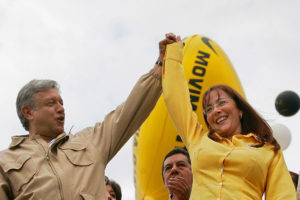
AMLO rejected the court’s decision: “The elections were not clean, free or genuine.”  Memories of 2006 now pester downtown residents in Mexico City—and with reason.  Over the weekend, the weakened #YoSoy132 youth movement, along with Mexico’s electricians’ union, marched towards the deputy’s chamber. More marches are expected, to including a demonstration at the iconic Zócalo next weekend.

Notwithstanding, the president-elect is already moving toward setting his legislative agenda. The PRI maintains a plurality in both the deputies and senate chambers, but will need to negotiate with President Felipe Calderón’s Partido Acción Nacional (National Action Party—PAN) and AMLO’s Partido de la Revolución Democrática (Party of the Democratic Revolution—PRD) to pass legislation. In the lower house, PRI, PAN and PRD were elected to 207, 114 and 100 seats, respectively; and in the upper house 52 (PRI), 38 (PAN) and 16 (PRD) seats. In both chambers, the PRI counts on old political dogs as party leaders; Deputy Manilo Fabio Beltrones is serving a third non-conescutive term, and previously served as governor of Sonora state. He was president of the senate until last week. Senator Emilio Gamboa has also served as senator, deputy, minister, and deputy minister under two PRI presidents. Both are party men who follow former U.S. President Lyndon B. Johnson’s famous tactics of squeezing, prodding and logrolling to get legislation passed.

Read More

Tags: corruption, Felipe Calderon, Transparency, organized crime, Enrique Peña Nieto, Meixco

Brazil Supreme Court Rules on Mensalão Corruption Scandal

August 29, 2012

by AQ Online

In a historic trial that resumes today, members of Brazil’s Supreme Federal Tribunal will decide whether public funds were used for monthly political payouts in Brazil’s infamous 2005 mensalão scandal.

The verdict delivered this week has implications on the legacy of former Brazilian President Lula da Silva, whose government is implicated in the scandal. The case revolves around accusations that members of Lula’s Worker’s Party (PT) bribed Brazilian lawmakers to back PT initiatives in Congress using money from state-owned companies. In all, 37 defendants, including Lula’s chief of staff, José Dirceu, and other senior officials, will be judged on a variety of felony charges that include money laundering and vote-buying.

On Monday, six of the 11 Supreme Court justices weighed in on whether the former president of the Brazilian Chamber of Deputies, João Paulo Cunha, and the former director of Banco do Brasil, Henrique Pizzolato, are guilty of corruption, alongside Marcos Valério, a businessman at the center of the scandal, and Valério’s two business partners, Ramon Hollerbach and Cristiano Paz.

All justices who spoke on Monday unanimously condemned Pizzolato, Valério, Hollerbach, and Paz, though they disagreed on whether Cunha was guilty of corruption. The remaining justices are scheduled to speak on Wednesday and Thursday, including Cezar Peluso, who is scheduled to retire from the bench when he turns 70 next Monday.

Dozens of Brazilian political figures and public officials have already been dismissed as a result of the scandal, though corruption has long played a major role in Brazilian politics. The federal auditor’s office has fired nearly 4,000 public employees since 2003, mostly for corruption, and blacklisted thousands of companies and individuals for corrupt business practices.

Brazilian Attorney General Roberto Gurgel said that the court’s swiftness in the voting thus far indicates that the charges against the defendants are serious. "This was important because it demonstrates that we aren’t dealing with light accusations,” he said.

Tags: corruption, Mensalão Scandal, Brazil Supreme Court

In Brazil, Graft Trial Threatens Lula’s Legacy

August 15, 2012

by Lucy Jordan

There is one story dominating the Brazilian headlines: The mensalão, a huge corruption case that could taint the legacy of former President Lula and the reputation of his Partido dos Trabalhadores (Workers’ Party—PT) to which his successor Dilma Rousseff belongs. 

Certainly the scope is wide. With 38 high-profile defendants including former ministers, bankers and wealthy businessmen, 600 witnesses and, according to calculations by Globo, a slush-fund of more than R$100 million ($49.7 million) in public funds, the mensalão has been dubbed the “trial of the century” by commentators here.

Prosecutors charge that, from 2003 to 2005, public money was handed to some members of the ruling coalition as a “mensalão”—roughly translated to “big monthly payment”—to ensure their support on key votes. The money was allegedly moved through government contracts granted to private companies, which then redistributed the funds amongst legislators.

The defendants deny the accusations, originally made by whistle-blower Roberto Jefferson, president of the Partido Trabalhista Brasileiro (Brazilian Worker Party—PTB) who belonged to Lula’s coalition but did not support Dilma’s bid for the presidency.  If found guilty of the charges, which include corruption and racketeering, the defendants could face prison terms of up to 45 years.

Read More

Tags: Brazil, corruption, Luiz Inácio Lula da Silva, Dilma Rousseff

Survey Finds Corruption in Latin America Declining

June 15, 2012

by AQ Online

Survey results released yesterday suggest corruption in Latin America has abated slightly due to stronger corporate ethics rules and enforcement of anti-corruption laws in the region. Miller & Chevalier and Matteson Ellis Law’s 2012 Latin America Corruption Survey, completed by 439 respondents in 14 countries, found that Chile and Uruguay are perceived to be the least corrupt countries, while Venezuela, followed by Bolivia, Argentina and Mexico, is seen as the most corrupt. Brazil, which has the largest economy in the region, fell somewhat in the middle.

About 51 percent of survey respondents said they had recently lost business to competitors who made illicit payments—slightly down from 57 percent of respondents who said so in 2008. And 75 percent said they were aware of an offender being prosecuted for receiving illicit payments, up from 69 percent in 2008. There was a marked difference between multinational and local/regional companies in their approach toward corruption: 93 percent of respondents from multinationals said their company has taken steps to protect itself from corruption risk, while only 75 percent of respondents from local and regional companies said this was the case.

The report attributes the slight decline of corruption to the U.S. Foreign Corrupt Practices Act (FCPA), which prohibits companies from paying bribes abroad and may have led multinational companies to adopt higher standards. Sixty-four percent of all survey respondents claimed to have extensive or somewhat extensive knowledge of the FCPA. Of respondents whose companies are publicly listed in the U.S. or are affiliates of U.S. multinational companies, just 3 percent think their company is not subject to the law, compared with 30 percent in 2008.

The survey comes on the heels of several high-profile corruption cases in the region, including an investigation into Wal-Mart Mexico for a series of bribery allegations dating back to 2005 and estimated to be worth $24 million.

The survey was administered by U.S.-based law firms Miller & Chevalier Chartered and Matteson Ellis Law PLLC, together with 12 Latin American firms. Three-fifths of the respondents said they worked at a multinational company, while the remaining 40 percent worked at a local or regional company. The survey did not provide a margin of error.

Tags: corruption

La crisis de la policía boliviana

June 1, 2012

by Cecilia Lanza

La jerga delincuencial de los policías bolivianos

En Bolivia, los policías destinados fuera de su lugar de origen pagan un “diezmo” (10 por ciento de su salario) a sus superiores. Llaman “saludar” cuando pagan por obtener determinado cargo; “aceitear” cuando exigen dinero para agilizar algún trámite; y “formar” cuando piden a un funcionario presentarse a su superior para ofrecerle dádivas. Hay otros también:  “cupo” es el dinero que deben reunir para “comprar” el destino al que quieren ir; “sanción” es el monto que pagan para pasar por alto sus faltas; “toco, teque” dicen, cuando pagan por un cargo u otros beneficios; y “vía rápida” llaman al soborno necesario para agilizar los trámites de licencias de conducir o documentos de identidad. Al mismo tiempo es muy común otras formas de pagamiento: “tres días” es el nombre y apellido de un hecho delictivo cometido por ellos mismos; “rayar” es el verbo que divide el dinero recaudado en algún trabajillo; y “filo” es la ganancia que exige el superior por el botín obtenido entre policías y ladrones.

Lo cuenta el propio presidente Evo Morales que en los seis años de su gobierno ya ha cambiado a siete comandantes generales de la Policía, tres de ellos en menos de dos años. Todos juran al cargo prometiendo erradicar la corrupción y lavar la tan deteriorada imagen institucional. Y todos terminan embarrados. Atrapados en el lado de los bandidos.

Un caso memorable es el del coronel Blas Valencia, líder de una banda delincuencial que el año 2001 atracó a un automóvil blindado con varios millones. De película. De ahí para adelante, rutina. Por eso casi ya no sorprende que el ex jefe de la Fuerza Especial de Lucha Contra el Narcotráfico, general de la Policía, René Sanabria Oropeza, quien hasta el año pasado dirigía el Centro de Inteligencia y Generación de Información antinarcóticos, sea más bien un gran narcotraficante, según acusación de la Oficina Antidrogas de los Estados Unidos donde fue extraditado luego de ser aprehendido infraganti en Panamá.

Read More

Tags: Bolivia, corruption, Crime and Security

Ecuador Aims to Stamp Out Police Corruption

August 18, 2011

by AQ Online

At a news conference yesterday, Ecuadorian Police Chief General Wilson Alulema announced the launch of an anti-corruption plan that will create an intelligence department to monitor corruption within the force. The new plan, which is to take effect “immediately,” will require each of the 42,000 officers, and all future agents, to take a lie detector test. Additionally, officers will have to declare their personal assets. This is intended to facilitate investigations of bribes, peddling and corruption.

The anti-corruption measures are in part a response to the police mutiny of September 2010, in which protests by police and military groups against benefits cuts turned violent. President Rafael Correa was tear gassed and trapped in a military hospital in Quito for over 12 hours. Following the attacks, Correa’s administration took control over the force, and the president has called for its modernization.

Despite the new initiatives, General Alulema lamented the judicial re-instatement of almost 300 officers who had been suspended over allegations of corruption. His new plan will create an incentive system to award officers demonstrating proper ethics and values and to denounce internal corruption.

Tags: corruption, Ecuador, Rafael Correa

Un año de Santos y su cruzada anti-corrupción

August 1, 2011

by Lorenzo Morales

Uno de los hechos más notables del primer año del gobierno del presidente colombiano Juan Manuel Santos ha sido su impetuoso interés por destapar escándalos de corrupción en las oficinas del Estado. En poco tiempo, Santos—que se posesionó el 7 de agosto de 2010—ha desenmascarado multi-millonarios desfalcos a las arcas públicas y ha puesto en evidencia sofisticadas redes de fraude que involucran a empresas privadas con altos funcionarios del gobierno, ex-funcionarios y mandatarios locales.

Para demostrar que esta batalla está muy arriba en la lista de sus prioridades, Santos ha salido a los medios en tono solemne a anunciar operaciones anti-corrupción de gran calado. Los anuncios se han vuelto tan frecuentes que a la prensa le queda poco tiempo para asimilar un caso cuando ya sus titulares apuntan hacia otro nuevo.

Hace apenas dos semanas, el 12 de julio, el Presidente Santos, acompañado de la Fiscal General de la Nación y el comandante de la Policía Nacional, reveló un millonario desfalco a las arcas públicas en la DIAN, la oficina nacional de recaudo de impuestos. 17 personas enfrentan cargos por el robo, desde 2004, de cerca de 1 billón de pesos (unos 568 millones de dólares), en devoluciones fraudulentas del impuesto a las ventas, IVA. “Este es apenas un bracito de un gran pulpo,” dijo Santos.

El 2 de mayo, el presidente, en otra puesta en escena similar, anunció el primer gran golpe contra una anillo de corrupción en el sistema público de salud, en el que se detectó que cerca de 600.000 millones de pesos anuales (unos 340 millones de dólares) habían sido robados o pagados de manera fraudulenta a contratistas privados por servicios de salud que nunca fueron realizados o por medicamentos que nunca fueron suministrados a los pacientes.

Read More

Tags: Colombia, corruption, Juan Manuel Santos

A Setback in Colombia’s Rapprochement with Venezuela

May 19, 2011

by Andrés Mejía Vergnaud

President Santos’ policy of rapprochement with Venezuela has suffered a significant and unexpected setback: the resignation of José Fernando Bautista, Colombia’s ambassador to the Bolivarian Republic.

Bautista submitted his farewell letter anticipating revelations of deals with the infamous Nule Group, whose owners, two brothers and their cousin, remain in prison while they face trial for what will perhaps be the greatest corruption scandal in Colombia’s history.  The case involves multi-million bribes and illegal commissions in public contracting.  The Nule scandal has also resulted in the suspension of Bogotá Mayor Samuel Moreno, the arrest of his brother Iván —a senator— and the imprisonment of a number of second-rank officials.

At this point, it’s still not clear what kind of job Mr. Bautista did for the Nules. A long-time successful lobbyist, he might have sold his ability to be influential in the highest circles of fovernment. But concerns have arisen that he might have gone beyond this, and that he could have been involved in an alleged plot to discredit Sandra Morelli, the Colombia’s comptroller general. Mr. Bautista claims in his letter that he did nothing but advising what at the time was a successful and respected corporate group. This defense leaves a question open: if this was the case, why did he feel compelled to resign? It’s hard not to suspect there’s something more.

Read More

Tags: Colombia, corruption

Mexican President Targets Corruption

March 15, 2011

by Arjan Shahani

Felipe Calderón is changing the rules of the game for fighting corruption. Earlier this month, Calderón announced a series of initiatives targeting corrupt practices in public service and for the first time, providing rewards to whistleblowers and citizens who provide information leading to identification of these practices.

Mexico’s President recognized that “the depth at which corruption has penetrated our society is a problem we can no longer permit.”  These types of declarations, which candidly and honestly recognize our fragile state, are unbecoming of what we are accustomed to hear from him.

Possibly wanting to shift public discourse away from the violence and crime dialogue (which is obviously linked to corruption), Calderón talked about this new legal framework and what it looks to achieve in more economic terms: “we must not allow corruption to continue hurting Mexicans, reducing our competitiveness or blocking our country’s ability to grow.”

Read More

Tags: corruption, Felipe Calderon

Pages


Connect with AQ


Twitter YouTube Itunes App Store


Issues in Depth: President Obama's travel to Mexico, Costa Rica

AQ's coverage and post-trip analysis of the President's May 2-4 visit.

» Read more.


WEB EXCLUSIVES

Most Popular

MOST POPULAR ON AQ ONLINE

  • Most Viewed
  • Past:
  • 1 day
  • 1 week
  • 1 month
  • 1 year

NOW ON AS/COA ONLINE

Loading...

AQ MEDIA PARTNER

Loading...