

![]() |
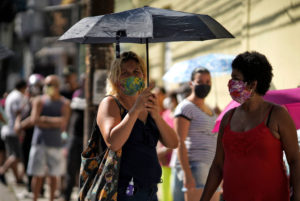
Unemployment in Latin America and the Caribbean dropped to 6.8 percent in 2011 from 7.3 percent in 2010 and reached its lowest levels in most countries since the mid-1990s, according to the International Labor Organization (ILO) recent report Panorama Laboral 2011. The report also projects unemployment numbers to remain stable in much of the region through the end of 2012.
“There is no doubt that unemployment rate trends have been very positive in recent years, which should help the region develop labor markets that not only generate more jobs, but better ones,” said the regional director the ILO’s Office for Latin America and the Caribbean, Elizabeth Tinoco.
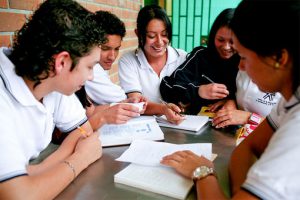
Despite notable progress, nearly 16 million urban Latin Americans remain out of work and joblessness among specific demographic groups—particularly youth—is three times higher than national averages. "The economic and social progress of recent years is unsustainable if policymakers don’t face the challenge of creating better opportunities for young people", says Tinoco.
![]() |

Please find the original text below, submitted in Portuguese.
Brazil’s black community faces many social and political problems, but a lack of economic opportunities is what most prevents this population from climbing the income ladder. According to Brazil’s National Association of Collective Black Entrepreneurs (Associação Nacional dos Coletivos de Empreendedores Negros, or ANCEABRA), the majority of Afro-Brazilians are in the informal workforce because of a lack of opportunities in the formal sector. Many Afro-Brazilians also face difficulty in opening legitimate, lasting businesses, with ANCEABRA reporting that only 3.8 percent of Afro-Brazilians identify professionally as entrepreneurs.
Why are Afro-Brazilians unsuccessful as entrepreneurs? Three factors are at play: a lack of societal encouragement to become entrepreneurs; family members without any history in creating their own enterprises; and, above all, the persistent difficulty of accessing capital. Brazil also has never had a public policy that sought to specifically promote black-managed enterprises.
This systemic problem presents a form of “black invisibility” in the business sector. This invisibility stands in stark contrast to Brazil’s position as one of the top-five countries in terms of entrepreneurship. Brazil’s enviable ranking puts it ahead of several enterprising European countries—yet most of these Brazilian enterprises are neither started nor managed by Afro-Brazilians.
But there’s more to this great challenge. A survey by the Ethos Institute showed that female Afro-Brazilians comprise only 0.5 percent of the top corporate executives of the 500 largest companies in Brazil. Our country, which proudly presents itself as a multicultural and multiracial nation, is ranking behind nations with similar ethnic compositions.
![]() |
From the Americas Society/Council of the Americas. AS/COA Online's news brief examines the major—as well as some of the overlooked—events and stories occurring across the Americas. Check back every Wednesday for the weekly roundup.
Sign up to receive the Weekly Roundup via email.
Haiti Rocked by Destructive Earthquake
A magnitude 7.0 earthquake struck Haiti on January 12, resulting in widespread chaos and substantial casualties. “Parliament has collapsed. The tax office has collapsed. Schools have collapsed. Hospitals have collapsed,” said Haiti’s President René Préval in an interview with The Miami Herald, who described the catastrophe as “unimaginable.” The United Nations and other agencies have warned that the rampant devastation is hampering efforts and The International Red Cross says as many as three million people have been affected and tens of thousands may have been killed by the earthquake, the epicenter of which lies just outside the Haitian capital. Images and reports of the destruction have been widely distributed via Internet and social media. Get updates via Twitter at #Haiti.
AS/COA has compiled a resource page with information about how to support relief efforts and get more information.
![]() |
From the Americas Society/Council of the Americas. AS/COA Online's news brief examines the major—as well as some of the overlooked—events and stories occurring across the Americas. Check back every Wednesday for the weekly roundup.
Sign up to receive the Weekly Roundup via email.
Calderón Undertakes Housecleaning
Mexico’s President Felipe Calderón announced that his government plans to close down the secretariats of tourism, agrarian reform, and public service in an austerity measure that could save hundreds of millions of dollars. The three agencies will be absorbed into others. The move followed a cabinet reshuffling that involved replacing the attorney general, the head of state oil firm Pemex, and the secretary of agriculture. An Associated Press report suggests Calderón’s decision to replace Attorney General Medina-Mora with Arturo Chávez represents a choice to go with a stronger approach toward fighting drug cartels. However, women’s rights groups have protested the choice, saying Chávez did little while attorney general in the border state of Chihuahua to resolve the disappearances of hundreds of women in Ciudad Juarez. Chávez must gain confirmation from the Mexican Senate.