

btn_subscribe-top
btn_give-a-gift
btn_login
btn_signup
btn_rss

Archive

From issue: The New Brazil and the Changing Hemisphere (Spring 2011)

Innovators/Innovations

Some of our hemisphere’s emerging leaders in politics, business, civil society, and the arts.

In this issue:

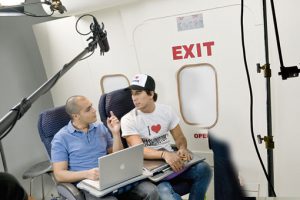
Arts Innovator Gabriel Ahumada rehearses for an upcoming performance. Photo: Courtesy of Joshua Z Weinstein.

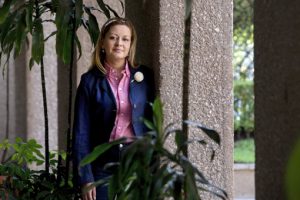
  • Political Innovator: Liliana Rojero, Mexico

    Liliana Rojero has had a passion for politics since she was 13 years old. Today, at 35, she is putting that passion to work. As the secretary of community outreach for Mexico’s ruling party, the Partido Acción Nacional (PAN), Rojero is responsible for creating programs to engage a new generation of PAN voters. Over the next three years, she aims to spread PAN’s reach and, ultimately, help it win the 2012 Presidential election.

    Rojero, a native of the state of Chihuahua, learned about political commitment from her parents—former state election monitors who instilled in her the values of democracy, transparency and participation. Observing how officials from the Partido Revolucionario Institucional (PRI) blatantly manipulated election outcomes—she and her mother would sometimes find ballots “mysteriously” filed by dead voters—led Rojero to see her participation in the democratic process as a duty. During a hotly contested governor’s race in 1986, she was inspired by watching her teachers and neighbors take their political protests to the streets and capitol. “I saw what freedom and their votes meant to them,” she recalls.

    Hoping to bring the political process to all Mexicans, Rojero has campaigned tirelessly for the PAN—the PRI’s principal rival. She has held various party posts, including youth action secretary, state coordinator for universities and national director for women’s political promotion.

    Prior to becoming secretary of community outreach, Rojero served as the executive secretary of Mexico’s Instituto Nacional de las Mujeres (National Institute for Women), an agency with a $585-million budget dedicated to eliminating discrimination against women and promoting their participation in federal and local politics. She designed and implemented federal policies to provide equal opportunities for women and help them exercise their rights more fully. Democracy, she believes, cannot flourish without women’s full political participation.

    Rojero continues to work toward bringing all citizens into the political process. She created Redes Ciudadanas, a citizens network that aims to mobilize voters at the local level, involving them in environmental causes and issues of security, family health and economic empowerment. In a country where popular cynicism and pessimism toward politics is all too common, Rojero hopes to inspire Mexican citizens to engage more with their representatives. “Political parties for too long have not put people front and center; rather, it has been about self-serving interests,” she says.

    Rojero is also currently leading a grassroots effort to engage PAN party members at the local level by forming working committees that relay voters’ concerns and expectations to PAN candidates. The goal is to generate political capital—and votes—for the PAN in the run-up to the 2012 election.

    While pleased with the program’s success, Rojero is far from complacent. She is convinced that Mexico must do more to bring all citizens into the political process. And though currently focused on PAN’s upcoming campaign, she dreams of one day becoming Mexico’s foreign secretary. If appointed, she says, she hopes to use the office to demonstrate that Mexico’s future as an economic power depends on eliminating discrimination by age, ethnicity and gender.


  • Civic Innovators: Diego de Sola, Ken Baker and Celina de Sola, El Salvador

    Real change begins when communities learn how to help themselves, believe Diego de Sola, his sister Celina, and her husband Ken Baker. This idea guided the three former Connecticut residents to pack their bags and move to El Salvador four years ago to start a small NGO, Glasswing International. Inspired by groups like Habitat for Humanity, Glasswing works in El Salvador, Guatemala and Honduras.

    Named after the transparent-winged butterfly native to Central America and Mexico and representing the transparency NGOs bring to development, Glasswing’s efforts focus on education and health. The three founders believe these two areas are most in need of help and have the greatest potential for impact. Unlike the past work of Celina and Ken—former disaster relief workers—the work is not top-down or short-term. The projects are staffed by a corps of volunteers called Crisálida (Chrysalis—in keeping with the butterfly metaphor). The spirit that motivates the volunteers is not one of noblesse oblige. The Crisálida corps attracts the young and old, students and professionals, and representatives from all socioeconomic strata.

    According to Diego, who, along with his sister, was born in El Salvador, volunteers’ energy and input build their civic pride, helping “to transform a society where fatalism is prevalent, and to empower people to take their destinies into their own hands.” Recruited locally through churches, civic groups, corporate sponsor employees, the Glasswing website, and word of mouth, volunteers engage in a wide range of activities, from tutoring and raising awareness about literacy to building youth centers and implementing reforestation projects. The formula has attracted close to $3.5 million in private support.

    Glasswing collaborates with government ministries of education and health, USAID, other NGOs, universities, and local and U.S. hospitals to train its volunteers. It has also become a resource for corporations seeking to expand or establish corporate social responsibility projects in Central America, including Taca, Microsoft, SAB Miller, and Chevron.

    According to Baker, Glasswing’s primary role is to help companies identify local needs, then provide a plan for investment and management of projects. Once those initial factors are in place, the companies then “build up the relationship on their own.”

    To date, in El Salvador and Guatemala, Glasswing has enlisted more than 15,000 volunteers in its infrastructure projects, and an additional 300 who are ongoing volunteers in its education programs. After only one year in operation in Guatemala, it already has 600 active volunteers; it is just beginning work in Honduras.

    Glasswing’s health initiatives include programs to increase access to medical services, improve the quality of care for children and expectant mothers, and provide specialized training for first responders. Education initiatives include after-school programs for children in kindergarten to ninth grade, including glee clubs, and classes in information technology and financial literacy.

    Glasswing’s success in revitalizing communities from within has earned it both praise and continued funding from USAID and corporate sponsors, which it hopes to use to do impact assessments and create new networks in Nicaragua, Panama and Costa Rica.

    Celina says one of the most satisfying outcomes of the volunteer corps has been “seeing people from different social classes who may never talk in public—or who have bad feelings toward each other—come together to rally around a common cause.”


  • Arts Innovator: Gabriel Ahumada, Colombia

    Gabriel Ahumada decided to become a flutist more or less on a whim. As a child, he listened to classical music at home in Bogotá, Colombia, and took piano lessons, but if you had asked him what he wanted to be when he grew up, he would have said “conductor of an orchestra.” He was advised to study a more classical instrument. Flipping through a catalogue of wind instruments one day, Ahumada picked the flute. “It seemed the easiest to learn,” he explains.

    Colombian classical music has been reaping the benefits of that decision ever since. Ahumada grew up to become not only one of his country’s most accomplished flutists, but also a teacher helping to develop the next generation of Colombian musicians.

    Ahumada, of mixed Colombian and Hungarian roots, now lives in Germany, where he is a soloist with the Philharmonic Orchestra of Konstanz. But he has maintained close musical ties to his homeland, which began with his studies at the conservatory of the Universidad Nacional de Colombia (UNAL) in the mid-1980s. Returning periodically to teach at conservatories and universities, he noticed a growing number of young Colombians interested in playing the flute. “I saw the great interest and appreciation they had for what we had learned in Europe [and thought] classical music doesn’t belong only to Europe. Music shouldn’t have borders.”

    Ahumada enlisted the help of fellow flutist and compatriot Hernando Leal, who had also studied at UNAL’s conservatory and now lives in Switzerland. Together, in 2008, the two founded the Academia Internacional de Flauta in Villa de Leyva, a small city about 110 miles (177 km) north of Bogotá. The annual, week-long summer camp provides aspiring flutists with training in technique and musical interpretation, as well as professional guidance. Mostly between 18 and 30 years old, participants come from all over Colombia, from Cali to Bucaramanga, for a program that begins with seminars and training and ends with a concert performance.

    The academy has attracted steady interest, with the number of participants ranging from 16 to 25. Instructors have included flutists from Ecuador, Mexico and Venezuela in addition to Colombia. The academy, financed mostly by tuition fees ($270 for “active participants” and $135 for “passive participants” who sit in on classes) and with assistance from Swiss institutions, including the Swiss Embassy in Colombia, accepts online registration.

    Recently, Ahumada established yet another link to Colombia’s expanding classical music scene, performing in January 2011 at the Festival Internacional de Música (International Festival of Music) in Cartagena. He says the festival and other events like it are crucial to his country’s future: “It’s necessary that cultural development accompany social processes in Colombia, not exist separately.”

    That may be a more “grown-up” goal than a small boy’s hopes of conducting an orchestra, but Ahumada intends to stick with it this time around.


  • Business innovator: Andrés Moreno

    If you visit Andrés Moreno’s blog, you’ll see a list of books he’s “recently enjoyed.” Among them are Globish: How the English Language Became the World’s Language, and Mastering the VC Game. The list not only reflects Moreno’s passion for English as a global language, but his entrepreneurial drive to turn that passion into profits.

    Last June, both the passion and the drive paid off when the Caracas-born Moreno, 28, launched Open English, a Web-based language school that promises “to reinvent the English-language learning experience.”

    Lots of programs offer specialized English instruction, but Open English is different, says Moreno, because “we provide an integrated solution to reaching fluency.” Not only does the school offer live virtual classroom sessions, it gives students interactive tools that keep them engaged—for example, voice recorders and spell-checkers to help evaluate their pronunciation and writing—and various multimedia content, including educational videos and audio podcasts.

    In 2008, Open English partnered with the Venezuelan media and entertainment giant Cisneros Group to produce a 60-episode television series called English Highway, which follows a group of young professionals as they use English in their daily lives and offices and ultimately land their dream jobs. There are beginner, intermediate and advanced series, and viewers can practice their skills through mid-episode speaking drills.

    Open English was not Moreno’s first foray into the English-language instruction field. In 2004, he co-founded Optimal English, which provided one-on-one language instruction to Latin American executives of Fortune 500 companies. But its high cost gave it limited appeal. Moreno wanted to tap into the market of  ambitious people needing to learn English to advance their careers, but who could not afford to travel to brick-and-mortar classrooms.

    Moreno found his inspiration—and a model—in the burgeoning popularity of social media sites like MySpace and Facebook. Starting in 2007 and working largely out of his Caracas apartment, he and a group of friends developed a learning platform for Open English. Some $2 million from Silicon Valley angel investors helped him bring the product to market.

    Since it appeared—in 2008 in Venezuela and 2010 across Latin America—Open English has been a clear hit. Over 7,500 students have signed up, the majority between 25 and 35 years old. Its strongest markets are Venezuela, Colombia and Mexico, and although most students come from major metropolitan areas, “a surprising number are coming from places we’ve never heard of,” says Moreno.

    Open English charges $1,000 for its year-long course. Students receive a curriculum tailored to their baseline knowledge of English (50 percent already have low-to-intermediate English skills) and their profession, interests and goals. “The 17-year-old studying for her TOEFL [Test of English as a Foreign Language] gets a very different program of instruction than the P&G executive,” says Moreno. “Personal study advisors” then guide them through the course.

    Live classes, which average fewer than 5 students per class, are offered every hour on the hour, twenty-four-seven. Teachers—all native English speakers, bilingual and tech-savvy—are based around the world and have backgrounds teaching English as a Second Language (ESL).

    Moreno is just beginning. He plans to expand to other untapped populations—including, later this year, Brazil, which represents 40 percent of Latin America’s broadband connections.

    What drives Moreno? The son of a Venezuelan diplomat, he had lived in eight countries and learned Spanish, English, Slovenian, and Italian by the time he was 15. “All that traveling I did as a kid gave me a real passion for languages and communicating,” he says.


    To learn more about Moreno's work and his company, you can visit his blog and the Open English website.


Subscribe

Follow AQ on

Heros of Social Inclusion

WEB EXCLUSIVES

Issues in Depth

2012 U.S. Elections: Follow AQ coverage of U.S. presidential candidates' positions on issues affecting the Americas. Updated May 4, 2012.


On AQ's Social Inclusion Portal

May 4: Read about Brazil's historic court ruling to legalize racial quotas in the federal university system.
Plus, read more on public and private efforts that promote inclusion and economic growth.

» Go to the Portal.

NOW ON AS/COA ONLINE

Loading...

AQ MEDIA PARTNERS