

-

Honduras Pact to Restore Democracy Falters, then Collapses
November 6, 2009
by AQ OnlineDevelopments early this week in Honduras appeared to bring the promise of an end to the country’s political crisis and the restoration of democracy there. The media reported globally that a U.S.-led effort had succeeded in reconciling the demands of deposed President Manuel Zelaya with those of de facto President Roberto Micheletti.
Under the terms of the agreement, the Honduran congress was supposed to vote on whether to restore Zelaya to office and the November presidential elections would then be recognized and held without either Micheletti or Zelaya as candidates. A unity government was to have been formed by last night that would govern until the new president took office. The U.S. and the rest of the international community would then recognize the new administration and democratic governance would be restored.
In a stinging rebuke to widely disseminated comments by senior U.S. officials that the crisis was over, today’s reports out of Tegucigalpa indicate that the deal has collapsed. The Honduran Congress has yet to vote on Zelaya’s reinstatement and Micheletti has announced the formation of a unity government without Zelaya’s representatives. According to the ousted president, “The accord is dead.” AQ Editor-in-Chief Christopher Sabatini says that the U.S. strategy for resolving the crisis has apparently backfired and U.S. diplomats “may have put themselves in a bigger pickle than if they hadn’t” taken a diplomatic role.
Meanwhile, in Nicaragua, regional events appear to have overshadowed President Daniel Ortega’s bid to push forward a constitutional reform to allow himself to run for re-election in 2011.
Tags: Crisis in Honduras, Daniel Ortega, Manuel Zelaya, Roberto Michiletti
-

Here We Go Again: Nicaragua-Honduras-Re-Election
November 6, 2009
by Christopher SabatiniJust south of Honduras, in Nicaragua, another constitutional crisis is brewing over re-election. And while attention is focused on Honduras, many of the actors that stood on the sidelines leading up to the June 28 coup in Honduras are standing on the sidelines again as political totalitarian ambition and institutions head toward a train wreck.
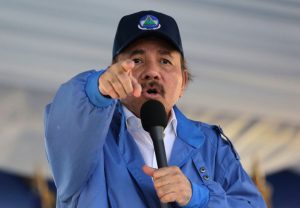
In this case, Sandinista President Daniel Ortega has sparked a constitutional crisis of his own by—like his friend Honduran President Manuel Zelaya—pushing for a constitutional reform to allow himself to run for re-election in 2011.
In this case, though, six members of the Ortega-packed Supreme Court supported the reform (under the curious and specious decision that Article 147 of the constitution was “inapplicable.” Huh?), and the Nicaraguan Congress refused to question it. The President of the Supreme Court declared his opposition to the ruling, but the pro-Ortega Sandinista congressional representatives spurned the opportunity to overturn it.
So wait: the Nicaraguan Supreme Court approved it, and Nicaraguan Congress supported the Supreme Court’s decision. If this were Honduras this would be constitutional, right? That’s what U.S. conservatives have been saying: that the coup in Honduras wasn’t a coup because the Honduran Congress and Honduran Supreme Court supported it, and thus democratic institutions had spoken. (Note: in both cases, the Supreme Court acted in secret with no public debate; in Honduras it was to arrest President Zelaya; in Nicaragua it was to support Daniel Ortega’s totalitarian plan.)
Tags: Daniel Ortega, Honduras, human rights in Latin America, Manuel Zelaya, Nicaragua, Organization of American State
-

Nicaraguan President Moves Closer To Another Possible Term in Office
October 23, 2009
by AQ OnlineNicaraguan President Daniel Ortega moved a step closer to running for another term this week when six justices of the constitutional branch of the Supreme Court deemed “unenforceable” a term-limit provision contained in Nicaragua's constitution. According to opposition leaders and legal experts, a 1995 amendment to the Nicaraguan constitution allows a maximum of two non-consecutive terms.
The ruling by the six justices, who are all affiliated with Ortega’s Sandanista party, requires formal approval by the full 16 judges of the court, but the head of the constitutional branch, Francisco Rosales, has said that the ruling will likely stand and the country's electoral court has indicated that it will also comply with the decision.
Many Latin American countries are dealing with the issue of presidential term limits. Venezuela's Hugo Chávez, Bolivia’s Evo Morales and Ecuador’s Rafael Correa have all sought constitutional changes that will allow them to continue running for reelection. The same was also true for deposed Honduran President Mel Zelaya, and may soon be true for leaders in Costa Rica and Colombia.
The U.S. reacted to the news yesterday by expressing concern over the irregular governmental actions in Nicaragua with State Department spokesman Ian Kelly commenting: "The ruling appears to short-circuit, through legal maneuverings, the open and transparent consideration by the Nicaraguan people of the possibility for presidential re-election."
Tags: Daniel Ortega, Nicaragua, Nicaraguan Elections, Presidential Term Limits
-

Nicaraguans Lose $62 Million in Assistance as Ortega Stands Firm in Defending Flawed Elections
June 18, 2009
by Jason MarczakEight months later, the consequences of last November’s municipal elections continue to reverberate throughout Nicaragua. Now the latest victim is not the legitimacy of the democratic process but Nicaraguan citizens. And the government of Nicaragua is to blame.
Last week, the Millennium Challenge Corporation (MCC)—a U.S. government entity established in 2004 that ties aid to good governance, economic freedom and investments in people—announced that it would cut $62 million in aid to Nicaragua. This money, suspended a few weeks after the municipal elections, was part of a five-year, $175 million agreement (or compact) that was signed with the Nicaraguan government in July 2005.
The reason? MCC assistance only goes to “governments who are governing justly,” and according to MCC Acting Chief Executive Officer Rodney Bent, Nicaragua has not shown “meaningful reforms or progress” in this area. The MCC had been looking for the government of President Daniel Ortega to address the voting irregularities that helped his Sandinista candidates win the mayorship of Managua, and the country’s second city, León. In Managua, Alexis Arguello defeated Eduardo Montealegre (Ortega’s challenger in the 2006 presidential election) amid accusations of voter identity fraud and suspicious polling station tallies. For the first time in 20 years, independent observers were barred from monitoring the election.
Tags: assistance, Daniel Ortega, Elections, Hugo Chavez, Nicaragua


I keep trying to post this question, but it does not seem to show ...1
Thank you for the explanation, but I still have some confusion about ...1
f It’s hard to find knowledgeable people on this topic, but you ...1
More comments...