



Panamanians go to the polls on Sunday to elect their next president. Knowledgeable observers including Jaime Daremblum predict that supermarket magnet Ricardo Martinelli will win the election, his primary opposition, Housing Minister Balbina Herrera, being far behind in the polls.
Martinelli is well versed in politics as well as in business, having served as Minister of Canal Affairs and as board chairman of the authority that oversees management of the Canal. His tenure was notable for its lack of drama. When the Canal officially reverted to Panama in 1999 under the terms of the Panama Canal Treaties signed with the United States, numerous observers predicted that the Panamanians would either run their most important asset into the ground within a matter of months, or they would turn it over to the Chinese.
Well, neither prediction came to pass over the past 10 years, nor has the prediction that Venezuela’s Hugo Chávez would be able to underwrite the Herrera campaign and exercise undue influence over the incoming government as he has long sought to do elsewhere in Central America. Panama is not Nicaragua, nor is it Bolivia. Nor is it Colombia or Costa Rica, for that matter. In fact, since the country’s founding in 1903, Panamanians have repeatedly shown a knack for independent actions that have routinely confounded their critics.
That independent streak has proven to be both a blessing and a curse. A blessing, because it has helped Panama to stand up successfully to outside players including, at different times, the United States, the Soviet Union, Cuba, Venezuela, and others. It has also allowed Panama to play important roles globally so that the country can punch well above its weight (for example, at the UN Security Council).
At the same time, Panama’s refusal to truly see itself as part of Central America and to rely on a go-it-alone economic strategy, based on its somewhat unique service economy and the now-fading historical “special relationship” with the United States, has cost it opportunities, particularly in the trade area. Had Panama not insisted on a separate trade agreement with the United States, rather than being a part of the Dominican Republic-Central America-United States Free Trade Agreement (DR-CAFTA), the country would be enjoying open trade right now, not just with the United States but also with its Central American neighbors. This was a miscalculation. With the change in politics in the United States and the severe global economic downturn, those lobbyists in Washington who so advised the Government of Panama to go this route should give back their healthy fees, with interest.
Despite this, I wrote in the Miami Herald late last year that the United States should take advantage of the Summit of the Americas in Trinidad and Tobago to take up and pass the agreement. Well, we missed that deadline. We’ll miss the deadline of Panama’s elections, too. The next deadline would be the presidential inauguration on July 1. That means that the U.S. Administration would need to submit the agreement shortly after Memorial Day (May 25) to have a vote prior to the summer congressional recess in early August.
How is all this relevant to Panama’s elections? Because the likely victor understands Panama’s place in the global economy and the country’s reliance on international trade and has pledged to have strong and positive relations with the United States. What better way to launch a new relationship with Panama, giving a tailwind to the new Panamanian president just a generation after we invaded the place, than to conclude a trade agreement that is uncontroversial to all but to the most extreme opponents of global trade.
After all, if we can do a trade deal with Vietnam—which remains communist—why not Panama, a nation that highlights better than any other nation in the Americas the historical sweep of U.S. relations with Latin America?
*Eric Farnsworth is a guest blogger to americasquarterly.org. He is Vice President of the Council of the Americas in Washington DC.
ABOUT THE AUTHOR
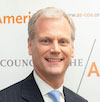
Eric Farnsworth
Reading Time: 3 minutesEric Farnsworth is vice president of the Americas Society and Council of the Americas in Washington, DC.