
![]() |
Top stories this week are likely to include: Cubans re-elect President Raúl Castro in one-party elections; Argentine Foreign Minister Héctor Timerman travels to London; Paraguay investigates the death of Lino Oviedo; Argentina reacts to the IMF after being censured; Mexican authorities conclude rescue efforts after PEMEX explosion.
Parliamentary Elections Begin in Cuba: Cuba’s nearly 8.5 million voters went to the polls yesterday to elect 612 national assembly members and members of the country’s 15 provincial assemblies in the country’s one-party elections. Eighty-six year-old revolutionary leader Fidel Castro—who had not been seen in public since October—made a surprise appearance at the polls on Sunday to cast his vote in Havana’s El Vedado neighborhood. His brother, Cuban President Raúl Castro, was re-elected for a second five-year term—his last, if the president’s decision last year to introduce two term limits is upheld. "This parliament will be in place at an important time in the history of the revolution; though they likely will not have the power or diversity to positively affect the course of reforms or leadership changes," says Christopher Sabatini, Editor-in-Chief of Americas Quarterly.
Argentine Foreign Minister Declines to Meet with Falkland Islanders: With little over a month before Falkland/Malvinas Islanders vote in a March 10 referendum on their island's political status, Argentine Foreign Minister Héctor Timerman has arrived in London to make the case that the disputed islands belong to Argentina. Timerman will make a presentation at the Argentine Embassy in London to discredit the upcoming referendum, in which the islanders are expected to affirm that they are British. Timerman had originally planned to meet with British Foreign Secretary William Hague in a bilateral meeting, but he declined the invitation after Britain insisted that representatives of the island’s government also be present.
Paraguay Investigates Death of Presidential Candidate Lino Oviedo: Paraguayan President Federico Franco has declared three days of national mourning after third-party candidate Lino Oviedo was killed along with his pilot and bodyguard in a helicopter crash late on Saturday. The cause of the crash, which witnesses say was accompanied by an explosion, has not yet been determined, but authorities have called the death an accident. However, members of Oviedo’s Unión Nacional de Colorados Éticos (National Union of Ethical Citizens—UNACE) party have demanded an investigation into whether the politician was assassinated. Oviedo was a retired general who helped overthrow Paraguayan dictator General Alfredo Stroessner, and was also charged with organizing a failed coup in 1996 against former Paraguayan President Juan Carlos Wasmosy, for which Oviedo served time in prison.
Argentina's Next Steps After IMF Censure: Last Friday, Argentina became the first nation to be censured by the International Monetary Fund (IMF) for its widely-disputed inflation data, which the national statistics agency reports at 10.8 percent. Argentine Minister of the Economy Hernán Lorenzo reacted to the fund’s decision by saying that his country is being punished for “protecting national industry and jobs, financing itself without the markets, and saying ‘no’ to vulture funds.” According to the IMF, Argentina must address "inaccurate data" by Sept. 29, 2013 to avoid suspension. If the country fails to comply with the IMF by implementing remedial measures such as creation of a new consumer price index, Argentina faces further sanctions, which could include suspension of voting rights or expulsion.
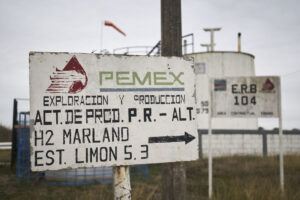
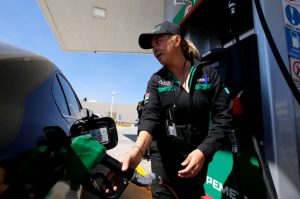
Investigation of Thursday's Pemex Blast Continues: Mexican authorities will continue to investigate the cause of the blast that killed at least 36 workers at a Pemex office complex in Mexico City on Thursday. The death toll rose on Sunday as rescue workers found three more bodies over the weekend, but it now appears that rescuers are concluding their efforts to search for survivors—though one woman who worked as a secretary at the office remains missing. Mexican Attorney General Jesus Murillo Karam declined to say on Friday whether the explosion was an accident, due to negligence, or part of an attack, but he added that there should be more information available in the coming days.
![]() |
A Brazilian government spokesperson announced yesterday that President Dilma Rousseff will visit Mexico in early 2013, likely in March, to build on “the very good impression” made by President Enrique Peña Nieto when the then-president elect visited Brasilia in September. The visit will focus on further reversing the tensions sparked over Brazil’s imposition of quotas in early 2012 as well as on sharing the Petrobras model, Brazil’s state oil company, with Mexican counterparts who are looking at how to reform the Mexican state oil company Pemex.
Plans are already underway for a follow-up visit where Pemex executives will travel to Brazil to learn first-hand how Petrobras functions.
Relations soured between Latin America’s two largest economies when Brazil, in response to an escalating trade deficit with Mexico, imposed import quotas on Mexican vehicles. Brazilian government officials have more recently hinted at the possibility of opening up discussions around the current automobile quotas.
Rousseff’s visit to Mexico may be largely symbolic, but the Mexican business community is awaiting concrete actions. Luis de la Calle, the former undersecretary of international business negotiations at the Mexican Ministry of Economy who actively negotiated the 1994 North American Free Trade Agreement said that it was “sensible to maintain a certain level of skepticism. At the end of the day, it comes down to interest and what is best for both Brazil and Mexico as a much more open trading relationship.”
![]() |
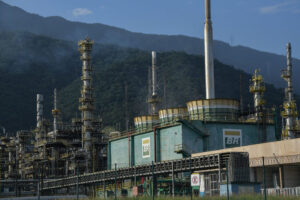
In 2008, in the midst of the debate over oil reform, Mexican President Felipe Calderón promised to build a new refinery. Now, one year down the road, the refinery’s location and a $9 billion investment have finally been chosen in a process that was the victim of a slow-moving bureaucratic machine.
Whenever it had seemed that the final decision will at last be announced, some other delay appeared. The process to pick a spot, secure land and actually begin the construction has revealed many of the inefficiencies of the Mexican state, including the lack of a trustworthy land registry and the inability of both federal and state governments to move forward with their decisions.
Calderon's choice—or failure to make one—surprised quite a few. Instead of keeping the old Mexican tradition of vertical orders, he started a contest for the refinery. States who felt they could manage the facility were to send proposals and studies to Pemex (the state oil company), and technicians in the company would then decide for the president. After months of bitter debate in the media between governors and pundits, oil experts announced the winner, or rather a winner and a half, on April 14. The state of
AQ's coverage and post-trip analysis of the President's May 2-4 visit.