

btn_subscribe-top
btn_give-a-gift
btn_login
btn_signup
btn_rss
  • Cell phones, Extortions and Regulation

    June 30, 2010

    by Julio Rank Wright

    El Salvador is a nation with more cell phones than inhabitants. In fact, according to the Superintendencia General de Electricidad y Telecomunicaciones, there are 7,445,736 mobile telephone lines for a country of 5.74 million people. Of these mobile connections, 6,286,967 are pay-as-you-go and only 663,736 are based on a fixed payment contract.

    These numbers speak for themselves. As can be reported from almost any other developing nation it’s difficult not to encounter someone with a cell phone even in the most remote regions of the country. The penetration of mobile telecommunications has brought incalculable benefits to the economy. This is especially for small and micro enterprises that can monitor prices and sell their goods by contacting suppliers and wholesalers. A cell phone, could be argued, has given them a sense of formality since now they can be contacted more easily.

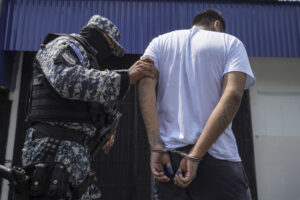
    However, there´s been an unforeseen consequence of cell phone penetration in El Salvador and presumably other developing nations: the use of cell phones to commit criminal acts, specifically extortions.

    Read More

    Tags: Cell phones, Crime, El Salvador, Security

  • Honduras in the Central American Spotlight

    March 16, 2010

    by AQ Online

    Salvadoran President Mauricio Funes called for Honduras to be readmitted into international forums at yesterday’s meeting of countries located in Central America’s northern triangle. The presidents of Guatemala, Honduras and El Salvador met with other politicians and business leaders from the three countries (Panama also sent business representatives) to discuss trade ties and diplomatic ties. Funes lobbied alongside President Álvaro Colom of Guatemala for the reintegration of Honduras into the Organization of American States (OAS) and the Central American Integration System (SICA), and offered to mediate Honduras’ return to such international bodies.

    Read More

    Tags: Coup in Honduras, El Salvador, Honduras, Mauricio Funes

  • Young Latin American Leaders from Business, Politics and Civil Society Speak Out in New AQ

    February 17, 2010

    by AQ Online

    A Canadian member of parliament, a gay rights activist from Jamaica, an Argentine National Deputy, and a dental entrepreneur from Mexico are among the young leaders who lend their voices to the Winter edition of Americas Quarterly, released today. The essayists’ views are as diverse as they are, representing new political and social ideas that defy old divisions in the hemisphere.

    “For many years I’ve been told that youth is the future,” writes Julio Rank Wright, director for Municipal Affairs of the Executive National Council of Arena in El Salvador. “I disagree. We are the here and now. Unless we decide to fill the void created by the previous generation in Latin America, we won’t have anything left worth fighting for.”
    The up-and-coming leaders are not content with the changes that have already occurred in the hemisphere—rather they express the challenges that their generation still must confront.

    “If Brazil hopes to be a leader among emerging nations, we must overcome serious internal problems such as inadequate income distribution, low investment in education, institutional racism, and digital apartheid,” writes Paulo Rogério, founder of the Instituto Mídia Étnica in Brazil.

    Many of these young leaders have come together this week in New York to discuss their essays and the region’s future at an Americas Quarterly and AS/COA conference.

    Tags: Americas Quarterly, Brazil, El Salvador

  • Weekly Roundup from Across the Americas

    January 20, 2010

    by AS-COA Online

    From the Americas Society/Council of the Americas. AS/COA Online's news brief examines the major—as well as some of the overlooked—events and stories occurring across the Americas. Check back every Wednesday for the weekly roundup.

    Sign up to receive the Weekly Roundup via email.

    Aftershock Hits Ravaged Haiti

    A 6.1-magnitude aftershock hit Haiti early Wednesday morning even as the country reels from last week’s ruinous earthquake. At least one person suffered injuries immediately after the aftershock. No deaths or damages were immediately reported. Even in the midst of chaos, officials around the world are considering what efforts can be implemented to aid Haiti’s long-term recovery. In a blog post on NationalJournal.com, COA’s Eric Farnsworth writes: “A long term project will require long term attention, and political will that goes beyond the provision of emergency relief efforts.” Foreign Policy features five views on how to help Haiti rebuild using emergency aid and development.

    Piñera Victory Ends Concertación Rule

    Business tycoon Sebastián Piñera won Chile’s runoff elections on January 17, marking the first win for a conservative presidential candidate since the country’s return to democracy. According to an article in The Washington Post, Chile will most likely continue to follow free-market policies that rendered the country prosperous since the end of the Pinochet dictatorship. COA’s Christopher Sabatini, quoted in the article, said Latin Americans “are making the choice to support market economies and rational leaders.”

    Read an AS/COA analysis of recent and upcoming Latin American elections.

    Read More

    Tags: Argentina, Bolivia, Brazil, Chile, Colombia, Cuba, El Salvador, Haiti, Honduras, Immigration, Immigration Reform, Mexico, Peru, U.S. Senate, Uruguay, Venezuela

  • Weekly Roundup from Across the Americas

    December 9, 2009

    by AS-COA Online

    From the Americas Society/Council of the Americas. AS/COA Online's news brief examines the major—as well as some of the overlooked—events and stories occurring across the Americas. Check back every Wednesday for the weekly roundup.

    Sign up to receive the Weekly Roundup via email.

    Mercosur Rejects Honduran Elections, Stalls on Other Matters

    Leaders of the Mercosur countries—Argentina, Brazil, Paraguay, and Uruguay—along with Venezuela’s Hugo Chávez gathered for a two-day presidential summit in Montevideo. They rejected Honduras’ November 29 elections, saying the elections took place in an illegal context. The presidents also agreed to move forward on free-trade negotiations with the EU but made little headway on their external tariff code, infrastructure projects for smaller countries, or a mechanism for the body’s Parliament to approve legislation. Leaders from the bloc also said they expect Venezuela to become a full member of Mercosur, pending approval by Brazil’s Senate and Paraguay’s Congress. Brazilian President Luiz Inácio Lula da Silva said he expected his country’s Senate to approve Venezuela’s accession as early as December 9.

    Latin Americans Worry over Climate Change

    With Copenhagen climate change talks underway, a BBC and Globescan poll found that global warming concerns most Latin Americans. Eighty-six percent of Brazilians and Chileans, 83 percent of Costa Ricans, 81 percent of Mexicans, and 72 percent of Panamanians thought it was a “serious problem.” But far fewer believed their government should play a leadership role in setting targets to address the issue. For example, only 53 percent of Brazilians and 25 percent of Panamanians answered affirmatively. This news comes as Brazilian President Luiz Inácio Lula da Silva pushes for international agreements to cut greenhouse gas emissions by 80 percent compared to 1990 levels.

    The Fall 2009 issue of Americas Quarterly explores environmental priorities for the Western Hemisphere.

    Read More

    Tags: Argentina, Bolivia, Brazil, Chile, Colombia, El Salvador, energy, Guatemala, Honduras, Human Rights, Immigration, Mexico, Panama, Peru, Venezuela

  • Weekly Roundup from Across the Americas

    November 18, 2009

    by AS-COA Online

    From the Americas Society/Council of the Americas. AS/COA Online's news brief examines the major—as well as some of the overlooked—events and stories occurring across the Americas. Check back every Wednesday for the weekly roundup.

    Sign up to receive the Weekly Roundup via email.

    Read More

    Tags: APEC, Argentina, Banana Wars, Brazil, Canada, Chile, Colombia, Cuba, El Salvador, Honduras, Mexico, Peru, Venezuela

  • Weekly Roundup from Across the Americas

    November 4, 2009

    by AS-COA Online

    From the Americas Society/Council of the Americas. AS/COA Online's news brief examines the major—as well as some of the overlooked—events and stories occurring across the Americas. Check back every Wednesday for the weekly roundup.

    Sign up to receive the Weekly Roundup via email.

    Deal Reached on Honduran Political Stalemate but Zelaya's Return Uncertain

    After four months of a political impasse, negotiators for deposed Honduran leader Manuel Zelaya and interim leader Roberto Micheletti reached a deal that, if approved by the country’s Congress, would allow for a power-sharing government. A delegation from Washington, including U.S. Assistant Secretary of Western Hemisphere Affairs Thomas Shannon, was involved in this last round of negotiations that prompted the accord. OAS Secretary General José Miguel Insulza announced that, given the deal,  a general assembly would be convened on November 16 to lift sanctions against Honduras. Ex-Chilean President Ricardo Lagos, a member of a verification committee tasked with overseeing that the deal’s measures are met, said a Cabinet of National Unity will be formed on November 5 in advance of the November 29 elections.

    Whether Zelaya will regain his office remains uncertain. As The Wall Street Journal reports, a committee of 14 Honduran lawmakers voted against calling a requisite special session to decide on whether the deposed leader would be reinstated. With no deadline to make a decision and elections nearing, Zelaya may not regain his post.

    Writing for ForeignPolicy.com’s The Argument, AS/COA’s Christopher Sabatini and AQ blogger Daniel Altschuler warn that, even with the breakthrough, some will continue to push “ideologically driven revisionism” in their coverage of the Honduran coup. “Allowing a government that came to power through unconstitutional means to ride out an interim period to the next election and then transfer power would set a perilous precedent,” they write. “The deal struck last week offers a responsible, democratic exit from the four-month political crisis in Honduras.”

    Read More

    Tags: Brazil, Chile, Colombia, Costa Rica, Cuba, El Salvador, Guatemala, Honduras, Immigration, Mexico, Peru, Uruguay, Venezuela

  • Weekly Roundup from Across the Americas

    October 28, 2009

    by AS-COA Online

    From the Americas Society/Council of the Americas. AS/COA Online's news brief examines the major—as well as some of the overlooked—events and stories occurring across the Americas. Check back every Wednesday for the weekly roundup.

    Sign up to receive the Weekly Roundup via email.

    Mujica to Face “Pink” Alliance

    During the first round of Uruguay’s presidential elections on Sunday, the Broad Front coalition’s José Mujica lost the majority needed to avoid a November runoff against the National Party’s Luis Alberto Lacalle. Mujica won a large majority at the polls, pulling in 48 percent—20 points above Lacalle. However, Mujica signaled concern about the “Pink” alliance made up of the National and Colorado Parties. While the Broad Front maintains a majority in Congress, it could lose its majority control in the lower house.

    Read a new Americas Quarterly web exclusive on the Uruguayan elections by Adolfo Garcé of the Institute of Political Science at the University of the Republic in Montevideo.

    Colombia, Venezuela Exchange Barbs over Espionage Accusations

    Caracas announced the arrest this week of two officers from the Administrative Department of Security (DAS), Colombia’s intelligence agency. Bogota denied the allegations. Colombia’s ambassador in Venezuela, María Luisa Chiappe countered that Colombia is more concerned with identifying those responsible for the recent abduction and murder of ten amateur Colombian soccer players in a Venezuelan border town.

    Tensions between Colombia and Venezuela have been heightened over a bilateral U.S.-Colombian agreement to give Washington access to seven of its military bases. Colombian Defense Minister Gabriel Silva announced that the deal could be signed as early as Friday this week. He added that the deal was not a recent development, but an extension of US-Colombian cooperation against drug trafficking.

    Read an AS/COA analysis of the military deal.

    Read More

    Tags: Argentina, Bolivia, Brazil, Chile, China, Colombia, Cuba, Ecuador, El Salvador, Honduras, Immigration, Uruguay, Venezuela

  • Weekly News Roundup from Across the Americas

    September 9, 2009

    by AS-COA Online

    From the Americas Society/Council of the Americas. AS/COA Online's news brief examines the major—as well as some of the overlooked—events and stories occurring across the Americas. Check back every Wednesday for the weekly roundup.

    Sign up to receive the Weekly Roundup via email.

    Calderón Undertakes Housecleaning

    Mexico’s President Felipe Calderón announced that his government plans to close down the secretariats of tourism, agrarian reform, and public service in an austerity measure that could save hundreds of millions of dollars. The three agencies will be absorbed into others. The move followed a cabinet reshuffling that involved replacing the attorney general, the head of state oil firm Pemex, and the secretary of agriculture. An Associated Press report suggests Calderón’s decision to replace Attorney General Medina-Mora with Arturo Chávez represents a choice to go with a stronger approach toward fighting drug cartels. However, women’s rights groups have protested the choice, saying Chávez did little while attorney general in the border state of Chihuahua to resolve the disappearances of hundreds of women in Ciudad Juarez. Chávez must gain confirmation from the Mexican Senate.

    Read More

    Tags: Bolivia, Brazil, Canada, Chile, Cuba, El Salvador, France, Guatemala, Immigration, Iran, Mexico, Micheletti, Military, unemployment, Venezuela

  • Weekly News Roundup from Across the Americas

    August 19, 2009

    by AS-COA Online

    From the Americas Society/Council of the Americas. AS/COA Online's news brief examines the major—as well as some of the overlooked—events and stories occurring across the Americas. Check back every Wednesday for the weekly roundup.

    Sign up to receive the Weekly Roundup via email.

    Washington and Bogota Agree on Defense Pact

    On August 14, the United States and Colombia finalized a defense agreement that will allow the U.S. military to operate out of Colombian bases to coordinate counternarcotics operations. The agreement comes in the wake of the closure of a U.S. base in Manta, Ecuador. In a U.S. Defense Department news briefing, U.S. General James Cartwright said the goal of the pact is “to be able to provide to the Colombians what they need in order to continue to prosecute their efforts against the internal threats that they have.” The accord awaits signature by the U.S. and Colombian governments.

    Still, the bilateral pact stirred up hemispheric tensions in recent weeks, particularly between Colombia and its neighbor Venezuela, as Liz Harper writes in the Americas Quarterly blog. On Tuesday, after meeting with Colombian Foreign Minister Jaime Bermudez, U.S. Secretary of State Hillary Clinton sought to squelch concerns about “what the agreement does and does not do,” saying it involves bilateral cooperation rather than the creation of U.S. bases in Colombia.

    Read More

    Tags: Argentina, Brazil, Chile, China, Colombia, Ecuador, El Salvador, Health care, Honduras, Mexico, Panama, Peru, Ricardo Lagos, Venezuela

  • Civic Organizations in El Salvador Demand Closure to Oscar Romero's Death

    August 17, 2009

    by AQ Online

    On Sunday, José Luis Escobar Alas, the Archbishop of San Salvador, responded to those who want to reopen the murders carried out during the country’s civil war (particularly that of former Archbishop Oscar Romero) saying that a repeal of the Amnesty Law would bring about a “difficult situation” for the country. He said that “as a Church, we have pardoned them” but that the Supreme Court of Justice and the Legislative Assembly should “make the decisions” in this matter.

    President Mauricio Funes recently commented that Romero’s assassination “cannot go unpunished” and has asked the Legislative Assembly to elect an attorney general “with sufficient courage” to address the issue.

    Oscar Romero, the former Archbishop, was assassinated during a public mass on March 24, 1980. The UN truth commission—created as part of the 1992 Chapultepec Peace Accords—determined in its report that Roberto D’Aubuisson, the founder of the political party ARENA (Alianza Republicana Nacionalista), “gave the order to assassinate the Archbishop and gave precise instructions to members of his security service, acting as a ‘death squad,’ to organize and supervise the assassination.”

    Archbishop Romero is still in the consciousness of the Salvadoran people. On August 15, the birthday of Archbishop Romero, some 500 Salvadorans made the pilgrimage to San Salvador to commemorate the 29th anniversary of his death.

    Tags: Archbishop José Luis Escobar Alas, Archbishop Oscar Romero, civil war, El Salvador, Mauricio Funes

  • Remittances to El Salvador Down in 2009

    July 13, 2009

    by AQ Online

    The Central Reserve Bank reported that remittances from January to June fell by 10.3 percent, or $200 million, in comparison to the first half of 2008. The drop in remittances to a total of $1.74 billion is attributed to the economic crisis and to unemployment in the United States. Presently, 2.5 million El Salvadorans live in the United States.

    Remittances are El Salvador's second-largest source of revenue and account for 17 percent of GDP. Two in 10 El Salvadorans rely on remittances as their main source of income. Adding to El Salvador's recession woes is its link to the U.S. dollar, which became legal currency in 2000.

    President Mauricio Funes, who took office on June 1, vowed during his campaign that El Salvador would become "the most dynamic economy in Central America." This recession jeopardizes that goal and is a stumbling block for his planned social programs.

    Tags: Economic Crisis, El Salvador, Remittances

  • Weekly News Roundup from Across the Americas

    June 17, 2009

    by AS-COA Online

    From the Americas Society/Council of the Americas. AS/COA Online's news brief examines the major—as well as some of the overlooked—events and stories occurring across the Americas. Check back every Wednesday for the weekly roundup.

    Sign up to receive the Weekly Roundup via email.

    Peru's PM to Resign, Push for End of Decrees that Sparked Amazon Conflict

    Peruvian Prime Minister of Peru Yehude Simon announced that the government will ask congress to eliminate decrees 1090 and 1064, which are among the laws at the core of the violent clashes between protesters and police on June 5. Those clashes claimed dozens of lives. Simon also said that he would resign from office as soon after the stand-off with indigenous people in Peru’s Amazon was resolved. The government also granted permission for indigenous leader Alberto Pizango to leave the country after he was granted political asylum by the Nicaraguan government.

    An Americas Quarterly web exclusive goes into detail about the set of controversial decrees and how they fueled popular discontent that led to the clashes. Furthermore, AQ offers ongoing coverage of the conflict in a dedicated “Issues In-Depth” section.

    Read More

    Tags: Alberto Fujimori, Argentina, Bill Clinton, Brazil, Colombia, Cuba, Ecuador, El Salvador, Guantanamo Bay, Haiti, Honduras, Immigration, Mexico, Peru, Venezuela

  • Weekly News Roundup from Across the Americas

    June 3, 2009

    by AS-COA Online

    From the Americas Society/Council of the Americas. AS/COA Online's news brief examines the major—as well as some of the overlooked—events and stories occurring across the Americas. Check back every Wednesday for the weekly roundup.

    Sign up to receive the Weekly Roundup via email.

    OAS on Overturning 1962 Rule Suspending Cuba

    Ecuador’s Minister of Foreign Relations Fander Falconí told journalists Wednesday that the ministers at the OAS General Assembly have agreed to overturn a 1962 decision that expelled Cuba from the organization. Falconi said that Cuba’s suspension will be lifted as a result of a new proposal that eliminates conditions for Cuba to rejoin. This came after the first day of the assembly ended with no consensus about allowing Cuba to rejoin the organization. U.S. State Secretary Hillary Clinton insisted that Cuba must show clear steps towards addressing human rights and political freedom before the island can be allowed to rejoin.

    Despite the United States opposing proposals to allow the readmission of Cuba without the country meeting certain democratic standards, signs of a U.S.-Cuba thaw continue. On May 30, the head of the Cuban Interests Section in Washington Jorge Bolaños officially accepted on behalf of Havana the U.S. proposal to resume high-level talks on legal immigration. Talks will also cover bilateral cooperation on drug trafficking, terrorism, disaster readiness, and resuming regular mail services.

    Financial Times takes a look at how some members of the U.S. Senate hope to block easing of restrictions in U.S.-Cuba relations. Senator Robert Menendez (D-NJ) suggested at COA’s Washington Conference that the United States should reexamine its funding for the OAS if the agency allows Cuba to rejoin.

    Read More

    Tags: Alvaro Vargas Llosa, Argentina, Brazil, Chile, Costa Rica, Crime, Cuba, Ecuador, El Salvador, Elections, Immigration, Mauricio Funes, Mexico, OAS, Remittances, Spain, Venezuela

  • Daily Focus: El Salvadoran President-Elect Mourns Son's Death

    May 29, 2009

    by AQ Online

    Mauricio Funes, El Salvador’s president-elect, is in Paris attending the trial of his son’s alleged killer. At the trial, Funes paid an emotional tribute to the deceased Alejandro, who was murdered in October, 2007 at the age of 27, saying “we shared the same ideals, the same life projects and the desire to transform El Salvador, to convert it into a just society that would put an end to violence.” The motive of the alleged killer, Mohammed Amor, is unclear.

    The murder is a tragic irony for the Funes family, which preferred the relative calm of Paris to violence-plagued El Salvador for Alejandro’s education. “We thought he would be safer,” said Funes. “I would never have imagined that he would be beaten to death here.”

    Funes ran in El Salvador’s March 15, 2009, election as the candidate for the Frente Farabundo Martí para la Liberación Nacional (FMLN), a former guerrilla organization that transformed itself into a socialist political party after its demobilization. He won the presidency in part due to his pledge to cut crime and increase security. He will be inaugurated on June 1.

    Tags: El Salvador, Funes

  • El Salvadoran President-Elect Mauricio Funes to Travel with VP Biden to Costa Rica (Or why this isn't El Salvador Retro 1980s)

    March 25, 2009

    by Christopher Sabatini

    On both the left and the right a lot has been made of Mauricio Funes’ victory in the March 15 presidential elections in El Salvador. Those on the left say this is yet another vindication of the failure of the neo-liberal model—another in a string of left-leaning leaders that have come to power through the ballot box. On the right, observers see this as a sign that the 1980s sky is falling—the nemesis of the Reagan administration now occupies the presidential palace.

    Truth is, quite frankly, it’s neitherThis isn’t the outsider politics of recent memory. First, let’s take a close look at who the candidate is and the evidence of the FMLN’s evolution. First, Funes. The man, an outsider to his party, is hardly a firebrand revolutionary. The former TV journalist is not the camouflage-wearing, bush-trained guerrilla of the FMLN past. Nor for that matter does he fit the pattern of the other outsider candidates that some want to equate him with. He’s not a former military officer (either official or out of the bush) like President Hugo Chávez of Venezuela; he’s not a political newbie, academic like Ecuadorian President Rafael Correa; he’s not a full-time provocateur/protester like Bolivian President Evo Morales; and he’s not a career, unrepentant revolutionary (and accused child molester) like Nicaraguan President Daniel Ortega. (And full disclosure, I don’t believe necessarily that Correa or Morales are as radical as the others. While their career trajectory has been unorthodox, they represent the dysfunctionality of the party systems that preceded them, more than a hard ideological turn one way or the other.)

    Funes on the other hand is a professional; a polished politician who preaches moderation. Immediately after the election he called for moderation and reconciliation. His slogan. “a safe change,” is positively Obama-esque.

    Read More

    Tags: Biden, Chavez, El Salvador, Elections, FMLN, Funes, Obama


Subscribe

Web Exclusives

Loading...


Loading...

Subscribe!