
![]() |
Venezuela’s state-owned oil company, PDVSA, said yesterday that it will pay Exxon Mobil $255 million over 60 days in compensation for assets it nationalized in 2007. This comes after an arbitration panel at the International Chamber of Commerce (ICC) informed the parties on December 30 that it had reached a decision that Venezuela owed $908 million to Exxon Mobil. The company had originally sought $10 billion in compensation for the heavy crude upgrading project in Venezuela's oil-rich Orinoco belt.
PDVSA justified the lower amount by saying it would subtract the $300 million that Exxon had successfully frozen in PDVSA’s U.S. bank accounts and the $191 million debt for financing of the Cerro Negro project. "After four years of arbitration, the real amount determined by the ICC tribunal indeed represents less than the exorbitant sum initially demanded," PDVSA said in the statement. Exxon responded by claiming that it recognizes “Venezuela's legal right to expropriate assets subject to compensation at fair market value."
PDVSA’s dispute is one of many attribution cases under consideration following President Hugo Chávez’s move to nationalize assets of several oil companies like Exxon Mobil and Conoco Phillips. But while Venezuela’s nationalizations have deterred some foreign investors, Chevron and Spain's Repsol signed investment deals in 2010 to exploit heavy oil in the country's Orinoco belt.
![]() |
From Americas Society/Council of the Americas. AS/COA Online's news brief examines the major—as well as some of the overlooked—events and stories occurring across the Americas. Check back every Wednesday for the weekly roundup.
PDVSA Hit with U.S. Sanctions over Iran Ties
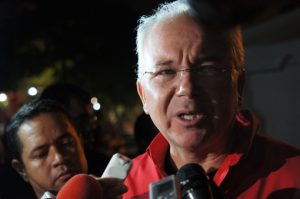
Venezuelan Foreign Minister Nicolás Maduro said Tuesday he could not guarantee the supply of oil to the United States after the Obama administration sanctioned Venezuelan state oil firm PDVSA over its dealings with Iran's energy sector. Venezuela exports one million barrels of oil per day to the United States, which amounts to 10 percent of U.S. imports. The Chávez administration threatened to cut exports in the past, but did not do so.
Colombia’s Senate Passes Victims Law
The Victims Law, which would provide a system of state reparations and means to recover illegally usurped land to victims of the country’s civil conflict, passed Colombia’s Senate. The House and Senate versions must now be reconciled. La Silla Vacía outlines the main points that require clarification before the Colombian Congress decides to approve the legislation.
LatAm, Asia Still Leading the Way on Global Econ Recovery
The UN’s mid-year update to the World Economic Situation and Prospects Report found that Asia and Latin America continue to aid a global economy on the mend. “The strong recovery continues to be led by the large emerging economies in Asia and Latin America, particularly China, India, and Brazil,” according to the report. However, the survey also warns of potential bumps in the road for these growth economies: “[C]oncerns include persistently rising inflation and emerging domestic asset price bubbles, fuelled by large capital inflows and related upward pressure on their exchange rates.”
Latinos Like Mobile
In February, the Pew Hispanic Center released a report finding that Latinos were less likely than non-Hispanic whites to use the internet, have a home broadband connection, or own a cell phone. A new study by the Hispanic Institute, however, found that English-speaking Hispanics have “emerged as the most avid users of wireless services,” and that they are more likely than non-Hispanics to own a cell phone, send text messages, and use a greater variety of mobile features.
![]() |
The United States announced new sanctions on Tuesday against Venezuela’s state oil company PDVSA and six other foreign oil and shipping firms that trade with Iran. Deputy Secretary of State James Steinberg said that sanctioned companies “engaged in activities related to the supply of refined petroleum products to Iran” in breach of an existing U.S. ban. PDVSA delivered at least two cargoes of refined petroleum products worth about $50 million to Iran between December 2010 and March 2011.
Sanctioned companies will not be allowed to access U.S. government contracts, import/export financing and export licenses for sensitive technology, but do not affect the companies’ sale of oil to the U.S. or the activities of its subsidiaries. According to the State Department, the sanctions are aimed at tightening Iran’s gasoline supplies, which will undoubtedly have a ripple effect on the energy sector in the Islamic Republic.
The other six sanctioned companies include Tanker Pacific of Singapore, Ofer Brothers Group of Israel, Associated Shipbroking of Monaco, Petrochemical Commercial Company International of Jersey and Iran, the Royal Oyster Group of the United Arab Emirates, and Speedy Ship of the United Arab Emirates and Iran.
The State Department announced a separate set of sanctions, also on Tuesday, directed at 16 companies and individuals in China, Iran, North Korea, and Syria involved in nuclear proliferation activities and development of weapons of mass destruction.
![]() |
President of Uruguay José Mujica met Venezuelan President Hugo Chávez in the presidential palace this morning during his first official visit to Caracas. Venezuelan Foreign Minister Nicolás Maduro received Mujica on Tuesday afternoon. Luis Almagro, foreign minister of Uruguay, and Roberto Kreimerman, minister of industry, accompanied Mujica.
Almagro said the two leaders planned to discuss the sale of crude petroleum to Uruguay as well as cooperation between the state Administración Nacional de Combustibles, Alcohol y Portland (Ancap) and Petróleos de Venezuela (Pdvsa). Raúl Sendic, future president of ANCAP, said the leaders would discuss the possibility of Venezuelan investment in a gasoline storage facility in the Nueva Palmira region.
Mujica also sought to secure more business for Uruguayan exports during the trip. Last year, Venezuela purchased $186 million of Uruguayan goods, mostly agricultural products, while Uruguay bought $520 million of Venezuelan oil.
![]() |
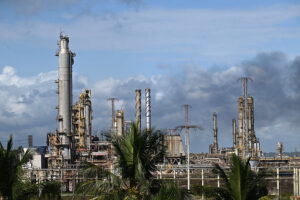
Venezuela’s state-owned oil company PDVSA will have to import at least six shipments of gasoline and other refined petroleum products to meet local demand due to production stoppages at key local refineries. Reports from local sources at Venezuela’s largest national refineries, Amuay and Cardón, on the Paraguaná peninsula, indicate that technical problems coupled with scheduled maintenance-related stoppages have paralyzed output and contributed to supply shortages to the local market.
Gasoline in Venezuela is the cheapest in the world, costing around $.04 per liter. This most recent news comes amid reports that President Chávez and his economic cabinet are considering a hike in gas prices, which have remained unchanged in recent years despite the region’s highest inflation in other sectors of the economy. Reports also indicate that the government has begun restricting gasoline sales to Colombian motorists who cross the border to fill their tanks.
The last time the Venezuelan government proposed raising gasoline prices, in 1989 during the administration of then-President Carlos Andrés Pérez, it triggered a series of bloody protests in Caracas that ultimately caused the death of up to 3,000 people.
AQ's coverage and post-trip analysis of the President's May 2-4 visit.