



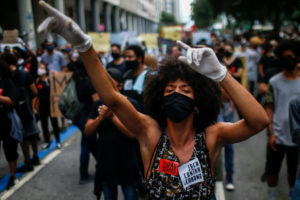
Why America’s Protests Resonate So Deeply in Brazil
A shared legacy of racism is under the spotlight in both countries, the author writes

My Struggles as a Black American in the Dominican Republic
When I lived in the Dominican Republic, there was a point when the jeers from the streets, shouts of “Arréglate ese pelo!” (Fix that hair!) and mocking gestures about my prominent pajón (afro) became too much to deal with. In a country of complex racial dynamics, where straightened hair is a social currency and billboards … Read more
[i]AQ[/i] Q&A: Judith Morrison on Race and Ethnicity
Judith Morrison, AQ author and senior advisor at the gender and diversity unit of the Inter-American Development Bank (IDB), speaks with Americas Quarterly about the importance of accurately integrating racial and ethnic populations into data collection. The methods for tabulating race and ethnicity vary widely between national censuses and household surveys, especially since some countries … Read more

PUBLISHED BY AMERICAS SOCIETY/ COUNCIL OF THE AMERICAS
680 Park Avenue
New York, NY 10065
Phone: (212) 249-8950