



This article is adapted from AQ’s special report on the Trump Doctrine
Bad Bunny’s halftime show at Super Bowl LX on February 8 is just around the corner. His selection to headline the United States’ most-watched annual sporting and cultural event caused quite a controversy as soon as it was announced. Today, we examine the music of Benito Ocasio, not to reopen the debate, but to explore this influential artist’s work.
I will begin by highlighting artistic contradictions that make his songs compelling. In both vocal delivery and arrangements, Bad Bunny’s music remains consistently—and confidently—understated. This creates a captivating contrast with the torrential, melancholy imagination of his lyrics.
That self-confidence also defines his artistic persona, which creates a contrast with the many heartbreak songs in his repertoire. How can he maintain his swagger after being dumped by so many women? (I don’t know if this applies to Benito the man, just Bad Bunny the singer).
His music often sounds as if you’re listening to the instruments through a magnifying glass, a common approach among musicians of his generation who grew up with easy access to digital musical tools. This sharpens our focus on the tiny sonic details and the singer’s conversational, intimate voice. He consistently invites us to share his belief that the words and musical gestures we hear are deserving of our attention.
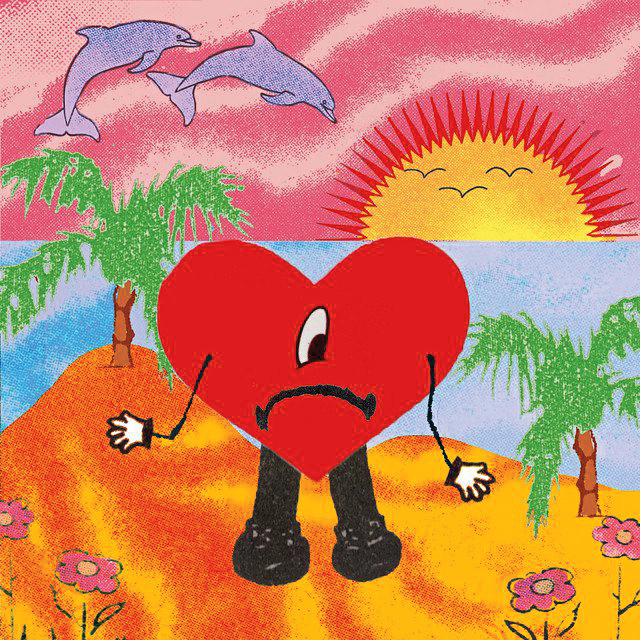
In the dreamy opening section of the sunny “Me fui de vacaciones,” the singer croons over a shimmering electronic organ. This later shifts to a pan-Caribbean reggae beat featuring a melodious bass line and backbeat guitar, with a steel drum solo after the first vocal stanza. As the song progresses, we hear moments when various instruments pause, leaving the voice alone with the bass or keyboards. These pauses in the musical texture add an important element of unpredictability to Bad Bunny’s style.
Me fui de vacaciones
Bad Bunny
Many of his roughly 140 officially released songs follow a similar pattern: an introductory section with the voice over a delicate and sometimes delightfully idiosyncratic accompaniment, followed a few seconds later by the start of the beat, which is often, but not always, the very popular reggaeton.
“LO QUE LE PASÓ A HAWAii,” a politically charged song warning of the destructive, homogenizing power of empire, urges Boricuas to hold on to their identity (including the flag and the lelolai musical tradition), lest the dilution of local culture that hap.pened to Hawaii after it became a U.S. state happen to their island (Puerto Rico is currently not a state, but a territory of the U.S.). The characteristic musical breaks are exaggerated at several points, making it sound like someone suddenly hit the “stop” button. The rhythm that begins after the introduction features the sound of the traditional cuatro, Puerto Rico’s national instrument. The jarring interruptions, especially the last one, add urgency to the song’s messages about exile and national identity.

LO QUE LE PASÓ A HAWAii
Bad Bunny
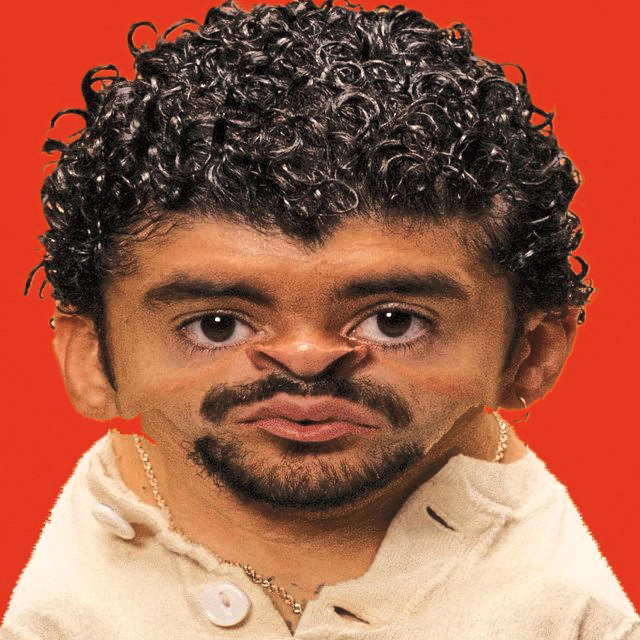
The introduction to the heartbreak song “PIToRRO de COCO” is preceded by a brief traditional jíbaro rhythm that returns as the tune progresses, and the singer buries his sorrows in the titular Puerto Rican drink. The faint sound of bells that closes the song is perhaps a reference to his thwarted desire to marry the woman he now remembers. Over the course of “PIToRRO…” we can hear Bad Bunny’s crooning vocal style gradually break into a fuller singing voice, which will be on full display in the similarly heartbroken “BAILE INoLVIDABLE.” Another unexplained stop separates the introduction from the rest of the song, a jazzy salsa dura that pays homage to the superstar Héctor Lavoe (Bad Bunny’s suit in the performance of “BAILE…” in the SNL 50th anniversary concert seems to have been inspired by his late compatriot’s outfits).
PIToRRO de COCO
Bad Bunny
Bad Bunny’s understatement is confident. If he croons, it’s not because he lacks the vocal ability, but because he is sure that particular vocal sound is exactly what he wants to do and what works best for that song. This confidence makes the songs focused and intentional and, when it clashes with the vulnerability of many love songs, creates a blend that is irresistible to his countless fans. Just a few years into a meteoric career, we can see that, alongside hits with billions of plays, the “less popular” songs in this accompanying selection have play counts only in the hundreds of millions.
Listen to this AQ Playlist on Spotify.
ABOUT THE AUTHOR
Sebastián Zubieta
Reading Time: 3 minutesZubieta is music director at Americas Society and a composer and conductor who has taught music in Argentina and the U.S. He has conducted early and contemporary vocal music and presented his compositions throughout the region.
The Many Facets of Contemporary Tango
AQ’s music columnist highlights a mix of tracks showcasing the classic genre's modern sounds.