


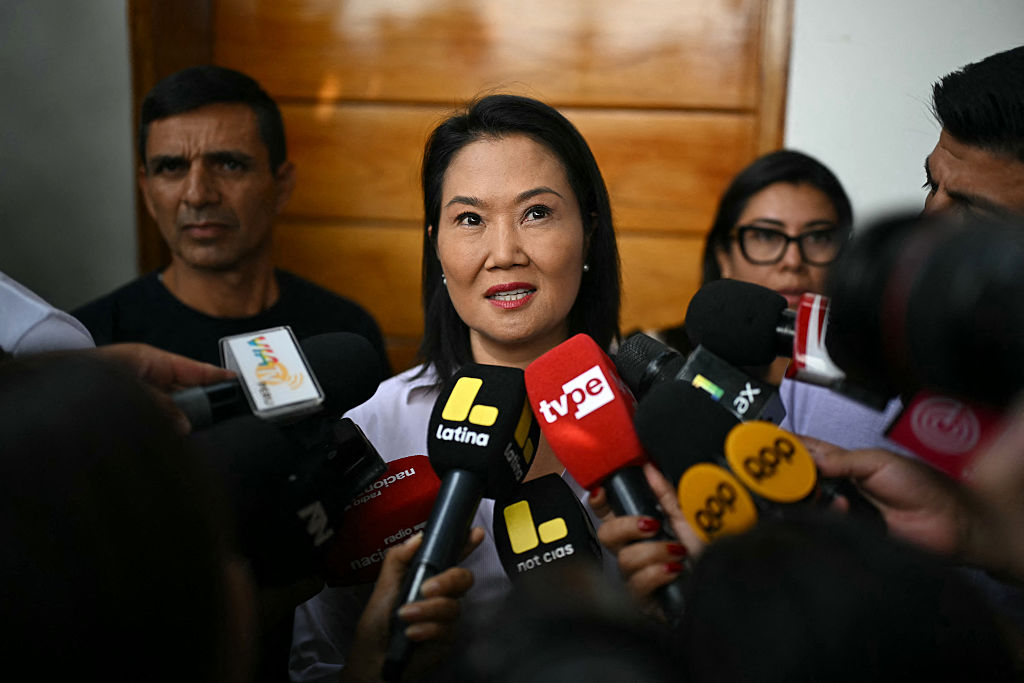
It will be several weeks before queried ballots are reviewed and the result becomes official, but it is clear that, on her fourth attempt, Keiko Fujimori has been elected as Peru’s next president. A conservative, she has won by less than 1% over her runoff rival Roberto Sánchez, a left-winger. It is the third successive presidential election in Peru decided by such a narrow margin. She will inherit a country divided not just between left and right but also regionally. It is also one whose institutions have been weakened in part by her own party’s doing.
Sánchez aroused fears of political and economic instability. Fujimori poses different risks, but also offers economic opportunities. Her victory guarantees the continuation of the market-led economic framework put in place by her father, Alberto, in the 1990s. This has served Peru well. Over that period it has boasted one of the fastest-growing economies in Latin America. The sol is one of the region’s most stable currencies. Keiko promises to put technocrats in charge of the economy. Luis Carranza, the likely economy minister, held that post for almost three years between 2006 and 2009 when Alan García was president. The new government proposes to cut regulations to encourage informal businesses to formalize. It will doubtless try to unblock large mining projects held up by red tape and local opposition.
Business can also expect more stability, after 10 years in which Peru has had eight presidents and 21 prime ministers. In the past five years alone, it has seen more than 170 ministers and 15 interior ministers. In other words, for most practical purposes the country has lacked a national government. Power has leached to Congress, to the judiciary, to the regions and to criminal organizations, ranging from illegal miners to extortion gangs.
So it is welcome that Fujimori has promised “order.” Her Popular Force party will have 22 of the 60 seats in Peru’s newly restored Senate, enough to block impeachment. But the first big question is what kind of order Fujimori wants: Authoritarian or democratic? She has said that she wants “to govern like my father”. He ruled for 10 years as an autocrat. He won the lasting gratitude of many Peruvians by defeating hyperinflation and the Maoist terrorism of the Shining Path but the hostility of many others because of the human rights abuses and corruption under his rule.
Unlike her father, Keiko Fujimori formed a political party. Indeed, Fuerza Popular can claim to be Peru’s only real party. Its critics claim it is a mafia, linked to private interests. But that applies, in part, to most of the parties in the outgoing Congress, of the left as well as the right. The problem is that if she governs as she has led her party, that will be a formula for conflict and regress.
Smarting from narrow defeat in 2016, she set out to make it impossible for her opponent, Pedro Pablo Kuczynski, to govern. She used her control of Congress to destructive effect, reversing a promising—and vital—education reform, ousting a reformist minister and gutting a regulator set up to require new private universities to adhere to minimum standards. More recently, Fuerza Popular has voted to roll back measures intended to fight organized crime, weakening the powers of prosecutors. That was in part a response to the persecution Fujimori suffered from a politicized judiciary, which included 17 months of imprisonment on charges that were eventually dropped.
The second big question is whether as president Keiko Fujimori will seek revenge, or the “reconciliation” she has more recently promised. Political control over the judiciary has passed to her side. If she wants to be an effective president in such a polarized country, she should make a real effort to govern inclusively. That means appointing respected independents to key jobs, such as the justice and interior ministries. She rightly stresses the need to improve security. But the police need reform, not the unconditional support for police violence that some of her advisers promote. Those in the private sector inclined to cheer Fujimori unconditionally should note that lasting prosperity requires strong institutions and the rule of law.
Fujimori will have no honeymoon. Partly because of Peru’s political fragmentation, only 11% of the electorate voted for her in the election’s first round. Her first task will be to establish her legitimacy after such a narrow victory and a protracted count in which Sánchez was ahead for a period. There is no reason to believe Sánchez’s claims of fraud, or calls for a recount, just as there wasn’t when Keiko Fujimori made the same claims after she was defeated by 44,000 votes by Pedro Castillo in 2021. The count was slow because the system is laboriously guarantee-laden, with each tally sheet having to be taken physically to the electoral authority.
She will face immediate challenges, notably the likely arrival of a strong El Niño weather system, which usually involves destructive flooding on Peru’s Pacific coast and drought in the southern Andes. That matters more because of an increase in poverty during the pandemic that has not yet been reversed. The left is likely to take to the streets. Rather than repress, she should listen. The southern Andes, the poorest and most indigenous part of Peru, voted heavily for Sánchez, as it did for Castillo. It needs investment in infrastructure and better public services and not the racist contempt it receives from some in Lima.
This was an election that the right should have won easily. Castillo’s presidency was disastrous, ending with his attempt at a self-coup in 2022. The issues that most concern Peruvians now are crime and economic growth, and as elsewhere in Latin America, these tend to favor the right. That the left almost won is tribute to Fujimori’s record and the continuing strength of anti-Fujimorismo. It is now her job to dispel this.
ABOUT THE AUTHOR
Michael Reid
Reading Time: 4 minutesReid is an author and journalist. His books include “Forgotten Continent: A History of the new Latin America”.

Peru’s Chaotic Election — and Some Reasons for Hope
While the country's politics remain in poor shape, the June 7 runoff offers a new opportunity to rethink the future.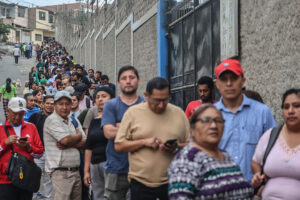
A New Test for Peru’s Economic Resilience
A runoff between Fujimori and Sánchez, if confirmed, will put the country’s famous macroeconomic stability at risk, a former finance minister writes.