


This article is adapted from AQ’s special report on Latin America’s space race
In the Americas, opera has been thriving since at least 1701, when Tomás de Torrejón y Velasco premiered La púrpura de la rosa, in Lima, an opera still performed around the world. The piece, with libretto by Pedro Calderón de la Barca, was commissioned to celebrate the 18th birthday of King Philip V and his first year on the Spanish throne. A decade later, Manuel de Sumaya, the most important Baroque composer born in New Spain, premiered La parténope in Mexico City. Both follow that era’s predilection for pseudo-mythological and pastoral settings and were the first operas written in the Western Hemisphere.
Not far from Lima, but worlds apart from the Spanish colonial cities, the religious opera San Ignacio was composed in the 1720s in the Jesuit missions of Chiquitos, in the Bolivian lowlands, almost certainly by Jesuits Domenico Zipoli and Martin Schmid, possibly alongside local composers. It was performed across the missions and probably in cities as well, and later entered the population’s folk music repertoire after the expulsion of the Jesuits.
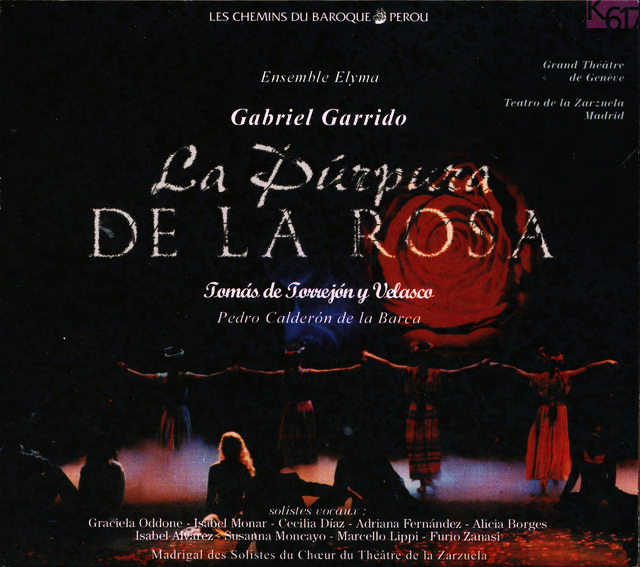
La púrpura rosa
by Tomás de Torrejón y Velasco
Opera, with its combination of music, poetry, narrative, stagecraft and dance, has never been cheap to produce, so a solid base of patronage and a willing public are necessary for its existence (except in the missional context). We know that the genre and its Spanish variety, zarzuela, were extremely popular in many of the large Viceroyal cities throughout the 1700s, but, as with Sumaya’s opera, the scores of most locally composed works were lost, so we don’t know exactly what local opera sounded like.
French opera had remarkable popularity in the second half of the 1700s in Saint-Domingue and the other Caribbean colonies, starting in Cap-Haïtien (then Cap-Français), where a theater company was founded in the 1740s. The Comédie du Cap, which was the center of the city’s social life, presented hundreds of operas in its 1,500-seat theater until it was destroyed in 1793 during the early battles of the Haitian Revolution. While Jean-Jacques Rousseau’s Le Devin du Village was a Caribbean favorite, equally popular was its Creole parody, featuring Afro-Haitian elements such as popular dances in place of French court dances or lyrics in Kreyol. The stage activity continued through the revolution and the reign of Henry I, but mounting political instability limited further development for decades, and very few items from the theater’s musical archives survive.
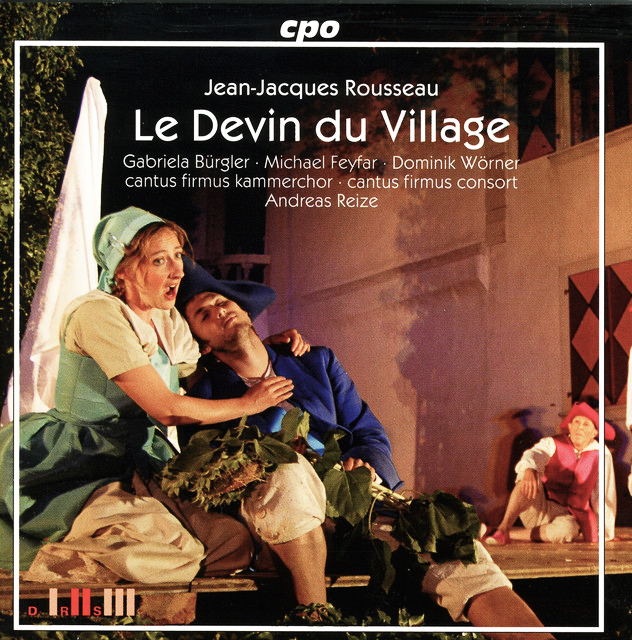
Le Devin du Village
by Jean-Jacques Rousseau
Italian opera began to arrive in theaters along the Atlantic shore, from Recife to Buenos Aires, in the early 19th century, brought by traveling companies, many of which would settle in the American cities and create the musical ecosystem that propelled musical life in the newly independent countries. In 1823, Gioachino Rossini’s Il barbiere di Siviglia was the first complete opera performed in Buenos Aires, where the genre continues to flourish to this day, anchored by the world-famous Teatro Colón.
The first half-century of independence was a turbulent time for most young Latin American republics, but as the new nations stabilized, the fervor for opera continued to grow. Creole composers started to professionalize, with many starting their training in institutions founded by earlier musical entrepreneurs and continuing their studies in Italy, Germany or France. Some of their works tell stories set in the Americas, such as romances between Indigenous and European characters or heroic tales from various independence wars, while the music is squarely in the European style.
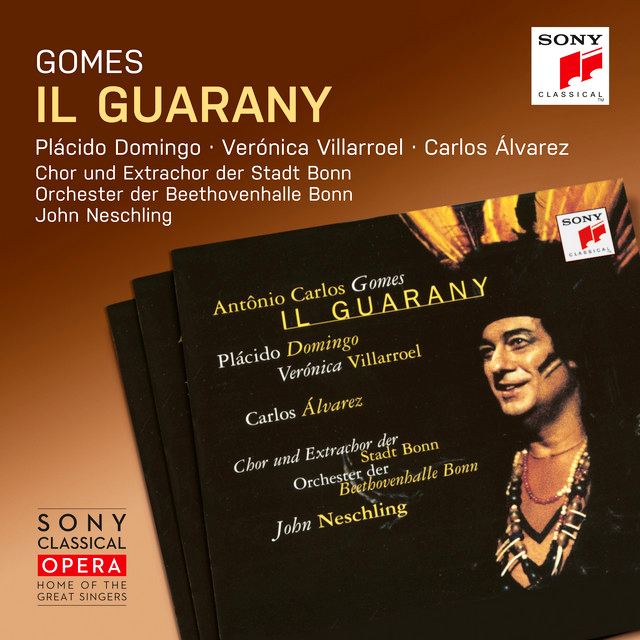
Il Guarany
by Antônio Carlos Gomez
The first American composer to achieve recognition in Europe was the Brazilian Antônio Carlos Gomes with Il Guarany, a smashing success in Milan’s La Scala in 1870. Set near Rio in the 1560s, it tells of the love affair between a Guaraní prince and the daughter of a Portuguese nobleman. The score, bearing no resemblance to any form of local Brazilian music, is full of beautiful melodies and masterfully written for the orchestra. The practice of including local musical elements, glimpsed in Haiti in the 1790s, did not become widespread among New World composers until the 20th century.
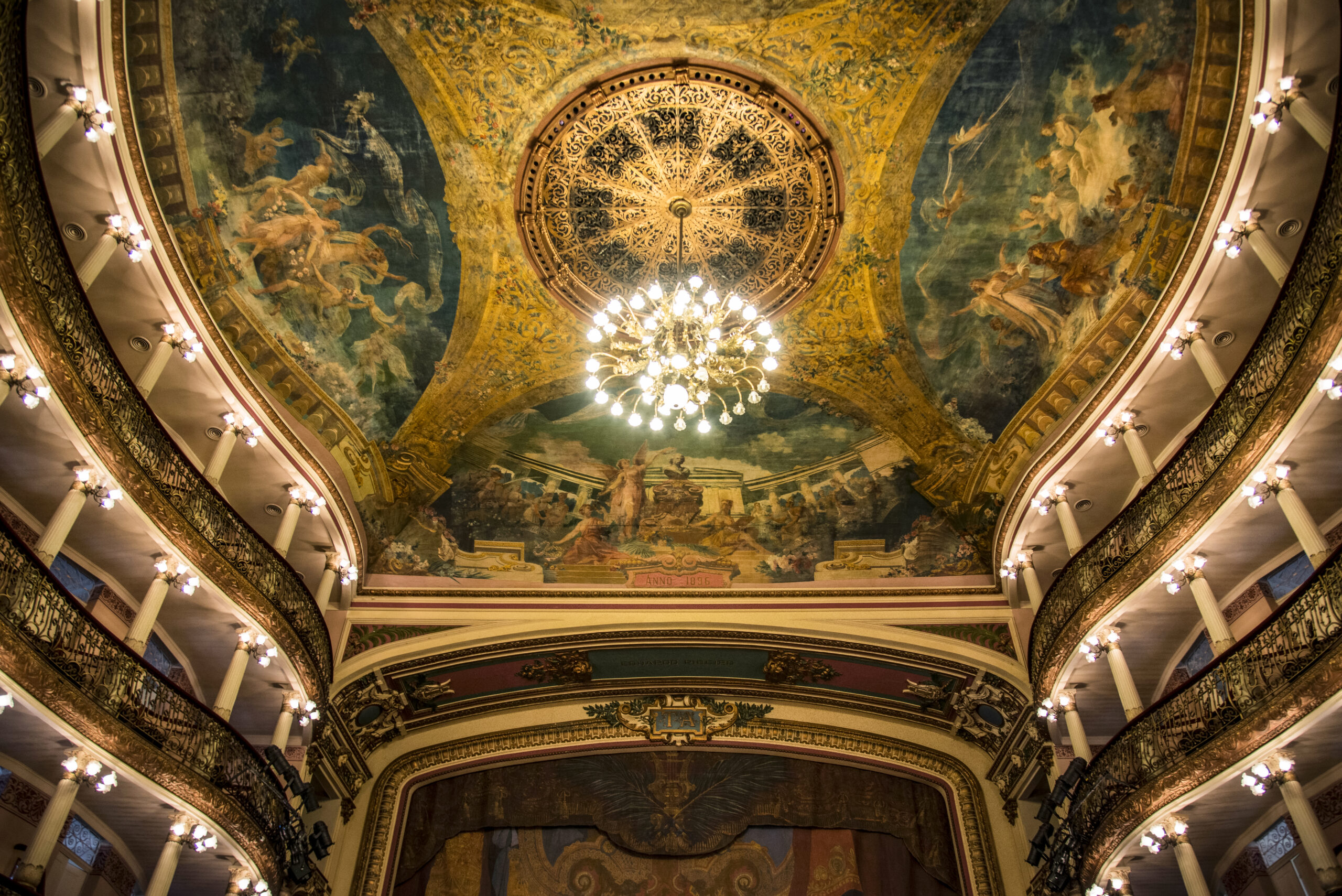
The waves of European immigrants in the 1800s fueled the construction of great metropolitan opera houses like Teatro Colón, Teatro Degollado in Guadalajara, the Municipal in Santiago, and the Amazonas in Manaus, as well as dozens of smaller theaters scattered across the continent. The creation of operas in the region surged in the last century and continued into the 21st, but that is a story for a future column.
Our playlist includes examples of some of the works mentioned, plus a jewel of an exoticist opera by the most French of Venezuelan composers, Reynaldo Hahn (1874-1957).
ABOUT THE AUTHOR
Sebastián Zubieta
Reading Time: 4 minutesZubieta is music director at Americas Society and a composer and conductor who has taught music in Argentina and the U.S. He has conducted early and contemporary vocal music and presented his compositions throughout the region.
A Journey Through the Rhythms of Carnival
From samba to soca and candombe, AQ’s music columnist traces Carnival season’s sounds across the hemisphere.
Exploring Bad Bunny’s Oeuvre
AQ’s music columnist examines the artist’s body of work ahead of his Super Bowl performance.