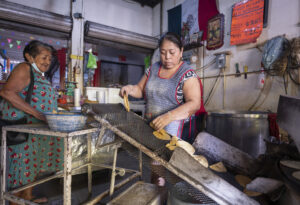




This article is adapted from AQ’s special report on Latin America’s demographic transformation

When I attended Columbia University Graduate School of Business in New York in the 1970s, the percentage of women MBA students was only about 5-10%. Upon graduation, Citibank hired me as one of just a handful of women international trainees and sent me to Venezuela. People in Caracas were wonderful, but there were very few women in the workforce—and the men seemed a bit mystified by my life choices, asking me if I wouldn’t have preferred to stay in the U.S., get married and have children.
The truth is, all of our countries have changed a lot over the last 50-plus years—for the better, when it comes to opportunities for women. Just as in the United States, women in Latin America now account for a majority of students at universities. Today, about six in 10 women of college age in the region are enrolled in higher education.
More women have also entered the workforce, giving them more independence—which has resulted in later marriages and delays in having children. This is also a huge generational change: In 1980, only 30-40% of the workforce were women and the average marriage age was between 22-23. By 2024, 50-55% of the workforce were women. The average age for marriage was only a bit higher on average, although in certain urban areas in countries like Chile and Argentina, women often delay marriage to their late 20s and 30s or co-habit with no children at all.
I believe this is a permanent shift, based on conversations I have in my travels throughout Latin America today. Women today want more choice and balance—a family, but generally a smaller one, as well as a successful career. The implications are enormous for each country both in social terms and economic ones—as this issue of AQ makes clear.
So what can we do to keep women in the workforce? First and foremost is affordable, high-quality daycare for children. Women need to know that their children are well taken care of, and in a safe learning environment. As society shifts, this is critical. Primary education must also be improved. Finally, there should be a level playing field in the workplace for women, free of harassment. Women don’t want special treatment, just the same opportunities as their male counterparts.
If we can have and keep more women in the workforce trained for today’s economy, then we can surely manage the impact of lower birth rates.
ABOUT THE AUTHOR

Susan Segal
Reading Time: 2 minutesSegal is President and CEO of Americas Society and Council of the Americas.

The Gray Tide: Latin America’s Demographic Transformation
A perfect storm of plunging birth rates and rapidly aging populations will break over Latin America in coming decades. Is there a silver lining?
Latin America’s Demographic Transformation by the Numbers
A deeper look at the shift’s nuances and impact on pensions and day-to-day life