


This article has been updated.
CARACAS—After 19 consecutive quarters of moderate growth, Venezuela’s economy is showing signs of a remarkable breakthrough, with an expansion of some 12% now possible this year. The open question is whether this truly marks the start of a new era—or another short-lived rebound tied to oil and external conditions.
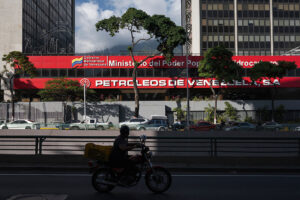
Recent developments in the oil sector explain much of the renewed optimism. Production has risen to more than 1 million barrels per day and is expected to keep increasing in the coming months, supported by joint ventures with Chevron, Repsol, Eni, and Maurel & Prom under flexible licensing arrangements. Since the January capture of former dictator Nicolás Maduro, exports to the U.S. have also recovered, averaging 329,500 bpd in recent months—up 192% from the 2025 average.
At the political level, interim President Delcy Rodríguez has pursued a strategy aimed at sustaining high output. The appointment of Paula Henao as Hydrocarbons Minister reinforces a pragmatic approach focused on operational stability and selective engagement with foreign partners.
This increase in oil activity is also reshaping foreign-currency flows, with knock-on effects on manufacturing, trade, and services. The recovery is already visible. Cement output rose 14% year-on-year in the first half of 2025, according to the Ministry of Industries and National Production, suggesting construction demand is beginning to recover after years of collapse. Oilfield service firms have also started recruiting engineers and technicians as projects move from negotiation to execution.
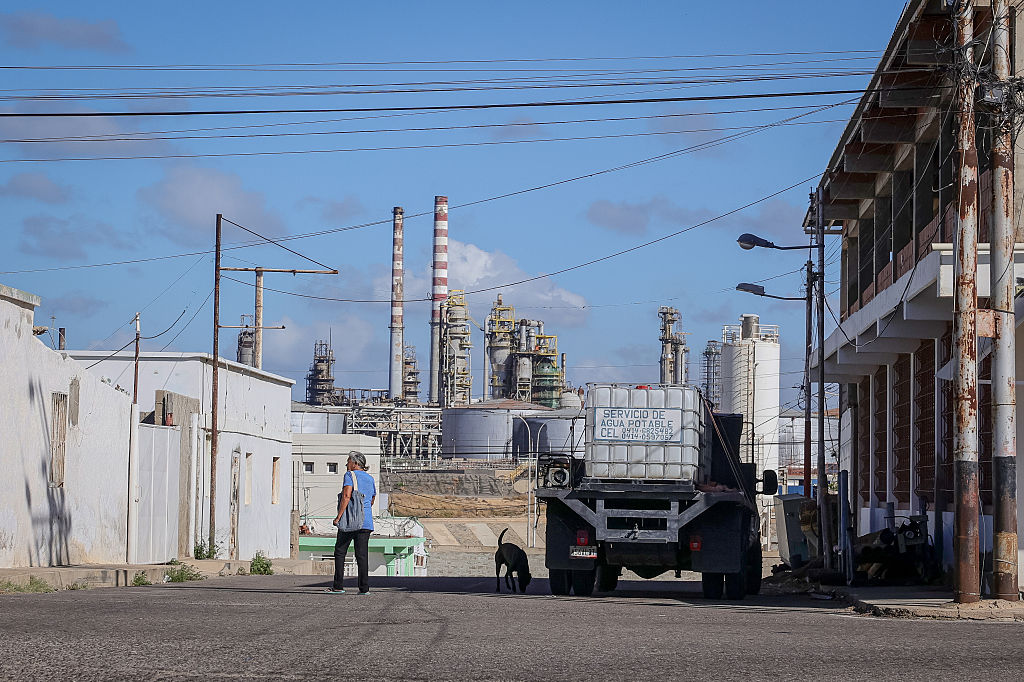
These projects will require roads, storage, pipelines, logistics, and other infrastructure. In a country where construction was among the sectors hardest hit during the 2014–2020 crisis, this creates a plausible channel through which oil can stimulate broader private investment and employment.
While these signs are encouraging, it remains unclear whether the recovery is transformational or temporary. More importantly, what reforms can be made at the legislative level to ensure sustainable conditions in the future?
Double-digit growth, triple-digit inflation
In 2025, Venezuela faced three contractionary pressures: declining external inflows, deterioration in the foreign-exchange market, and accelerating inflation. These compressed consumption, reduced imports, and squeezed business margins.
Our estimates point to 12.1% GDP growth for this year, with energy, manufacturing, trade, and construction as the main drivers. However, this reflects a recovery more than structural expansion. Deep gaps in infrastructure, financing, and productivity remain. Much of the increase in GDP reflects the use of idle capacity accumulated during years of contraction.
For businesses and households alike, the main barometer will be the foreign-exchange market. Higher oil revenues increase the supply of foreign currency through both official channels and private transactions linked to exports and energy services. According to our projections, Venezuela’s oil revenues could rise by 76.8% from 2025 levels, reaching $22.1 billion—the highest level since 2018.
This additional liquidity helps ease pressure on the parallel exchange rate and narrow the gap with the official rate. Convergence will not be immediate, but the trend points toward gradual stabilization. In highly dollarized economies like Venezuela’s, exchange-rate stability remains the main anchor for expectations and a key factor in disinflation.
Venezuela remains one of the world’s highest-inflation economies. Official data show prices of goods and services rose 475.3% in 2025, and although inflation slowed in February, annualized inflation remains above 600%. It is expected to close below 155% this year. While this would represent significant improvement, the pace of inflation is still likely to rank among the highest globally.
The expected slowdown in inflation reflects tighter monetary conditions and greater restraint in the monetary financing of fiscal deficits. Still, it would be misleading to attribute disinflation to a coherent anti-inflation program already being implemented by the central bank, BCV. Instead, the main driver is the oil channel: Higher revenues ease foreign-currency shortages, moderate devaluation expectations, and reduce the exchange-rate gap that shapes domestic prices.
From a private-sector perspective, 2026 may offer the most favorable macroeconomic environment in years: growth, increased access to foreign currency, lower exchange-rate volatility, and expanding demand. This could support greater investment and the reactivation of stalled projects.
But the limits of this recovery are clear. Improvements in the business environment will depend on progress in pending reforms: legal certainty, financial normalization, clearer rules for energy investment, trade openness, and institutional modernization. Without these changes, growth is likely to remain cyclical rather than sustained.
Political decisions
An early assessment of today’s Venezuela suggests that current growth reflects a rebound driven by oil and temporary external factors, rather than a structural transformation. Our country’s history offers a cautionary tale: Past windfalls were often absorbed through short-term spending and consumption rather than used to strengthen institutions, boost productivity or build lasting fiscal buffers. The result was a repeated pattern of temporary relief without structural change.
International experience shows that a different path is possible. Countries such as Norway used commodity booms to build fiscal buffers and reduce volatility. Venezuela now faces a similar choice. If the current rebound is treated as a temporary cash-flow improvement, the economy will remain trapped in a cycle of low productivity, high informality, and institutional weakness.
But if this window is used to improve the business climate, restore credibility, and enable non-oil investment, oil could become a bridge to more sustainable growth. That would, in turn, enable Venezuela to move into the third stage in the roadmap the Trump administration has designed: a democratic transition.
The outcome will depend less on oil prices than on policy decisions. Without reforms that strengthen macro stability and establish predictable rules, this year’s growth may be remembered as another temporary recovery.
There is a window of opportunity. The question is whether Rodríguez’s government is willing—and able—to go beyond a tactical opening. The most plausible scenario is a selective approach: enough reform to restore cash flow, but not enough to fully reshape the economy.
That tension is evident in recent legislation. The recently approved hydrocarbons law allows greater operational autonomy, reduces royalties from 33% to as low as 15%, and permits dispute resolution closer to international arbitration. A proposed mining law, initially approved in March but still pending further debate, would repeal 1999 legislation passed under late former President Hugo Chávez, extend concessions from 20 to 30 years, and open gold, diamonds, and rare earths to investment by domestic and foreign firms. It would also introduce international arbitration and revise tax treatment for mining projects.
Taken together, these changes are a meaningful first signal to foreign investors. But they do not fully resolve concerns over fiscal terms, contract stability, and institutional reliability. Some decisions are urgent in key areas. It’s clear that the country needs to rebuild its critical infrastructure, and the government should expand public-private partnerships, adopt a fiscal rule and a fiscal council, and begin talks to renegotiate the public debt. At the same time, authorities should work to restore central bank independence, allow greater currency convertibility, and gradually reduce reserve requirements.
Without further changes, Venezuela may become more investable—but not yet a sustainably fast-growing economy.
This article was updated to add details on additional economic reforms needed.
ABOUT THE AUTHOR

Asdrúbal Oliveros
Reading Time: 4 minutesOliveros is a Venezuelan economist and consultant. He was a partner and director of Ecoanalítica, a Caracas-based economic and financial advisory firm. He has worked as a consultant for multilateral organizations and as a professor at UCAB and UCV.

How Can Venezuela’s Opposition Regain Momentum?
Political organizations plan to reactivate the Democratic Unitary Platform. However, the most delicate challenge may be Machado's return.
Reinventing Venezuela’s Struggling Electricity Sector
Having enough electricity is key to the nation’s post-Maduro recovery. Two experts offer a way forward.