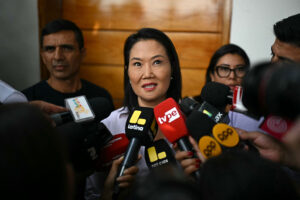



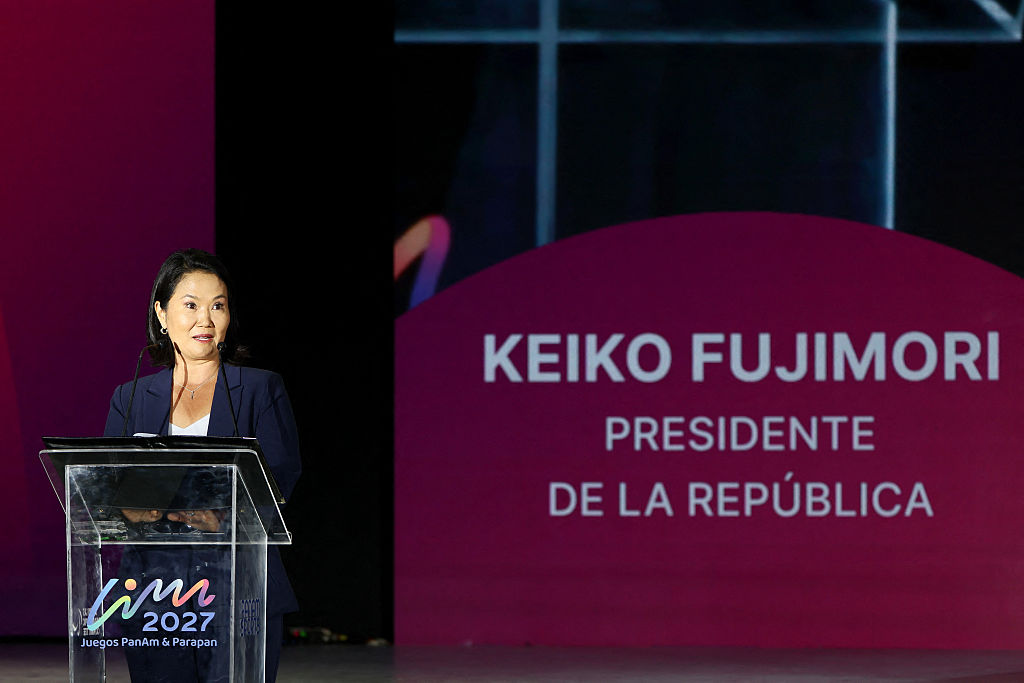
LIMA—Keiko Fujimori took office on July 28 with something no Peruvian president has enjoyed in a decade: a functioning economy and the benefit of the doubt. Polls have put her approval between 53% and 60%, with disapproval near 30%. After eight presidents in 10 years, Peruvians are prepared to be optimistic on modest evidence.
Private investment is posting double-digit growth, domestic investor confidence is recovering, formal job creation is picking up, and copper and gold are trading at levels that comfortably support any Peruvian budget. Economic growth is running near 3.5%, roughly 50% above the regional average. Julio Velarde has been reappointed to a fifth term at the central bank, which he has run since 2006, and the finance ministry went to a respected technocrat, Elmer Cuba. Inflation closed August at 4.4%, above the target range, pushed by imported oil and the first supply effects of El Niño, and the central bank expects it back within the range sometime next year. The budget bill sent to Congress is austere by first-year government standards.
Foreign investors have read all of this as policy continuity, and about the macroeconomics they are right. What that view misses is that Peru’s macroeconomic strength has coexisted for decades with a state that cannot pipe drinkable water into a house, police a neighborhood, or finish a subway line. That gap has been eating away at the country’s politics, and closing it is what President Fujimori was elected to do.
Peru’s constitution compresses an extraordinary amount of decision-making into a new government’s first four weeks. The general policy statement, the macroeconomic framework, and the budget bill all landed between July 28 and the end of August, along with a request for broad delegated legislative powers that the government chose to add. That agenda offers a more honest portrait of what an administration intends to do than any poll can.
The 2027 budget does not grow in inflation-adjusted terms, and most of the revenue windfall goes to current expenditure, reflecting the legacy of years of congressional spending initiatives and executive weakness. The structural fiscal balance, which strips out the commodity cycle, deteriorates from 2.1% to 2.3% of potential output next year, and convergence to the 1% fiscal rule is pushed from 2029 to 2030.
The debt ceiling and deficit target
Three weeks before sending the budget, the finance ministry announced that it wants to raise the debt ceiling and loosen the medium-term deficit target. By regional standards, this is not fiscal irresponsibility. Peru’s public debt, at 30% of GDP, remains far below the Latin American average of about 75%. But the budget cannot reflect the new fiscal framework, because it must be drafted under the rules in force.
Peru’s actual fiscal stance will become visible only on November 30, the constitutional deadline for approving the budget, when it will presumably be voted on alongside the amendment to the fiscal rules.
The ministry wants additional spending room for a reason. In her inaugural address, the president raised the minimum wage by 15%, promised a compensating bonus to small firms that appears nowhere in the budget, doubled the non-contributory old-age pension from 350 to 700 soles every two months, and committed to four new metro lines in Lima, among other pledges. Public finances cannot absorb all these requests, and containing the political pressure is the first real test of whether orthodox fiscal management is back in Peru.
Supply shocks are meanwhile gaining intensity. On August 28, Peru’s oceanographic committee put the odds of an extraordinary coastal El Niño between September and January at 62% or higher, the first time since 1997 that it has made the most severe category its base scenario. NOAA puts the odds of a very strong global event this quarter above 90%. Oil, meanwhile, is back near $100 a barrel after this week’s exchange of strikes between the U.S. and Iran, with no negotiations in sight—tough news for Peru, a net fuel importer.
El Niño economic costs are estimated at 0.6 to 0.9 points of growth at a minimum, with further inflationary pressure. Peru has been through this twice in recent years and struggled to ameliorate the effects of El Niño, in good part because of the incompetence or corruption of regional and local authorities. Some 536 river points still await dredging, and the government has acknowledged that by December 15 it will have acted on only 30% of 2,000 critical flooding points, just as torrential rains begin in the north.
The challenge of security
Security is where the administration is most exposed. Extortion and contract killing dominated the campaign, and only 15% of Peruvians tell pollsters they have real confidence that the government will bring crime down. The budget moves money toward justice and defense, while the interior function, the one that runs the police, falls 3.3%. In Congress, there are already calls to remove police chiefs as the death toll keeps rising, and discussions are on the table to give the armed forces a larger role and harden policy in dealing with crime.
Then comes October 4, when Peruvians elect 13,148 regional and municipal authorities. Most of the jurisdictions that sit on top of the country’s copper, gold and gas voted against Fujimori in June, when she won the runoff by roughly 50,000 votes out of more than 18 million. Illegal gold now generates export earnings comparable to legal mining and finances candidacies openly. A hostile map of governors would turn every permitting decision of the next five years into a negotiation, and into a potential source of social conflict.
Fujimori will negotiate from a weaker position than the polls suggest. Her party, Fuerza Popular, holds 22 of 60 seats in the restored Senate and 40 of 130 in the Chamber of Deputies, the largest bloc in each and a majority in neither. Her request for delegated powers asks for 120 days across eight subjects, from security to tax and labor reform, and 66 distinct authorizations. It must clear both chambers. Governing by delegation is legal and, in Peru, normal for a new administration, but it requires votes the government does not yet have. The next few weeks will show whether her party’s legislative experience is enough to secure these powers.
Peru’s fundamentals have bought this government time that its predecessors never had. But high metal prices do not dredge rivers, and a credible central bank does not staff a police station. Those are jobs for a state that has not managed them in decades, and the dates are already set.
Peruvians will find out soon enough whether this government used this window of opportunity to rebuild the state’s capacity to deliver—or spent it defending the room to spend.
ABOUT THE AUTHOR
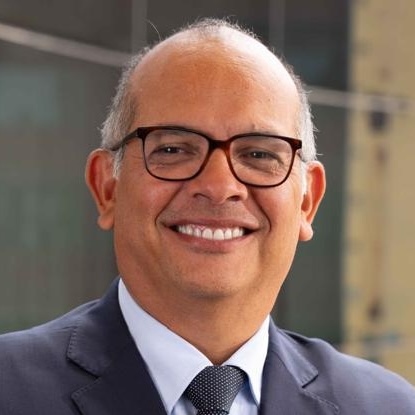
Luis Miguel Castilla
Reading Time: 4 minutesCastilla is president of the Hágase Instituto and a senior visiting fellow at London School of Economics. He previously served as Peru’s minister of economy and finance, and ambassador to the United States.

El Niño Will Challenge the New Andean Right
Presidents-elect Keiko Fujimori and Abelardo De La Espriella face risks of disaster and instability in their first months in office.
AQ Podcast | Keiko Fujimori Takes Power. Can She Keep It?
Peru’s Former Finance Minister on what Keiko Fujimori's presidency means for the country’s stability, economy, and its place between Washington and Beijing.