



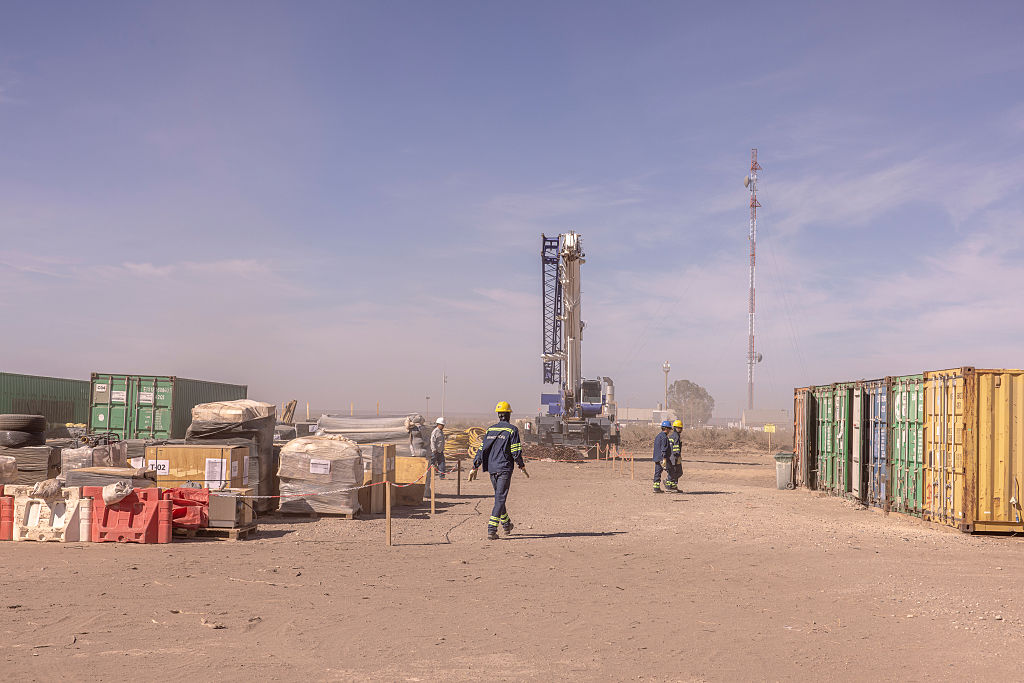
Almost 60 years ago, as Alaska was beginning an oil boom, local authorities received nearly $900 million from a single lease sale on the North Slope—roughly six times the state’s annual budget at the time. Auspiciously for some, the money went to roads, schools and other regional necessities. But some years later, as the funds started to run out, the state’s Governor Jay Hammond (1974-1982) called them “flamboyant expenditures.”
Chastened by the rapid depletion of the funds, Alaskans did something almost no resource-rich jurisdiction had done before: In November 1976 they amended their constitution by referendum to remove a share of future royalties from the legislature’s reach. They did so to prepare for a bonanza, and as oil began flowing through the famous Trans-Alaska pipeline, the first deposit was made to a newly created Alaska Permanent Fund on February 28, 1977. Today the fund holds more than $91 billion, supplies over half of the state’s unrestricted general revenue, and has paid an annual dividend to every resident since 1982.
What Alaska did can fittingly serve as a model to a nascent boom taking place today in Argentina. The country has the world’s second-largest shale gas and fourth-largest shale oil reserves, and along with Chile and Bolivia is at the center of the global energy transition as part of the so-called “Lithium Triangle.” Together, these resources could generate record annual exports in the next decade, as sector leaders recently estimated. These numbers may elicit expectations of a windfall, so the country now faces a question other nations have grappled with for years: how to avoid repeating the mistakes that have turned booms into lost opportunities.
Take the case of the country’s rising oil production. Argentina is expected to produce 1 million barrels per day (bpd) by the end of the year, a 26% increase compared with last year’s average of 793,000 bpd. In June alone, total output from the province of Neuquén, where the much-hyped Vaca Muerta basin is located, reached a record of 648,114 bpd, a 30.5% annual jump.
Additionally, lithium production reached about 11,987 tonnes in June, up roughly 59% year-over-year from about 7,536 tonnes in June 2025, according to INDEC mining production index data. Total 2025 production was 16,600 tonnes, up 56% over 2024, led by the provinces of Jujuy (57%), Catamarca (28%) and Salta (15%).
Still, it is little known that under a 1994 amendment to Argentina’s federal Constitution, the natural resources and the taxes derived from their exploitation belong to the provinces where they are located. In practical terms, the provinces, and not the federal government, collect and manage the royalties for exploiting these natural reserves. That distinction is relevant; regional governments will play a major role in deciding how to both manage future booms and avoid the “resource curse.”
An example to follow
The Alaska Permanent Fund exists today only because voters carved out a constitutional exception that a future legislature cannot unilaterally undo. And the Alaska Permanent Fund Corporation, a professional, arm’s-length entity created in 1980, has delivered an average annual real return of more than 6% since inception. Argentina—its provinces in particular—could take a page from this playbook.
So far, Argentina’s provinces have handled analogous windfalls very differently. Mendoza, the province with the longest-standing and most developed institutional framework, offers the clearest cautionary tale. Its Fondo para la Transformación y el Crecimiento (FTyC) was created in 1993 from a one-off $617 million payment the province received from the federal government to settle a decades-old dispute over underpaid hydrocarbon royalties.
For years, the fund extended subsidized credit to local producers at negative real interest rates, and its capital was steadily “liquefied”—from more than $1 billion at its peak to roughly $25 million today. On July 23, Governor Alfredo Cornejo signed a law dissolving the fund’s administering body altogether. Three decades of a resource fund ended in liquidation, not legacy—exactly the fate Hammond’s constitutional amendment was designed to make politically difficult.
Neuquén, Vaca Muerta’s main producing province, shows that Argentina can design something closer to Alaska’s model when it tries, but many caveats remain. In 2020, the state’s legislature created the Fondo Anticíclico de Estabilización y Desarrollo (FEDeN), funded by a share of monthly hydrocarbon export royalties. It is not entrenched in the provincial constitution, and its allocation can still be adjusted by ordinary budget law—a real vulnerability.
Neuquén’s monthly royalty collections from hydrocarbons alone stood at approximately $388.5 million in May, and the local authorities expect that figure to rise to $500 million once Argentina’s liquefied natural gas export infrastructure is fully developed in 2031. That would amount to roughly $6 billion annually.
Recent legislative changes have redirected these resources to cover the province’s foreign-currency public debt obligations instead of maintaining pure anticyclical savings. The fund, which has not been capitalized since 2023 and is frozen until December 2027, represents a reset opportunity to improve its reach and prevent a repeat of the current situation.
A path forward
Argentina’s resource-rich provinces face a defining choice: whether to use a stabilization fund to avoid the examples of Mendoza or Neuquén and their current capitalization delay. It would be a savvy decision to turn today’s windfall into lasting wealth.
The nation’s 1994 constitutional reform provides a way to reconcile current spending pressures with saving for the future. A Ley Convenio, an intergovernmental legal compact approved back then, offers provinces incentives to embark on major projects with 30 years of tax, customs, and foreign-exchange stability under the Régimen de Incentivo para Grandes Inversiones (RIGI), and to create a new generation of stabilization funds.
Until now, provinces have not used this legal framework, because in an environment of high inflation, recurrent crises, and weak federal credibility, long-term guarantees looked largely aspirational. Today’s sizable investment pipeline, harder budget constraints, and legally entrenched RIGI make it rational for provinces to engage, using the Ley Convenio to turn a volatile boom into a durable asset.
But the provinces should make their move. They should agree to place at least half of their commodities-derived royalties into permanent funds. The principal would be off-limits for routine political spending; only a professionally managed, arm’s-length institution could invest it for the benefit of future generations. In return, the federal government could deepen—or extend—the RIGI for projects in provinces that join the agreement.
Alaska offers the essential lesson. Resource wealth can be saved, invested, and made to outlast the resource itself. Argentina has the investment momentum, fiscal imperative, and constitutional tools to get this done. What it needs is coordination and an alignment of political will between the nation and the provinces. And it needs this soon, before it’s too late.
ABOUT THE AUTHOR

Conrado Tenaglia
Reading Time: 4 minutesTenaglia is a lawyer and former partner at Linklaters LLP. He was a 2025 visiting scholar at Harvard Law School.

Milei and Argentina’s Two-Speed Economy
The government is betting that improving living conditions will bolster Milei’s reelection chances, an expert writes.
Is Argentina Ready for a Copper Moment?
Vast reserves of the metal and nine mining projects under review represent a unique opportunity for the country and investors alike, two experts write.