BUENOS AIRES—Argentina today has a two-speed economy, one that defies easy simplification and may hold clues to the future of President Javier Milei.
On the fast track: Agriculture, long a source of strength but now joined by new sectors, surged 32.2% year on year last December, helping to drive overall growth of 4.4% for the year, according to INDEC, Argentina’s national statistics institute. The other stars are oil, up 13% last year thanks to the Vaca Muerta shale fields of Neuquén, while gas rose just 1.7%. Mining as a whole advanced 3.3%, with lithium production soaring more than 40% even as gold and silver declined.
In the slow lane: Public consumption declined 0.9% annually, while investment fell 11.6%. Private surveys indicate that between January and May of this year, consumer spending dropped 3%.
Unemployment has fallen slightly, from 8% to 7.8% over the past year, but the long-standing trend of weak formal job creation and rising informal employment has persisted. About 200,000 people shifted from formal private employment to informal jobs, which have remained stubbornly steady at around 40% of the country’s active population for most of the past two decades.
Inflation plummeted from 211% in 2023 to 31% in 2025 due to fiscal and monetary tightening, a trend expected to continue this year. Nonetheless, Argentina’s cost of living remains among the highest in the world.
Taken together, the data highlight an economy with brighter prospects ahead. In fact, private consultants and multilateral organizations forecast GDP growth of around 3% to 3.6% this year.
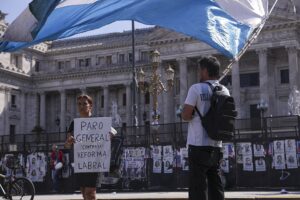
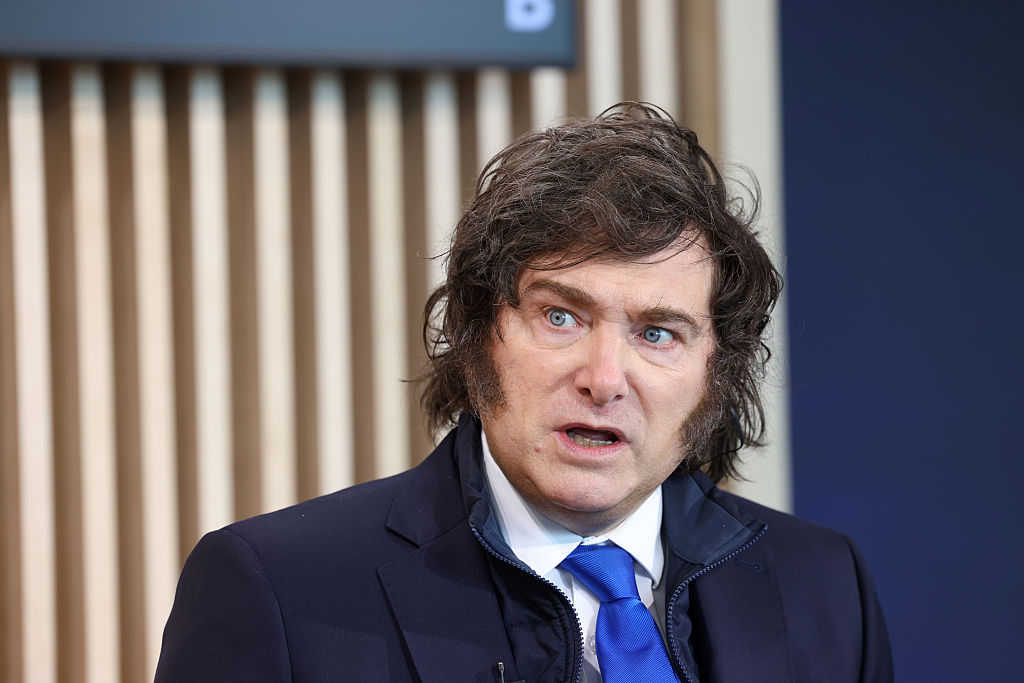
Yet many Argentines are still not feeling the benefits of growth in their daily lives. This problem, compounded by recent corruption allegations, has weighed on Milei’s popularity.
However, if the recovery manages to broaden and reach households more tangibly, the president could rebuild political capital in time for next year’s presidential election.
This mixed pattern has repeated itself elsewhere: Tax revenues have declined in real terms over the past nine months, forcing the government into deeper spending cuts to meet the annual fiscal surplus target of 1.4% pledged to the International Monetary Fund (IMF). Yet Argentina has also recently shifted from being an energy importer to a net exporter, a milestone made more significant by recent turmoil in the Middle East. Argentina moved from an energy deficit of $270 million in 2023 to a surplus of $7.8 billion in 2025, which could double by the end of this year.
That, in turn, has helped Milei shore up one of Argentina’s long-term weaknesses: a shortage of central bank (BCRA) reserves. Under pressure from the IMF, the government abandoned its initial stance of not accumulating reserves, and by midyear had already surpassed the $10 billion target of additional reserves set for the full year of 2026. The total now stands at about $49 billion, double its level in 2023.
In tandem, Argentine country risk has fallen from 1,900 basis points at the start of Milei’s administration to the current 400 points, allowing Argentina’s potential return to international debt markets. The last time the country sold bonds to international investors, under foreign law, was before the 2018–2019 crisis that marked the end of Mauricio Macri’s presidency. In the meantime, Milei opted for issuing in the local market and receiving loans from international banks backed by collateral from the World Bank and the IADB.
The path ahead
Milei believes these financial and economic cushions will help ease the path toward next year’s presidential elections, with fewer shocks than last year, when midterm elections triggered turmoil. At that time, leftist governor Axel Kicillof’s victory in the Buenos Aires provincial election sparked a financial crisis that was only contained through direct intervention by the U.S. Treasury at Donald Trump’s direction.
If Kicillof emerges as the main opposition candidate for president next year, Milei’s reelection prospects may improve, since independent voters could reject a figure so closely tied to the era of former presidents Cristina Fernández de Kirchner and Alberto Fernández.
As mentioned, recent corruption scandals involving government officials have surfaced, such as Milei’s chief of staff Manuel Adorni, who had to resign over allegations of illicit enrichment (he has denied wrongdoing). But so far, polls suggest these allegations appear secondary to voters more concerned with income and employment. Adorni was replaced by Diego Santilli, from the camp of former President Macri, who is considered a shrewd political figure.
Looking ahead, Argentina will continue to face a bumpy transition between two economic models: from a closed economy to one marked by openness, exports, and foreign direct investment. Export growth is already evident, but investment remains uncertain, as foreign companies demand unrestricted capital outflows and remain wary of Argentina’s deep political divide between libertarians and kirchneristas, those favoring the ideas of former President Néstor Kirchner and his wife, Cristina Fernández de Kirchner.
Between January and May of this year, Argentine exports reached $40.4 billion, an increase of 24.3% compared to the same period of 2025. The growth was driven by higher volumes (+15.7%) and better international prices (+7.5%). By contrast, foreign direct investment has been falling for a year, and although the projects mentioned promise a better outlook, the decline in the domestic market prevents any significant short-term change in this variable.
Real wages are below the levels at the start of Milei’s administration, largely due to hikes in public service tariffs and public transport fares that had been frozen under Alberto Fernández’s troubled presidency. Thus, there is an apparent contradiction between the general decline in the inflation rate and the drop in disposable income among middle- and lower-middle-class households.
Milei’s bet
Milei’s inner circle is betting on a supply-side stimulus to strengthen the economy and spur demand. At the same time, with a pragmatism absent in other areas, the government has increased social spending for the poorest households above the annual inflation rate of 33%, even as it cut public-sector wages, pensions, and infrastructure spending. As of 2025, the poverty rate stands at 28%, the lowest level in the last seven years.
The official recipe is clear: build investor confidence through sweeping deregulation carried out over the past two years. But history looms large, with Argentina’s ten sovereign defaults and, more recently, the disillusionment following Macri’s collapse.
Can Milei break Argentina’s inflation curse, entrenched since the 1970s and largely tamed elsewhere in Latin America (except Venezuela)? Given his particular personality and his electoral mandate, he will continue to play an all-or-nothing gamble.
ABOUT THE AUTHOR

Martín Kanenguiser
Reading Time: 4 minutesKanenguiser is an economic journalist and the author of several books including La Argentina en el Fondo, a book about Argentina’s history with the International Monetary Fund.
Is Argentina Ready for a Copper Moment?
Vast reserves of the metal and nine mining projects under review represent a unique opportunity for the country and investors alike, two experts write.