



The Trump administration has been clear about its intent to make the United States the dominant security force in the Western Hemisphere. Under the so-called “Donroe Doctrine,” Washington has increased pressure on Cuba and Panama, removed Venezuela’s Nicolás Maduro from power, and launched the “Shield of the Americas” to combat drug cartels. These actions have reinforced the official policy that the White House “will not hesitate to use force if necessary and appropriate” to suppress cartels and gangs.
The question now is whether the “Donroe Doctrine” can be adapted to help address one of Latin America’s most pressing challenges: Haiti. While the U.S. government has a long record of failed interventions in the country, the Trump administration’s heightened focus on security could in fact serve the interests of both countries – if Washington is committed to mobilizing and sustaining the necessary support over time. The Donroe Doctrine is already reshaping the U.S. approach to the Caribbean nation, as the Trump administration has abandoned the Biden-era policy of seeking a “Haitian solution” in favor of a U.S.-defined strategy.
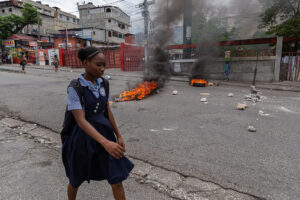
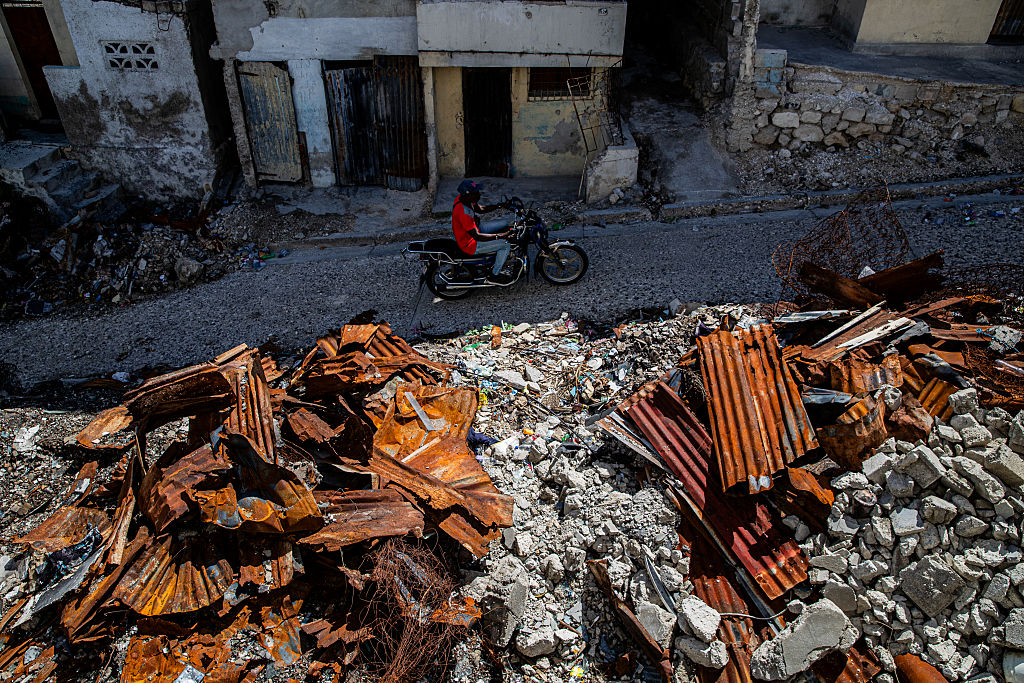
In a February 10 Senate hearing, Henry T. Wooster, the U.S. chargé d’affaires for Haiti, summed up the administration’s objective in one word: “stability,” which he defined as “no collapse of the state” and “no mass illegal migration onto U.S. shores.” However, achieving real stability in a nation with the region’s highest homicide rate, where gangs control close to 90% of the capital, and 1.4 million people are internally displaced due to gang violence, will clearly demand sustained engagement from Washington.
Also in February, the U.S. allocated up to $5 million in support for the Haitian Armed Forces and permitted the government to purchase defense articles and services from the U.S. for the Haitian Coast Guard. Last year, after designating Haiti’s major gang coalitions as terrorist organizations, the U.S. pushed for and secured a U.N. Security Council resolution to replace the current Kenyan-led security mission with a larger, offensive-minded Gang Suppression Force (GSF), expected to begin deployment as early as this month.
A new security posture
The arrival of the 5,550-strong GSF is a critical step in helping the Haitian armed forces make inroads into gangs’ fiefdoms and take back occupied territories as the August 30 elections approach, and should also help bring Haiti’s constantly postponed electoral process to an end.
Haiti hasn’t had an election in more than 10 years, and its remaining elected officials left the country in January 2023. The upcoming electoral cycle, which the government has promised to complete by December, will give Haitians a chance not only to elect legitimate representatives whom they can hold accountable but also to put an end to a series of provisional governments.
Since the assassination of President Jovenel Moïse in July 2021, Haiti has confronted both a security and a governance crisis. A gang insurrection in March 2024 forced then-Prime Minister Ariel Henry to resign after being locked out of the country following a trip to Kenya. Haitian civil society actors, backed by CARICOM and the U.S., then established a nine-member Transitional Presidential Council (TPC), aiming to restore security and democratic rule. After 22 months, the TPC transferred power to Haiti’s prime minister, Alix Didier Fils-Aimé.
With the gangs’ continued havoc and violence spreading to key electoral battlegrounds beyond Port-au-Prince, organizing free and fair elections by year-end is far from guaranteed. The growing complexity of Haiti’s criminal network has far outpaced the capacity of the Haitian National Police (HNP), which the U.S. has helped to train and equip since its establishment in 1995.
However, the U.S. could make an immediate and impactful contribution by helping Haiti address the flow of weapons and ammunition to local gangs. It will also be important to increase intelligence-sharing to break access to regional criminal networks, and to leverage existing legislation to support Haiti in prosecuting those who sponsor violence there, including those already under U.S. sanctions.
Political pressure
The Trump administration has also taken a more assertive stance in Haiti’s political sphere. Earlier this year, the U.S. applied significant pressure on the TPC to abandon an attempt by five of its members to fire Prime Minister Fils-Aimé ahead of February 7, when the TPC’s mandate expired. Secretary of State Marco Rubio called the prime minister to offer his support, the State Department issued multiple warnings to the dissidents, and the U.S. even deployed warships to the bay of Port-au-Prince in early February.
Later that month, political and civil society actors signed a pact for stability and elections that backed Fils-Aimé as Haiti’s single leader, without a clear end date. Going forward, the U.S. will need to clarify whether its support for Fils-Aimé is a carte blanche or contingent upon clear results. The U.S. should move swiftly and decisively to prevent a situation where actors engage in endless political negotiations, cabinet reshuffles, and ultimately, another time-consuming provisional government.
The governance challenge
If stabilizing Haiti means avoiding the collapse of the state and preventing mass migration to the U.S., then in practice it means helping Haiti improve its governance—both during and after the elections. Haiti’s institutions must be strengthened, and resilient local capabilities must be developed to maintain a functional state while discouraging actors that benefit from an unstable Haiti.
By helping Haiti out of the abyss, the U.S. can advance its diplomatic and security interests. A functional Haitian state would cease to be a highway for illicit trafficking and reduce pressure to migrate, both of which are U.S. national security concerns.
A good starting place could be the Global Fragility Act (GFA), signed by President Trump during his first term. Recognizing the nexus between economic development, political stability, and security, the GFA’s whole-of-government approach offers an unparalleled infrastructure to prevent conflict and instability in places like Haiti before they metastasize. Although Haiti was excluded from the priority list in last year’s GFA reauthorization bill, applying the GFA framework to address the Haitian crisis would significantly boost the effectiveness of U.S. support.
Rebuilding the economy
Simultaneously, Haiti will also need support to revive its economy. The country’s real GDP has contracted for seven consecutive years since 2019, and the IMF expects another 1.2% decline for 2026, while more than half of its population is facing famine-like hunger. Stemming mass emigration, especially among the country’s youth, will require offering credible economic alternatives at home.
Economic assistance will be needed, and renewing trade programs like HOPE and HELP would be a step in the right direction. Other measures to improve Haiti’s revenue-collection capacity, better manage its public finances, modernize its economy, and remove barriers to entry for new economic actors will also be critical to turn the tide.
U.S. hemispheric reassertion could be decisive for Haiti—but only if Washington backs up its policy shift with real commitment. The true test for the Donroe Doctrine in the country will be whether—through sustained institutional and technical support—the policy leaves Haiti in a more politically and institutionally resilient position to weather future crises and offer better economic alternatives to its citizens. This is achievable, but it requires the Trump administration to act decisively, with a coherent plan, and the right resources in place.
ABOUT THE AUTHOR
Esnold Jure
Reading Time: 5 minutesJure is a policy analyst and Senior Fellow at Haiti Policy House, focusing on governance, development, and international affairs.
Haiti’s Political Crisis Deepens Amid a Slide Into Criminal Governance
Confrontation on the Transitional Presidential Council is not only about leadership, but about whether a future transition can reduce the influence of armed groups.
Ending Haiti’s Criminal Governance Crisis
The country needs a coherent political and sustainable financing strategy. A multilateral summit could bring all the parties to the table, an expert writes.