



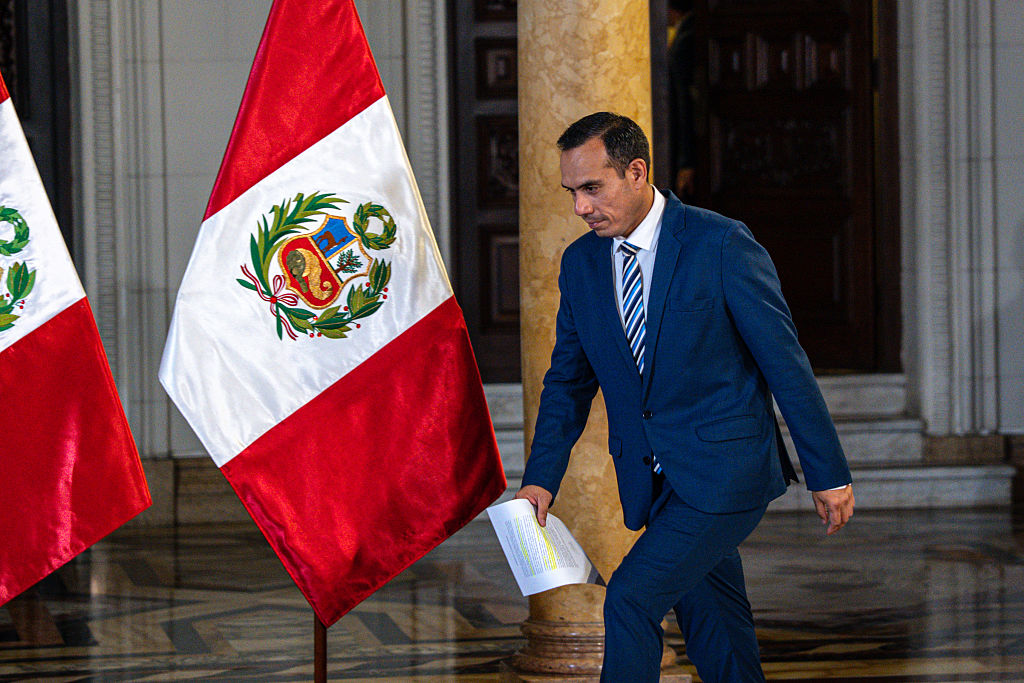
Peru’s Congress voted on February 17 to remove José Jerí from the presidency for failing to disclose meetings with Chinese businessmen. Congress is expected to choose the country’s next interim president late Wednesday.
Jerí served just four months as president before his ouster. Meetings between Jerí, state contractor Zhihua Yang, and other associates were not published in the presidency’s official agenda as required by law, triggering congressional scrutiny and allegations of misconduct. A lawyer and former president of Congress, Jerí denied wrongdoing and called the meetings “circumstantial.”
Jerí was Peru’s eighth president in ten years. This political instability will be a top concern for Peruvians when they vote in the first-round presidential election on April 12. All of Congress is also up for election in the high-stakes contest. If no presidential candidate earns over 50% of the vote, a runoff will take place on June 7.
AQ asked analysts to share their reactions and perspectives:

Alejandro Arreaza
Andean region economist at Barclays
Following the impeachment of President José Jerí, Peru is on the verge of having its eighth president in less than eight years. Investors and economic stakeholders have become accustomed to this recurring political instability, and a narrative that separates the country’s economic performance from political developments has become common. However, it is hard to believe that the economy can remain permanently immune to dysfunction in its political system. Ultimately, this recurring instability hampers the government’s ability to address structural challenges and maintain credible policies, increasing execution risk and neglecting social demands that gradually weaken institutional strength and public trust. In this context, Jerí’s impeachment could be significant, as it raises uncertainty ahead of the April elections and heightens the risk of a market-unfriendly candidate gaining power, potentially leading to increased volatility.
It remains unclear who will succeed Jerí; however, this seems less important since the chosen individual will hold office for a maximum of only five months. Congress is expected to elect a new leader for the legislature who will also serve as head of state. Despite the uncertainty this creates, risks may be limited because Congress is controlled by center-right parties, making it more likely that any successor will come from that side of politics and be market-friendly. As a result, the risks are deferred until the first round of the presidential vote in April.
The corruption allegations leading to Jerí’s impeachment could fuel anti-establishment sentiment, especially given the discrediting of political parties and Congress—according to a February Ipsos poll, only 9% of people have a favorable view of the nation’s legislative power.
The establishment didn’t seem to have a good option. If it had retained Jerí, it would likely have been seen as defending someone involved in questionable activities. Now that it removed him from office and is likely to take over, it inherits a complex, highly dysfunctional government, which could easily backfire. Peru has a history of volatile voter preferences with outsiders emerging near election day, and political conditions may favor such a figure amid a highly fragmented system. The key now is which candidate can capitalize on the existing discontent.

Eduardo Ruiz
Analyst for the Andean region at Control Risks
Political instability in Peru has opened a new chapter following the removal of President José Jerí. After just four months in power, Jerí was ousted by Congress, underscoring the ongoing fragility of Peru’s political institutions. This episode is not an isolated case; rather, it reflects a structural trend driven by the significant powers vested in the legislature, a lack of professionalization among many politicians, and relatively low levels of social engagement on political accountability. These factors create an environment where executive leadership can be abruptly ended, contributing to broader perceptions of political volatility.
Despite repeated political crises, Peru’s economic landscape has remained remarkably resilient, and there is little evidence that current instability will derail macroeconomic performance or investor confidence. In recent years, Peru has shown a relative decoupling between political turbulence and economic outcomes, maintaining stability across key economic indicators.
GDP grew approximately 2.7% in 2022, the year that former President Pedro Castillo (2021-2022) was ousted, and then around 3.3% last year, despite the removal of former President Dina Boluarte (2022-2025). Inflation has also remained well within the target range set by the nation’s central bank (BCRP), around 1.7% in 2025, reflecting effective monetary policy and price stability even amid external shocks.
A further demonstration of economic resilience is the Peruvian sol’s performance, which has historically been among the most stable currencies in Latin America. Its stability helps mitigate exchange rate risk and supports investor confidence, even during periods of domestic political uncertainty. Peru’s foreign trade has also demonstrated robustness, with export sectors such as agriculture and mining continuing to expand and diversify markets.
As a result, it is unlikely that the latest bout of political instability will materially alter Peru’s economic trajectory or significantly deter foreign investment. Peru is likely to remain a strategic player in the mining and agro-industrial sectors, supported by regulatory stability, substantial copper reserves, favorable geography and climate, and new infrastructure such as the Chancay Port.

Esteban Tamayo
Andean and Caribbean & Central America economist at Citigroup
José Jerí’s short stint in Peru’s highest office was met with resistance from day one. Before his debut policy move, his social media activity raised eyebrows, making his learning curve as president much steeper. Additionally, the center-right Jerí was holding office during the term for which left-leaning Pedro Castillo was originally elected, which heightened the left’s push for impeachment despite the limited time before the first-round presidential election in April.
The impact of his removal from power on politics and policy is unlikely to be significant. Election dates are fixed, and an earlier vote isn’t possible. Jerí’s four months in office didn’t result in major policy shifts, and whoever is elected to serve for (at most) four months until July 28—when the new president takes office—will not have enough time to make substantial changes. Congress is scheduled to select a successor from among its members, but this new leader will likely oversee the executive branch in a lame-duck capacity. Members of Congress should now concentrate on their own electoral campaigns rather than on interim leadership.
The impact on macroeconomic conditions is also likely to be muted. Castillo’s impeachment and Boluarte’s rise initially sparked public protests. However, over time, domestic activity and macroeconomic developments became largely disconnected from presidential politics as Boluarte deprioritized policymaking. To some extent, this was a more typical situation in Peruvian macroeconomics, similar to the period leading to Pedro Pablo Kuczynski’s resignation in 2018, when a series of impeachments caused volatility in investment, prompted protests, and disrupted daily operations in sectors such as mining and transportation. Under Boluarte’s calmer approach, normal business operations resumed and mostly stayed that way when Jerí took over in October. The new short-term interim leadership is unlikely to directly alter this dynamic.
The outcome of this year’s presidential election will likely have a greater impact on short-term macroeconomic conditions than Jeri’s removal and replacement. Moreover, the new bicameral Congress should restrict the impeachment process in the upcoming term, as it will be more difficult for the two legislative chambers to come together as quickly as the unicameral Congress can do now.
Peru: A 2026 Snapshot
AQ tracks key indicators and political and economic trends to watch in 2026.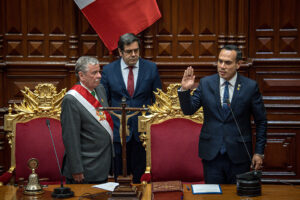
REACTION: Peru’s Congress Ousts Boluarte
Boluarte was removed amid surging crime and José Jerí, formerly President of Congress, was sworn in to complete her term ending in July 2026.