


This article is adapted from AQ’s special report on the Trump Doctrine
SÃO PAULO—A Brazilian company investing in technology is helping farmers in Latin America and the Caribbean address one of the greatest challenges of our time: the unpredictability caused by climate change.
Started in 2014, Agrosmart began as a homemade irrigation guide device created by three young professionals in southeast Brazil. Today, its app uses artificial intelligence as well as climate and soil sensors to help more than 100,000 farmers in nine countries navigate day-to-day decisions on planting, irrigation and crop care.
The market for real-time, data-driven planting and monitoring of crops in Latin America is expected to reach $10.4 billion by 2033, up from $2.2 billion just a couple of years ago, according to IMARC Group, a research firm. Brazil’s farm sector is especially promising: The country has posted record harvests in four of the past five years, and grain output has almost tripled since the early 2000s to a record of nearly 320 million tons in the 2022–23 cycle.
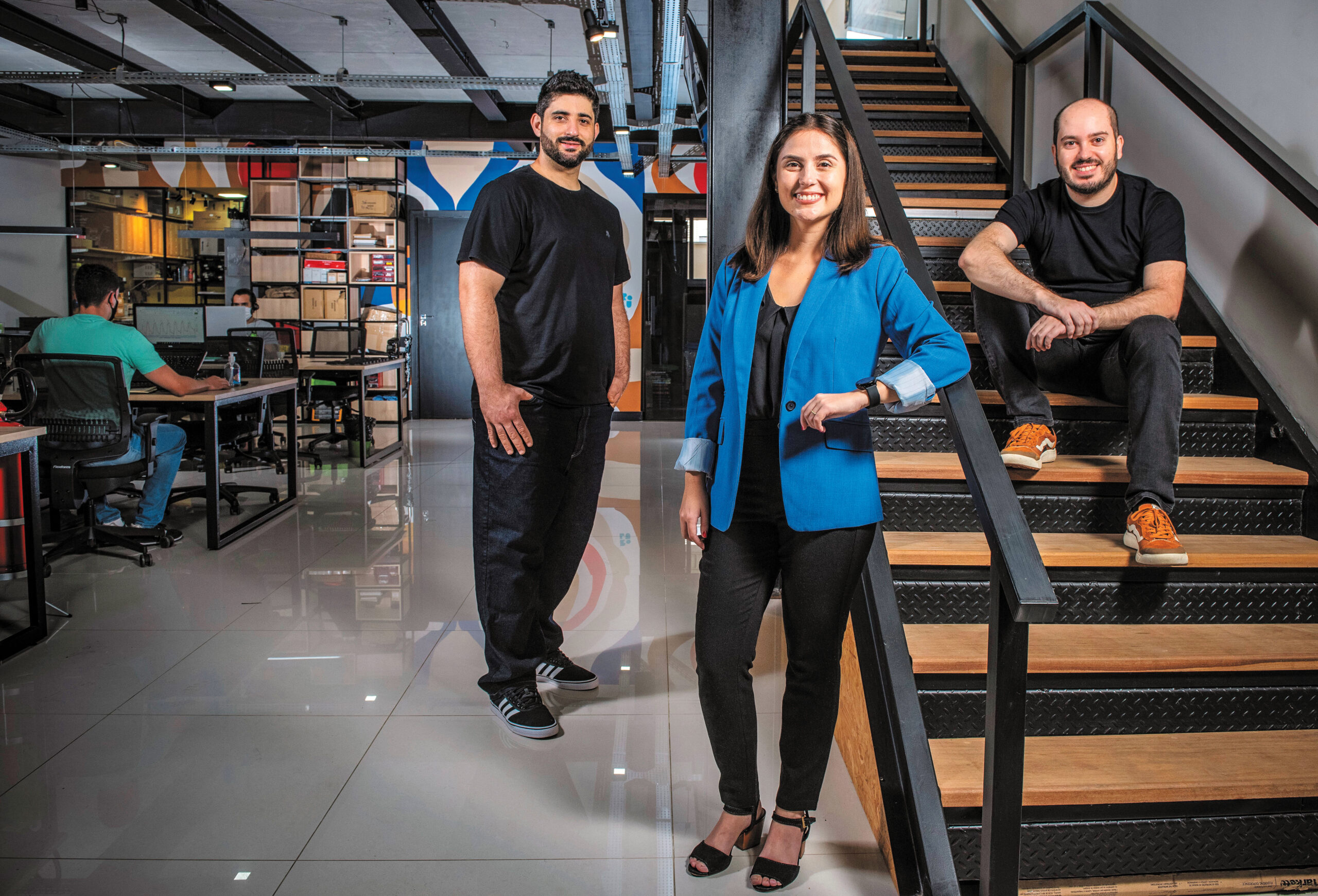
With 40 employees, Agrosmart traces its origin to the Vale da Eletrônica (Electronics Valley) in southern Minas Gerais, a Brazilian hub for technology and innovation. In 2014, Mariana Vasconcelos, a young entrepreneur with a bachelor’s degree in business administration, and cofounders Raphael Pizzi and Thales Nicoletti created an irrigation prototype: a “cooking pot” with sensors that measured weather and soil conditions on farms, aiming to optimize water management as Brazil endured severe droughts.
This initial device did not withstand outdoor exposure, but after the startup was officially launched that year, they raised $42,000 through Start-Up Brasil, a federal government incentive program, along with Baita Aceleradora, an angel investor, to develop improved models.
“It was challenging because the ecosystem was still emerging, and none of us were agronomists,” Vasconcelos, nowadays Agrosmart’s CEO, told AQ. “We didn’t have the scientific foundation needed to design and validate equipment that could withstand field conditions. So, we immersed ourselves in research, studied and tested everything we could find until we were able to develop a robust solution that delivered results.”
Agrosmart’s app works with over 90 crops and helps to monitor more than 48 million hectares in the region, featuring tailored weather forecasts, a collaborative rainfall map, and other basic tools for farmers. The company also installs climate and soil sensors that farmers use to plant, irrigate, and spray crops based on weather conditions and crop health. More recently, the startup created a service for corporate clients that diagnoses climate, environmental, and compliance risks in supply chains. It is being used by major players in a range of fields, from agribusiness to insurance companies and banks.
Unstable weather
An Agrosmart customer since 2021, José Ricardo Rodrigues manages a 150-hectare citrus farm in Pirassununga, in the state of São Paulo, and accesses information about more than 100,000 orange trees on his smartphone. Using Agrosmart’s BoosterPro app, he checks soil moisture and personalized real-time forecasts for rain, wind, and humidity. He also receives daily reports on all this via WhatsApp.
Rodrigues, who has been farming citrus for 25 years, said the weather is now more unstable than ever. “There are more droughts or heavy rains all at once. Technology helps us be better prepared,” he told AQ. “Sometimes it’s hot, but we detect that the soil is moist and avoid unnecessary irrigation,” he said. He estimates that, when his irrigation system is off, he saves about $2,200 in electricity alone per month.
In 2024, Agrosmart’s customers in southern Brazil received alerts forecasting the severe storms that culminated in the country’s worst climate tragedy: flooding in the state of Rio Grande do Sul, which killed 184 people and displaced more than 615,000. Thanks to these alerts, some were able to bring forward harvests, protect crops, and evacuate properties.
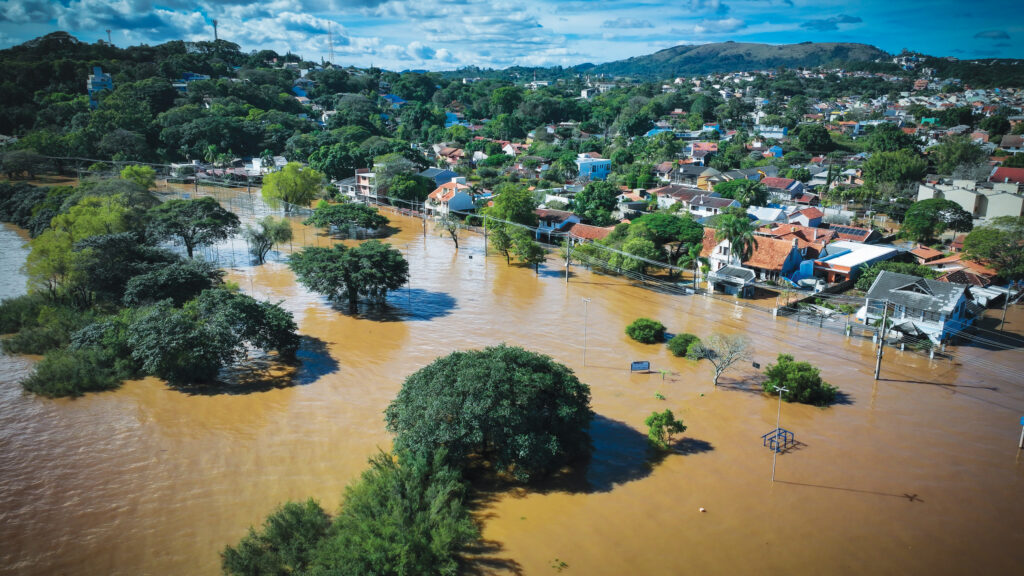
Photo by Jefferson Bernardes/Getty Images
But if more readily available information helps Brazilian farmers deal with the effects of climate change, the expansion of the country’s agricultural business is under public scrutiny. In 2024, the same year of the Rio Grande do Sul tragedy, deforestation and agriculture together accounted for 70% of Brazil’s greenhouse gas emissions, according to the Observatório do Clima, the country’s largest network dedicated to climate policy. Brazil emits more gross carbon from deforestation than Saudi Arabia and Canada combined, two of the world’s leading oil-producing countries, the institution found in its research.
Challenges ahead
Given the sizable role agriculture plays in Brazil’s economy, it’s not surprising the country ranks as the second-largest adopter of agricultural technology, behind only the U.S. According to an annual report by Embrapa, a state-run research company for agriculture and cattle, the number of agtech companies grew 75% to almost 2,000, from 2019 to 2024. However, according to Vasconcelos, many of them focus on just one function, such as water or climate management, and there is a need for platforms that integrate multiple parameters. Her goal is to transform Agrosmart into the largest agrometeorological data platform in Latin America.
She said that the lack of connectivity remains an obstacle for agtechs, which often require reliable internet connections in both farm headquarters and in their fields. But this challenge should be overcome soon by the rapid growth of satellite internet, bringing connectivity to remote regions of Brazil, said Aurélio Favarin, an analyst at Embrapa’s Innovation and Business Directorate.
“Farmers want solutions that increase profitability and mitigate risks. But their routine is not easy; they have little free time,” Favarin told AQ. “If they have to operate several systems that do not communicate with each other, it will mean extra work. So, there’s a lot of demand for companies that integrate data.”
Francisco Jardim, managing partner at SP Ventures, Latin America’s largest agtech fund, called Agrosmart a survivor in a market that has seen many companies close down. Some were foreign startups, from countries like Israel and Canada, that were bigger than Agrosmart but failed to adapt to the needs of tropical agriculture.
With $130 million under management and offices in Brazil and Mexico, SP Ventures invested $368,000 in Agrosmart in 2016 and, two years later, more than tripled its bet, investing another $1.3 million. It remains on the company’s board.
Agrosmart’s ongoing investment in innovation to meet this market’s needs has kept it competitive, Jardim told AQ. “They are problem-solvers. They managed to raise money when no one else did, cut costs, and survive. Tropical agriculture is operationally very complex: We have several harvests because the plants grow year-round, but pests and soil erosion do as well. Those who won in Brazil won in the most competitive agribusiness environment in the world,” he said.
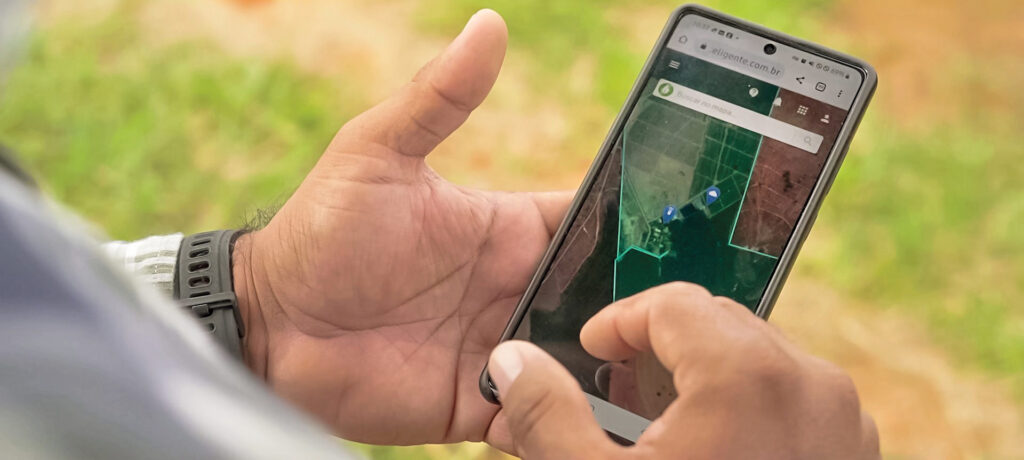
Photo courtesy of Agrosmart
Vision for the future
Vasconcelos, who now lives between Palo Alto, California, and Campinas, in Brazil, describes herself as an advocate for gender equality. Agrosmart maintains a 50/50 ratio of women in leadership and advisory positions, and Globant recognized her with a “Women That Build” award in the game-changer category in 2020. She also made Forbes’ 30 Under 30 list in 2018, and was named one of the most influential people in Latin America by Bloomberg Línea in 2023.
Her career reflects the rise of women in Brazilian agribusiness as well as the challenges they face. In the beginning, her relationships with corporations were complicated by sexism, she told AQ. During field visits, she was welcomed “like a daughter” by rural producers, but had difficulty closing deals. “They showed me the farm, told me things. But when it came time to pay me, no one wanted to,” she said. She ended up hiring men to handle the commercial side.
While Agrosmart does not disclose revenue figures, the company expects to start reporting a profit in April. For the next 18 months, the company’s priority is to consolidate its presence across the region. Already strong in South America, it is beginning to gain traction in Central America as well—Vasconcelos was heading to Guatemala when she spoke to AQ.
But the company is seeing increasing demand from other emerging markets as well, especially in Africa and Southeast Asia. As Agrosmart grows, Vasconcelos said, it will maintain what has brought it this far: a focus on the needs of individual farmers and firms as they adapt to an increasingly unstable climate.
“We’re already doing a lot, and the numbers speak for themselves: Our adoption rate is high, and our reach is wide. Working with more than 100,000 farmers each month, I witness this every day,” Vasconcelos said. “What we need now is to communicate this pioneering role more clearly to the world.”
ABOUT THE AUTHOR

Flávia Mantovani
Reading Time: 6 minutesMantovani is an independent journalist who has written and edited for major Brazilian media outlets for over 20 years

Solving Latin America’s “Food Paradox”
The region’s agriculture exports are booming, but food insecurity is higher than a decade ago. What can be done?