


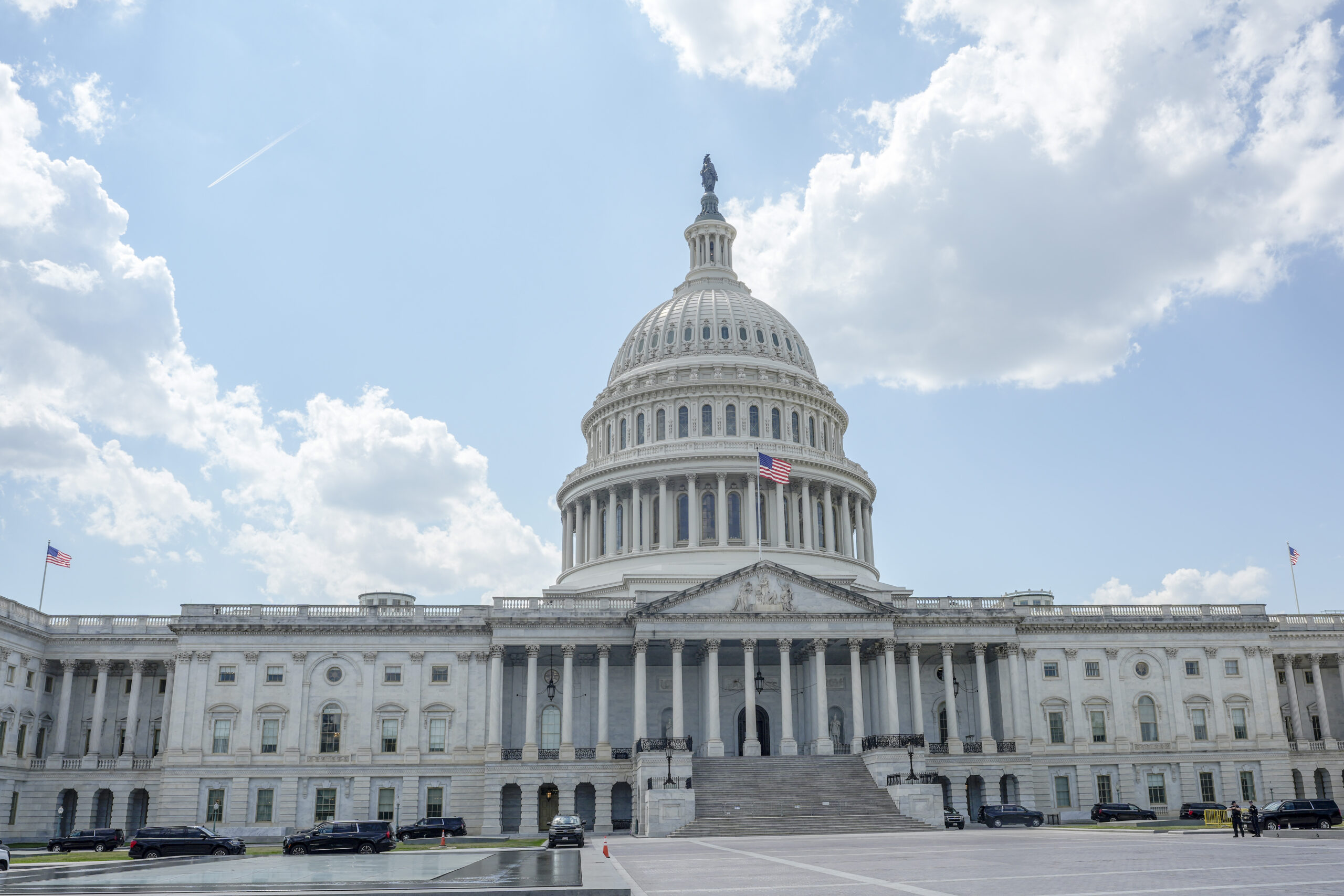
Midterm elections in the U.S. are six months away, and while they rarely hinge on foreign policy, let alone U.S. policy toward Latin America, the region will nonetheless feel the consequences of the critical vote in November. With all 435 seats in the House of Representatives and 34 Senate seats on the ballot, the contest could upend Republican control of Congress and restore a check on the Trump Administration’s approach to the Americas: an agenda characterized by immigration enforcement, tariffs, airstrikes, and an aggressive military posture that has reshaped Washington’s relationship to the region.
Most U.S. midterm cycles follow a pattern: The party out of power typically gains congressional seats. Although efforts to redraw congressional districts across many states are shifting the playing field in real-time, early polling still shows Democrats with an advantage six months out. Control of one or both chambers would unlock key tools for the Democratic party and end President Trump’s use of the reconciliation process—which requires only 51 votes in the Senate—to push through partisan budget and policy priorities.
In the most likely scenario, Democrats will win control of the House of Representatives but not the Senate. This would mean more hearings and investigations, and a check on some of the executive’s overreach. Latin America watchers should expect to see several notable shifts, tempered by the reality that the executive branch would still hold the reins on foreign policy. Even if Republicans hold onto both the House and Senate—which seems unlikely at this point—Republican infighting in Congress ahead of the 2028 presidential election would probably obstruct some of President Trump’s agenda during his last two years in office.
Oversight
At the top of Democrats’ oversight agenda will be the ballooning budget of Immigration and Customs Enforcement and the actions of its officers across U.S. cities. But the unprecedented use of U.S. military force in boat strikes across the Caribbean and Eastern Pacific will also see more aggressive oversight. Traditionally, the powerful House and Senate Armed Services Committees—which have oversight of the Defense Department—have played a limited role in U.S. policy toward Latin America, deferring to their foreign affairs committee counterparts. If Democrats win control of the House, that would likely change, and oversight efforts may play out in the annual National Defense Authorization Act, including through provisions restricting certain types of funding for U.S. Southern Command and increased reporting requirements.
While a 2024 Supreme Court ruling grants broad immunity to presidents for official acts, it does not shield Defense Department officials if courts find their conduct unlawful. That distinction matters. If testimony is not voluntarily forthcoming, a Democratic Congress would likely turn to subpoenas to investigate the intelligence underpinning these strikes and why longstanding U.S. Coast Guard drug interdiction protocols have been ignored.
In the more traditional Latin America foreign policy space, Congress would take a closer look at U.S. policy towards Venezuela, including the opaque handling of oil revenue, and influence exercised over contracting by the Venezuelan regime. Shining a light on these processes could expose corruption, increase accountability and, hopefully, lead to improved conditions for Venezuelans. In addition, lawmakers will likely scrutinize the use of facilities such as CECOT in El Salvador for U.S. deportees and the role of U.S. funds in these deportation arrangements.
In short, increased oversight could cause the Trump administration’s appetite for boat strikes, deportations to CECOT, and opaque dealings with Venezuela to abate somewhat, but not entirely. More broadly, governments may see these shifting power dynamics as a reminder that Donald Trump will not be in power forever. Those that have neglected ties with Democrats may soon find themselves scrambling to recalibrate as Washington’s political center of gravity begins to shift once again.
War powers
In its December 2025 National Security Strategy, the Trump Administration declared its intent to “reassert and enforce the Monroe Doctrine” in the Western Hemisphere. It has moved quickly to operationalize that vision, most notably through military intervention in Venezuela, and continues to leave open the possibility of similar or even broader action in Cuba.
The current Congress has already sought to assert congressional prerogative on war powers—the U.S. Constitution gives the power to declare war to Congress, and the 1973 War Powers Act allows armed forces to operate for no more than 60 days without a declaration of war. However, efforts to restrict unauthorized military action in Venezuela have been unsuccessful, despite bipartisan unease. A similar push on Cuba also fell short.
A Democrat-controlled Congress will probably force more votes and scrutiny on war powers, but this is unlikely to change President Trump’s decision-making on Latin America. His administration will continue to approach regional policy through a security lens, and the executive branch will continue to dominate decisions on the use of force. Ultimately, the most likely check on the Trump administration’s increasingly interventionist approach is not Congress, but rather the rising public frustration with the domestic costs of conflict, including the higher gas and food prices that have come from war in Iran.
Spending
The U.S. Constitution also gives Congress the power to decide how to spend the government budget, but the current Republican legislature has largely surrendered it. The Trump administration’s deep cuts to foreign assistance, including the dismantling of USAID, and the impoundment of congressionally approved funding, have reshaped U.S. engagement in Latin America. While restoration of USAID during the Trump administration is not in the cards, a democratic Congress would certainly attempt to reclaim lost ground on foreign assistance. But the limits of that effort are already being set. Thus far, the administration has been surprisingly successful in defending its foreign assistance cuts in court.
Following the longest partial government shutdown in U.S. history, House and Senate Republicans have a second reconciliation bill in the works as they prepare to pump billions of dollars into ICE and Customs and Border Protection through 2029, precisely to insulate immigration policy from budget cuts from a democratically controlled Congress.
Tariffs and trade policy
Congress is likely to have more impact over economic policy. The Constitution grants Congress the primary authority to impose tariffs, but President Trump bypassed Congress by levying tariffs worldwide. In February, the Supreme Court struck down his use of the International Economic Emergency Powers Act to enact tariffs, leading to the use of other, likely more legally durable, authorities to keep sweeping tariffs in place. A Democratic majority in Congress would likely seek to reclaim congressional authority over tariffs, and it will certainly use oversight tools to obtain data on tariffs’ impact on the U.S. economy.
On trade, all eyes are on the six-year review of the U.S.-Mexico-Canada Trade Agreement (USMCA), which formally kicks off on July 1, 2026. During the review, the parties can decide to extend the agreement as-is, extend it with an annual joint review, or terminate it. Pressing matters are up for discussion, such as AI, digital trade, critical minerals, and energy, and if any revisions require changes to U.S. law, they would have to go through Congress. Any effort to reopen the core text of the USMCA would trigger a tough scramble to secure elusive congressional approval.
Nominations
A Democratic majority in the Senate could slow down the nominations process or stymie some of the more partisan or less qualified candidates. The current Republican Senate will almost certainly use the lame-duck session of Congress at the end of this year to try to push through critical nominations. If he has not yet been confirmed, Juan Segura—the recently announced nominee for Assistant Secretary of State for Western Hemisphere Affairs—would likely be considered quickly, along with other pending ambassadorial nominees. If Republicans hold the Senate, Latin America could expect to see some of its roughly 20 U.S. embassies in the Western Hemisphere currently without Senate-confirmed ambassadors filled with Trump administration political appointees.
In the end, the November elections will not entirely reshape U.S. policy towards Latin America, but they will determine the extent to which the Trump Administration’s agenda is contested on several critical fronts.
ABOUT THE AUTHORS
Eric Jacobstein
Reading Time: 5 minutesJacobstein is Founder and Principal at Puentes Global Advisory and a Senior Fellow at the Inter-American Dialogue. He served at the State Department as Deputy Assistant Secretary for Western Hemisphere Affairs and at the White House. He writes from Washington, D.C.
Emily Mendrala
Reading Time: 5 minutesMendrala is a Senior Advisor at Dinámica Americas. She served as a Deputy Assistant to the President and Senior Advisor on Migration at the White House. She has experience in both the private and non-profit sectors and served as a professional staff member on the Senate Foreign Relations Committee. She writes from Washington, D.C.