


To understand the U.S. military operation against Nicolás Maduro, many analysts have invoked a familiar historical comparison: the era of the Roosevelt Corollary (1904). This was a period when the U.S. engaged in recurrent interventions in Mexico, Central America and the Caribbean, roughly between 1898 and 1933. The comparison is understandable, but ultimately incomplete. It helps explain Washington’s rhetoric and motivation, but not its full conduct in Venezuela today.
The comparison cannot explain why the U.S. has kept the regime intact and snubbed the opposition. During the Roosevelt Corollary era, the U.S. tried to neutralize or displace the perceived troublemakers. Seldom were they allowed to continue in office, not even under U.S. tutelage.
To make sense of recent U.S. action in Venezuela, we need supplementary analogies. I propose two. The first comes from the corporate world: a hostile takeover. The second comes from Cold War history: the 1961 Bay of Pigs Invasion. Both illustrate the perils of sidelining democratic allies.
A corporate hostile takeover
What we have just witnessed in Venezuela looks like a corporate hostile takeover from the business world. In such takeovers, a firm responds to a competitor by acquiring it rather than destroying it. The acquiring firm makes personnel changes, preserves its core operations, and redirects profits to itself. The goal is control, not dismantlement.
That logic fits Operation Absolute Resolve. The U.S. removed the top executive (Maduro) but kept the firm. The core activities—providing internal security and resource extraction—were also kept.
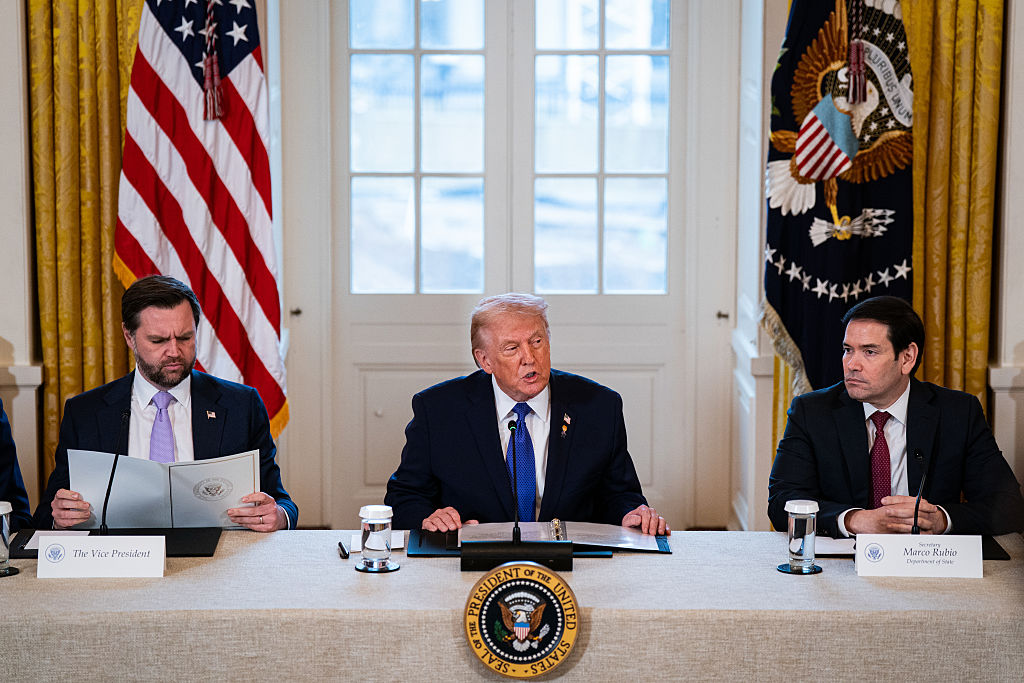
From the perspective of the acquiring firm, the advantage of a hostile takeover is market stability. Likewise, by keeping rather than displacing the Chavista state, the U.S. did not need to deal with the chaos of regime change. This spared the U.S. the need to deploy troops on the ground or engage in nation-building. President Donald Trump, who sees himself as a CEO above all, would have easily found this model familiar and appealing.
But hostile takeovers look easier on paper than in reality. The acquirer inherits an alien corporate culture. The culture of Chavismo is to rely on corruption (ties with illicit actors), intimidation (repressing dissent), backstabbing (internal surveillance), and concealment (operating under the radar, betraying promises).
Hostile takeovers thus trade short-term stability for a severe principal-agent problem (PAP). The principal issues instructions to an agent, without guarantees that the agent has the incentives, capacity, or commitment to comply. Monitoring is weak, information is asymmetric, and sabotage is common. In Venezuela, the PAP that the U.S. has just obtained is worse than your typical textbook case: The principal had no role in selecting the agent, which is vast and unruly.
At some point, a choice emerges. Either the new owner tolerates the inherited culture—or intervenes more deeply to reshape it. If the latter happens, the one task Trump sought to avoid—nation-building—becomes unavoidable.
Still, the metaphor has limits. In most corporate takeovers, senior management is replaced well beyond the CEO. In Venezuela, by contrast, every member of the Chavista state kept their post, though the new CEO, Interim President Delcy Rodríguez, has made some Cabinet changes. The U.S. had the opportunity to bring in a more loyal team to make decisions, but decided not to. The hostile takeover analogy cannot explain the decision not to go deeper with personnel changes, and in the process, to exclude loyal allies.
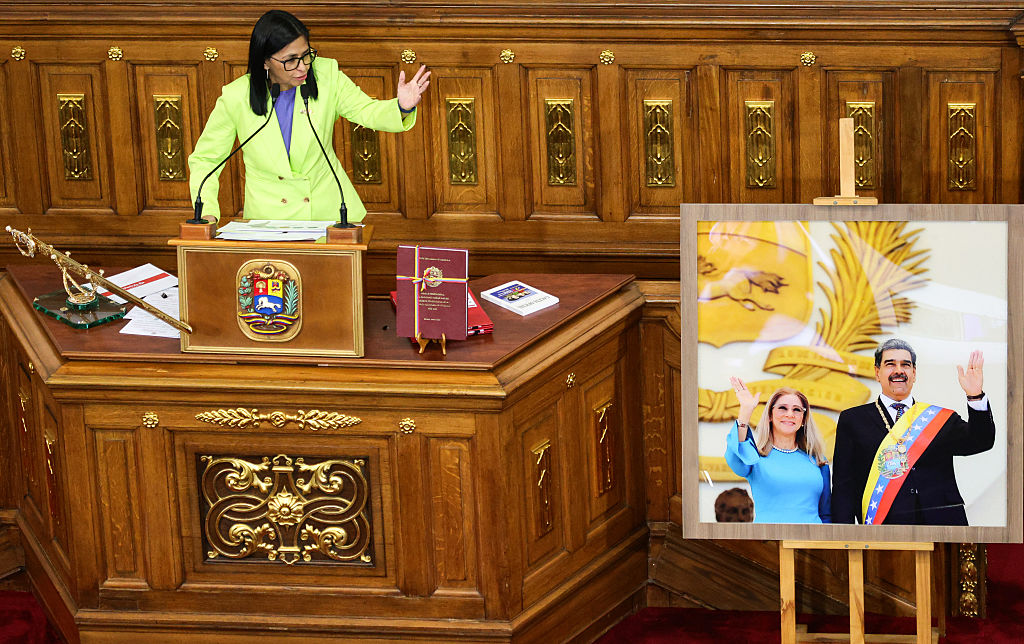
Photo by Jesus Vargas/Getty Images
A modified Bay of Pigs
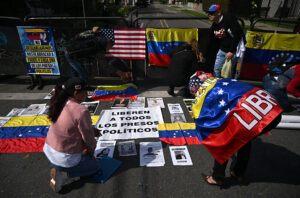
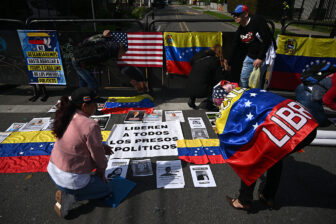
From the point of view of many in Venezuela’s democratic movement, Operation Absolute Resolve feels like absolute abandonment. The U.S. has not only partnered with the bad guys, but also engaged in an embarrassing problem of political exclusion. Despite all her courting (including her decision to offer Trump her Nobel Peace Prize), María Corina Machado has been sidelined, along with the entire opposition.
In the history of democracy promotion, this exclusion of opposition forces is highly unusual, but not unprecedented. It’s similar to what happened during the 1961 Bay of Pigs invasion in Cuba, one of the most infamous episodes in U.S. foreign policy.
Washington encouraged and organized democratic forces against Fidel Castro, even training a faction for a joint military operation. Then, at the decisive moment, once the first Cuban troops disembarked, the U.S. pulled back. President John F. Kennedy never authorized air cover. The opposition forces were left stranded—literally and figuratively.
Venezuela is not Cuba, and 2026 is not 1961. The differences matter. In Venezuela, the U.S. achieved tangible results: Maduro was captured, whereas in Cuba, Fidel survived. In addition, the U.S. gained some concessions, including access to oil and the release of some political prisoners, whereas in Cuba, Washington gained nothing. Moreover, the political mood in Washington today is triumphant, not chastened.
Yet the deeper parallels are unsettling. First and foremost, both are episodes of the U.S. misleading and then abandoning democratic forces. In Cuba, the abandonment was military and immediate. More than 1,300 Cuban troops trained by the CIA were left stranded in Playa Girón. In Venezuela, the abandonment was political and strategic. After almost 10 years of supporting and even coaching the Venezuelan opposition, at the last minute, the U.S. excluded it from negotiations and governance discussions.
Second, fear of escalation and political backlash constrained action in 1961, just as it did in 2026. In 1961, the White House worried about provoking the Soviets and destabilizing Berlin. In 2026, it worried about unsettling the MAGA base that opposes foreign entanglements.
Third, in both cases, democratic allies were portrayed as too radical, polarizing, or unreliable. Cuban exiles were dismissed as reckless ideologues. When asked if Machado could run Venezuela, Trump said she “doesn’t have the respect within the country.” Washington has used this and other negative characterizations of the opposition to justify its hesitation to side with democratic allies in 2026.
In both episodes, Washington placed too much trust in the idea that economic leverage could do the work. Kennedy trusted that the economic embargo on Cuba would eventually force Fidel to capitulate, or at least make him more pragmatic toward Washington. Trump also trusts that the threat of an economic quarantine will align Delcy Rodríguez with U.S. interests.
Abandoning democratic allies
The aborted Bay of Pigs invasion reminds us that the U.S. can at times betray the democratic opposition. That said, the analogy is also imperfect: First, it’s not clear that the Trump administration had the intention to democratize Venezuela.
Second, in 1961 one could argue that the U.S. held back thinking that the new Cuban regime was popular. Analysts might have confused government-organized pro-Castro mass rallies for widespread popularity; lack of information on the regime’s popularity may have caused Kennedy to err on the side of caution. The same could not be said about Trump’s abandonment of the opposition. It is well known that the Venezuelan regime is widely despised, and María Corina Machado is admired.
Third, the Bay of Pigs emboldened Fidelismo. In Venezuela, January 3 might have instead demoralized Chavismo or at least, given rise to new internal tensions within Chavismo. This is one silver lining: The Chavista state may still unravel on its own.
Fourth, and most importantly, the Bay of Pigs analogy cannot explain the mood in the White House after Operation Absolute Resolve. In the days after the Bay of Pigs, the U.S. acknowledged failure, at least internally. The episode became an opportunity to derive lessons on mistakes to avoid in the future. In 2026, Washington insists on declaring victory, even as the core structure of authoritarian rule remains intact and democratic forces are marginalized.
Implications for today
Analysts have offered three useful analogies to explain what happened in Venezuela. None are perfect—that’s why they are useful. They help us understand continuity and rupture, as well as the challenges of the moment.
The Roosevelt Corollary helps us understand that the U.S. is returning to a familiar role of hemispheric overseer and leading extractivist, but it cannot account for the U.S.’s low-investment approach. The hostile takeover metaphor, by contrast, reveals the risks, contradictions and unintended obligations embedded in Washington’s strategy to preserve stability by taking over a competing actor, but it cannot account for the decision to exclude the opposition and how little thought has gone into reshaping the acquired corporate culture. The Bay of Pigs analogy reminds us that there are times when a superpower retreats and even betrays democratic allies and goals.
Tutelage can backfire. Ignoring legitimate domestic political actors breeds resentment and of course lessens the chances of democratization. If U.S. actions in Venezuela are framed as a success, its contradictions may never be confronted—and therefore repeated.
ABOUT THE AUTHOR

Javier Corrales
Reading Time: 6 minutesCorrales is a professor of political science at Amherst College and the author of Autocracy Rising (Brookings 2023) and co-author of Dragon in the Tropics: Venezuela and the Legacy of Hugo Chávez (2015).
Maduro’s Miscalculations Are a Cautionary Tale for Rodríguez
Venezuela’s interim president faces an existential balancing act: cooperating with the Trump administration while staying loyal to her base.