


This article is adapted from AQ’s special report on Latin America’s space race
There is a paradox unfolding across Latin America and the Caribbean. Climate change appears to occupy a smaller share of political debate than many expected a decade ago, often overshadowed by concerns such as crime, inflation and economic hardship.
Yet at the same time, climate and environmental pressures are increasingly shaping those very challenges. The question, therefore, is not simply whether we are talking more or less about climate change. It is whether climate change is increasingly becoming embedded in the issues that dominate public and political attention.
Hard data suggest that public concern about climate change remains strong across Latin America. A Lancet study using Google search trends found that climate-related engagement has increased significantly over time in both Spanish- and Portuguese-language searches. A 2023 European Investment Bank survey of more than 10,000 people across Latin America and the Caribbean (LAC) found that 91% of respondents throughout the region believed climate change affects their daily lives, and 88% support stronger government action to promote climate-friendly behavior.
However, while the public awareness and concern in LAC seem to remain remarkably high, surveys such as Latinobarómetro and the OECD Trust Survey show that it seldom ranks among the most pressing political priorities. Instead, immediate concerns such as crime, inflation, employment, corruption, and economic hardship continue to dominate public attention.
But what strikes me as most significant is not how much we talk about climate change, but how we talk about it. Across the region, climate and environmental issues are increasingly moving beyond the confines of environmental policy and becoming intertwined with questions of security, economic development, public health and quality of life.
We see it in the Panama Canal, where water scarcity in the basin has turned an environmental challenge into an economic one for Panama, the region, and global trade. We see it in countries like Brazil, Costa Rica, Ecuador and Peru, where illegal mining sits at the intersection of organized crime, forest destruction, public health risks, and limited economic opportunities, frequently linked to broader criminal economies involving human trafficking, arms trafficking, money laundering and illicit gold markets.
We see it in the difficult choices facing fossil fuel-exporting countries such as Colombia, Brazil, Ecuador, Guyana, Trinidad and Tobago, and Venezuela. As the global energy transition advances, these economies must prepare for a future of declining demand for oil and gas or risk falling export revenues, fiscal pressures, stranded assets, and employment disruptions.
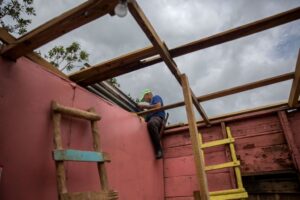
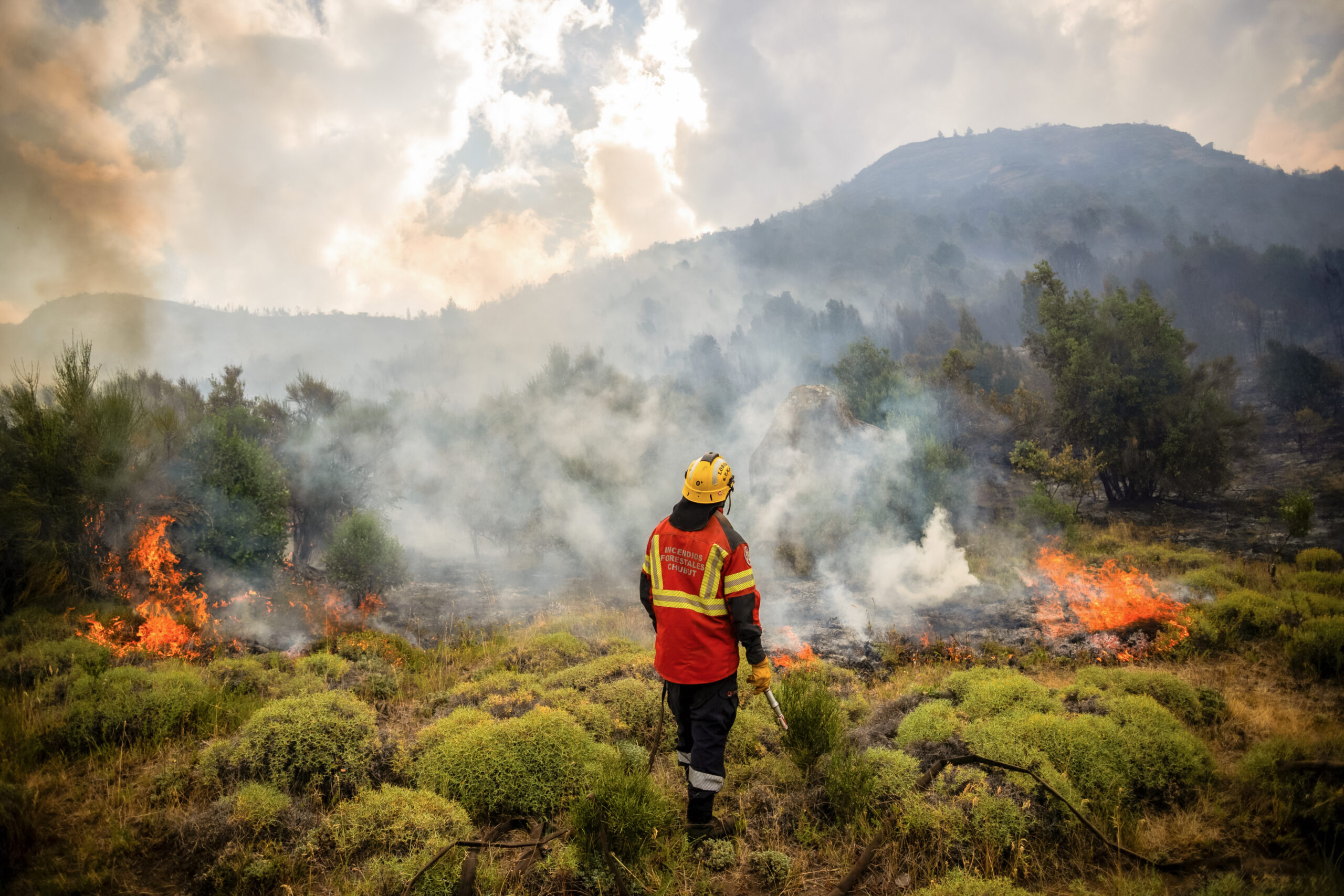
We see it in the growing impacts of extreme heat, wildfires, floods and droughts, which are disrupting livelihoods, affecting public health, straining infrastructure, and, in some cases, contributing to migration. Across the Caribbean, sea-level rise threatens critical infrastructure concentrated along vulnerable coastlines, increasing both economic and social risks. At that point, it matters little whether a government or a mayor is on the left or the right; communities expect leadership and effective solutions.
It is one of the lessons I draw from the launch of Costa Rica’s National Decarbonization Plan in 2019, during my presidency. The plan was the first long-term decarbonization strategy presented by a country following the adoption of the Paris Agreement in 2015. Independent research conducted in 2020 by the RAND Corporation, the Inter-American Development Bank (IADB), and the University of Costa Rica estimated that its implementation could generate approximately $41 billion in net benefits for the country by 2050.
It projects reshaping virtually every dimension of national development, from transportation, air quality, and public health to climate finance, agricultural productivity, energy systems, and the long-term competitiveness of key sectors such as tourism.
Yet, if I had the chance to do it again, I would place less emphasis on the decarbonization narrative and would highlight more intentionally how putting people at the center of the plan improves various dimensions of their livelihoods.
In other words, climate change should be discussed less as a standalone topic, and increasingly as an interconnected force shaping many of the challenges that dominate public and political attention.
This shift is also occurring in a geopolitical context in which security and defense have re-emerged as dominant priorities. From the United States to Europe, the Middle East, and Asia, governments are confronting choices about how to strengthen national security while maintaining ambitious climate commitments.
As a senior European official from the donor community told me not long ago in Berlin, the challenge today is to strengthen military preparedness while maintaining ambitious climate action. Reconciling both priorities is proving to be one of the defining policy dilemmas of our time.
But recent evidence from the region’s principal multilateral development institutions suggests that climate finance in Latin America and the Caribbean has continued to grow substantially. The IADB increased climate finance from $7.5 billion in 2023 to $8.2 billion in 2024 and aims to reach $11.3 billion annually by 2030; CAF committed $40 billion over five years for climate action, biodiversity, and the energy transition while reporting record approvals of $18.7 billion in 2025.
It remains insufficient and falls well short of closing the financing gap required to meet the region’s climate and development needs. Nevertheless, it points to an encouraging trend: While climate change may have lost some visibility as a standalone political issue, institutions increasingly recognize its economic and social impacts, as well as the growing imperative of investing in resilience.
Perhaps the lesson is that climate change was never a separate agenda. It is woven into the prosperity of our economies, the security of our communities, the health of our families, and the opportunities available to future generations. We may discuss it through different lenses, but we experience it through the conditions that shape everyday life. Climate change does not compete with these concerns; it increasingly helps define them.
As David Bohm, the physicist and thinker whom I deeply admired, observed in the 1980s: “We are the Earth because all our substance comes from the Earth and goes back. It’s wrong to say it’s an environment, (or) to say it’s just surrounding us.”
That’s a perspective shared by many Indigenous peoples across the Americas. And in a sense, the same may be true of climate change as well. It is not merely an environmental issue competing for space on the public agenda. It is an expression of our relationship with the natural and human systems upon which all dimensions of life depend. The sooner we integrate that reality, the better equipped we will be to build a more resilient, prosperous, and sustainable future.
ABOUT THE AUTHOR
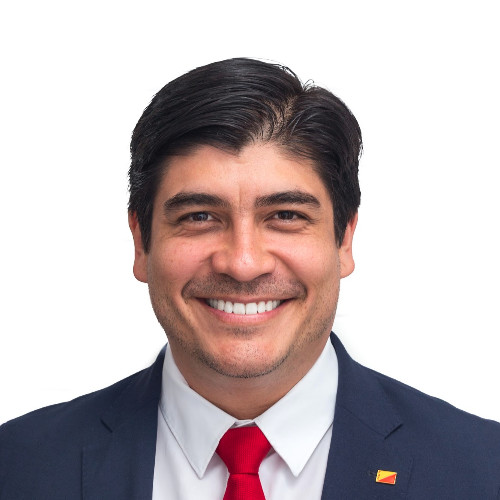
Carlos Alvarado Quesada
Reading Time: 4 minutesAlvarado Quesada is a former president of Costa Rica (2018-22) and professor at the Fletcher School at Tufts University.
The Legacy of COP30 for Latin America
As the UN climate summit in Brazil winds down, one attendee looks at its lasting effects for the region.
Photo Essay: The Melting Glaciers Releasing Heavy Metals
High in Peru’s Andes, communities and scientists are racing against time to mitigate one more calamity wrought by climate change.