



This article is adapted from AQ’s special report on Latin America’s space race
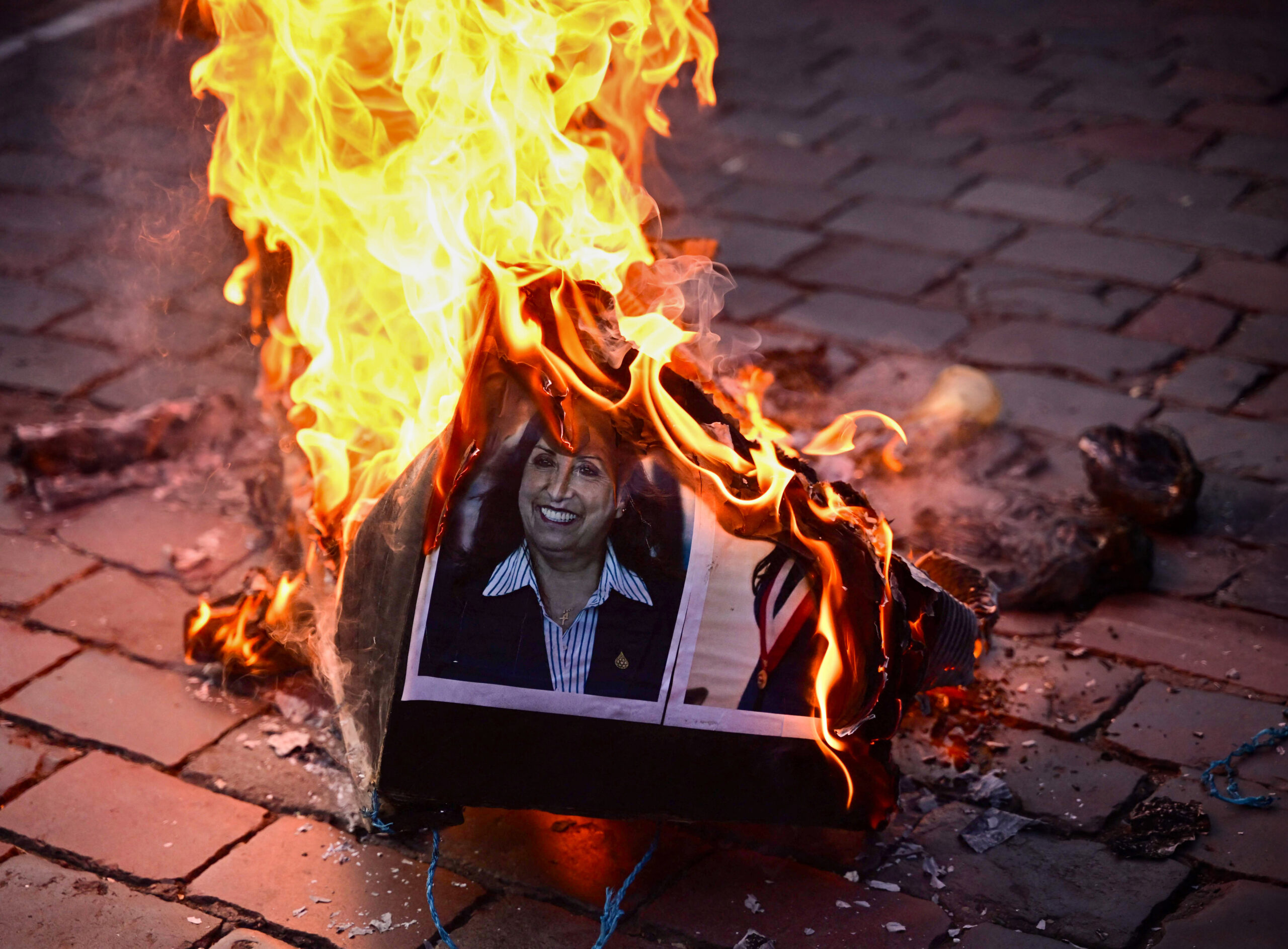
Peru has had nine presidents in a decade. None were removed by a coup in the traditional sense; most fell to congressional maneuvers, corruption scandals, and the relentless pressure of a constitution designed to make presidents removable. Earlier this year, a record 35 candidates entered the presidential race, but after a months-long recount, the first-round results confirmed that the two leading candidates didn’t even reach 30% of the vote combined.
Peru’s political landscape mirrors trends elsewhere, though not always as extreme. Across Latin America, elites have sidelined democratic norms, the rule of law is under assault by various social and political forces, and if citizens abandoned parties long ago, they have now simply disengaged from formal politics. Elites and citizens seem to be exiting the democratic consensus, giving way to institutional hollowing out without a classic authoritarian takeover.
For years, analysts have cited external shocks to explain the fraying of the Western liberal order: the rise of China, a revanchist Russia, and the global surge of illiberal populism. Although these challenges are real, they are symptoms of a deeper problem: The central dynamic weakening liberal societies today is disintegration from within.
The economist Albert Hirschman classically analyzed this dynamic of “exit,” or the decision to leave rather than fight. His framework, originally designed for firms, now describes our societies. When citizens conclude that raising their voice or participating in politics is futile, they stop trying. They vote for outsiders, work off the books, emigrate, or simply disengage. Leaders do the same: They abandon democratic norms, withdraw from international treaties, and govern as if institutions were obstacles rather than foundations.
This creates a vicious cycle in which, as more people disengage, the institutions people rely on weaken further, making exit an even more rational alternative for those who remain.
Leaving democracy behind
For leaders such as Gabriel Boric, Andrés Manuel López Obrador, Nayib Bukele or Javier Milei, to name only a few, running against the establishment became a competitive advantage regardless of ideology. Traditional political parties are crumbling everywhere: In 20 Latin American presidential elections held between 2021 and 2025, 16 were won by parties fewer than 10 years old. Political parties are the connective tissue between citizens, executive branches, and legislatures. When they collapse, three things fray at once: voters lose a reliable cue for retrospective accountability; presidents lose stable legislative coalitions; and the orderly machinery of succession degrades.
The case of Guatemala in 2023 captures all three. Semilla, a political party barely six years old, won the presidency under the leadership of Bernardo Arévalo, but immediately faced legal harassment from prosecutors aligned with traditional elite networks. Without a consolidated party behind it, the elected government’s path to power depended on episodic street mobilization.
This is no defense of the old party systems, which were responsible for regional ills, including extensive patronage and corruption scandals. Yet, for varying periods and unevenly across countries, those parties provided a modicum of order and legitimacy that their successors have not reproduced.
In turn, the politicians who run against the establishment often treat institutional constraints as the next thing to discard. President Donald Trump has claimed he “does not know” whether he must uphold the U.S. Constitution. Latin America’s left largely refused to acknowledge that Peru’s Pedro Castillo attempted a coup in December 2022, and the right denied that Jair Bolsonaro’s supporters did the same against President Luiz Inácio Lula da Silva.
An Ipsos global survey found that 47% of respondents would support a strongman willing to break the rules if it meant they achieved results. In Latin America, 54% said in 2023 they would accept a non-democratic government if it solved their problems, up from 45% in 2001.
The exit is not only at the top. According to International IDEA, global voter turnout fell from 65% in 2008 to 55% in 2023. But it’s more than apathy: Decades of unaddressed inequality, corruption, and criminal violence have convinced many that neither voting nor protesting produces change.
When citizens do mobilize, the results often deepen frustration. Protests can topple a government overnight but rarely succeed in reconstituting power, legitimacy, or order. Chile’s 2019 estallido and its aftermath illustrate a society that explicitly demanded a new constitution but twice failed to adopt one. Chileans knew what to reject but were unable to articulate what they wanted instead.
Exiting the formal market
When the formal economy fails to deliver opportunity, people build their own. According to the International Labor Organization, six out of 10 workers and four out of five enterprises operate informally. And contrary to decades of predictions, informality is growing in many countries. The COVID-19 pandemic reversed years of modest progress in the Global South. Meanwhile, illegal markets have expanded everywhere, generating the income that the formal economy could no longer provide for a significant portion of the world’s population.
Consider what this looks like on the ground. In Ecuador, the national homicide rate surged from 5.7 per 100,000 in 2018 to 45.1 in 2023, as criminal organizations moved into the spaces the state had abandoned, controlling neighborhoods and informal economies. The promise of social inclusion through education and formal jobs rings hollow for youngsters raised in violent, corrupt, and unequal democracies. As a result, they’re embracing a kind of vernacular libertarianism built around crypto speculation, synthetic drugs, platform work, and social media self-branding.
This expansion of informal and illegal markets renders state policy less effective in shaping people’s lives. At the same time, the institutional capture of politics by organizations that profit from these economies escalates corruption and makes formal democracy less meaningful. The spread of illegal markets and the violence that accompanies them is visible not just in Latin America, but across the globe, from Rosario to Malmö, Marseille, and Guayaquil.
Walking away from home
Migration is exit in its most concrete sense. Although Trump’s border enforcement has slowed migration flows into the United States, it has not touched the structural forces that push people out: authoritarian governance, economic informality, climate stress, and violence. Migration as an exit persists, albeit now directed toward other destinations.
And it reshapes politics in receiving countries. According to an Ipsos global survey, negative views of immigration rose 4 percentage points from 2016 to 2021. National defection in one country fuels democratic defection in another, as xenophobic backlash empowers anti-immigrant movements across the West. Chile’s new president, José Antonio Kast, built his campaign on harsh anti-immigrant rhetoric, and his success is a case in point.
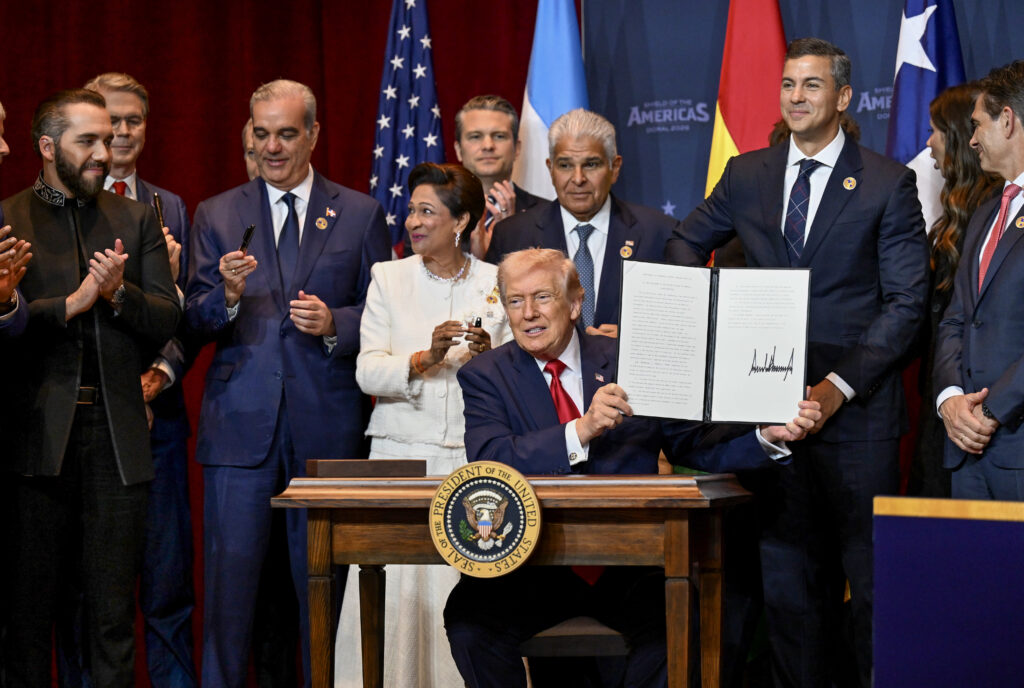
Perhaps the most consequential defection has occurred at the international level. Both right and left have returned to nation-state programs, portraying globalization as a vehicle for exploitation. As Ivan Krastev and Stephen Holmes argued during Trump’s first term, his rhetoric erased the U.S. tradition as a “beacon of liberty,” recasting the country as simply another self-interested power. The second Trump administration has deepened this logic, withdrawing from the World Health Organization and the Paris Agreement (for the second time) and projecting a vision of international relations stripped of any normative content.
The pattern extends well beyond Washington. Brexit was the highest-profile case, but withdrawal from international commitments has become fashionable everywhere. In South America, domino departures reduced UNASUR from 12 members to five between 2018 and 2020. This meant less regional cooperation.
The retreat rests on the fundamental assumption that international cooperation is naive: There are always winners and losers, and nations should act accordingly. Hugo Chávez famously lamented, “While we leaders go from summit to summit, our peoples go from abyss to abyss.” Today’s leaders have found a simpler solution: Skip the summits rather than fix the abysses.
Rebuilding the case for engagement
Disengagement is the rational instinct when institutions fail to respond. Reversing that dynamic requires rebuilding the case for engagement, even if it requires new political experiments.
As Moisés Naím noted, minilateralism—bringing together the smallest possible number of countries needed for impact—has emerged as a pragmatic alternative. Sometimes, fewer is more. The Argentine-Brazilian nuclear accountability agency ABACC has become a global model of confidence-building and technological cooperation, proving that bilateral commitments can succeed where multilateral ones falter. The U.S. rupture with Canada and Mexico need not be the inevitable fate of neighboring democracies. This time, the South of the Americas may be showing the way to the North.
Political scientists have often argued for democratic reform, but they have done so timidly, within the box, seeking marginal adjustments. The fixation on measuring “backsliding” from an assumed democratic endpoint is itself a trap; it assumes a teleology that history does not support. Democracy has always been an experiment, one that flourished first in small places and weakly centralized states. Ironically, the most experimental political system nowadays is China’s, combining subnational autonomy, policy tinkering, and career promotion based on successful innovation. Relegitimizing democracy will require balancing gradualism with boldness, central planning with regional experimentation, and less demand on citizens’ attention with institutions that reward participation. Better societies are built through engagement, not alienation. Many people in the Americas and around the globe have lost hope that engagement works. What we need is to make engagement worthwhile through institutional experimentation, the appeal to a future our youngsters envision as worth living—in their own terms—and a democratic politics that delivers more than the promise of the next election.
ABOUT THE AUTHORS

Andrés Malamud
Reading Time: 6 minutesMalamud is a senior research fellow at the Institute of Social Sciences of the University of Lisbon. He has been a visiting researcher at the Max Planck Institute in Heidelberg and at the University of Maryland, College Park, and a recurring professor at universities in Argentina, Brazil, Italy, Mexico, Portugal and Spain.

Juan Pablo Luna
Reading Time: 6 minutesLuna is a professor of Political Science and Diamond Brown Chair in Democratic Studies at McGill University, and a researcher at the UC School of Government in Chile.

Alberto Vergara
Reading Time: 6 minutesVergara is a political scientist and professor in the Universidad del Pacífico’s Department of Social Sciences in Lima, Peru.

Can Liberal Democracy Adapt Before It Unravels?
The global embrace of illiberal democrats reveals not just widespread disillusionment, but elite failure.