


This article is adapted from AQ’s special report on Mexico’s path forward
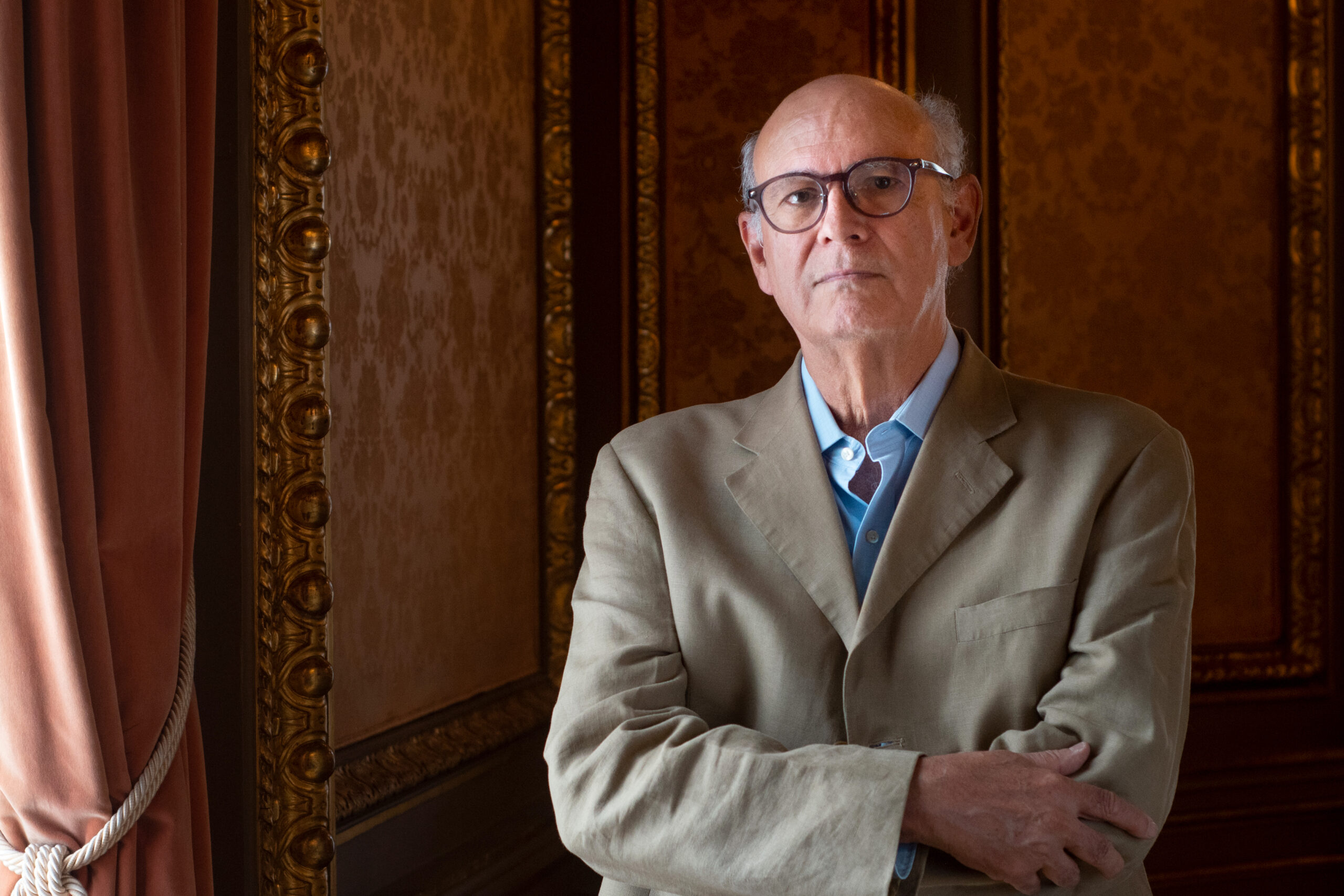
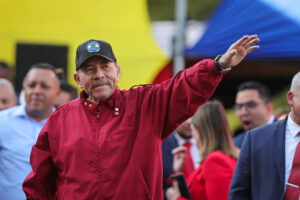
When Nicaragua’s President Daniel Ortega announced in July that the country would no longer hold elections, Carlos Fernando Chamorro wasn’t surprised. “Why is Ortega making a statement about something that is already happening in the country?” thought the journalist, a longtime critic of the 80-year-old Sandinista leader who has ruled Nicaragua for almost two decades.
Despite living in exile since 2021, Chamorro, 70, still begins each day “in” Nicaragua. In May of that year, government authorities raided the newsroom of the multimedia outlet he founded, Confidencial, confiscated equipment, and forced him to Costa Rica for a second time. The previous occasion was in December of 2018, when police officers ransacked the offices of the news outlet following months of anti-government protests that started over a controversial pension reform but shortly after morphed into a massive movement that sought to dislodge Ortega and his wife and then-vice president, Rosario Murillo, from power.
Many fear that Ortega’s intentions—preventing any part of the real opposition from participating in the elections originally scheduled for November 2027—may be the nail in the coffin of Nicaragua’s inexorable democratic collapse. “For me, it’s a big provocation,” Chamorro told AQ in a recent interview.
Ortega’s announcement has raised eyebrows across the Western Hemisphere, and 29 countries endorsed a proposal by the Organization of American States to hold a special meeting of foreign affairs ministers to address the country’s political situation on September 17. Brazil opposed the motion, and Mexico abstained.
During his tenure, Ortega and his now co-president Murillo have systematically sought to obliterate the opposition and curtail political dissent via mass incarcerations. “These latest developments further deepen the severe restrictions on fundamental freedoms, the dismantling of civic space, and the steady erosion of the rule of law,” UN Human Rights chief Volker Türk warned days after the announcement.
Isolating the regime
The ruling Sandinista National Liberation Front (FSLN) has consolidated a police state that makes the country part of a hemispheric dictatorship axis with Cuba and, until recently, Venezuela. But unlike these countries, Nicaragua exhibits fiscal and monetary stability despite a massive depletion of human talent, targeted international sanctions, and the erosion of the rule of law. For this year, the IMF projects 3.8% GDP growth, the fifth consecutive year of economic expansion, driven by continued favorable terms of trade and higher remittances.
“Nicaragua is not Cuba or Venezuela. It’s not collapsing; you don’t have blackouts. You have a very sui generis macroeconomic handling, very responsible in some issues, and on the other hand a flagrant violation of the rule of law and the judicial security,” Chamorro told AQ.
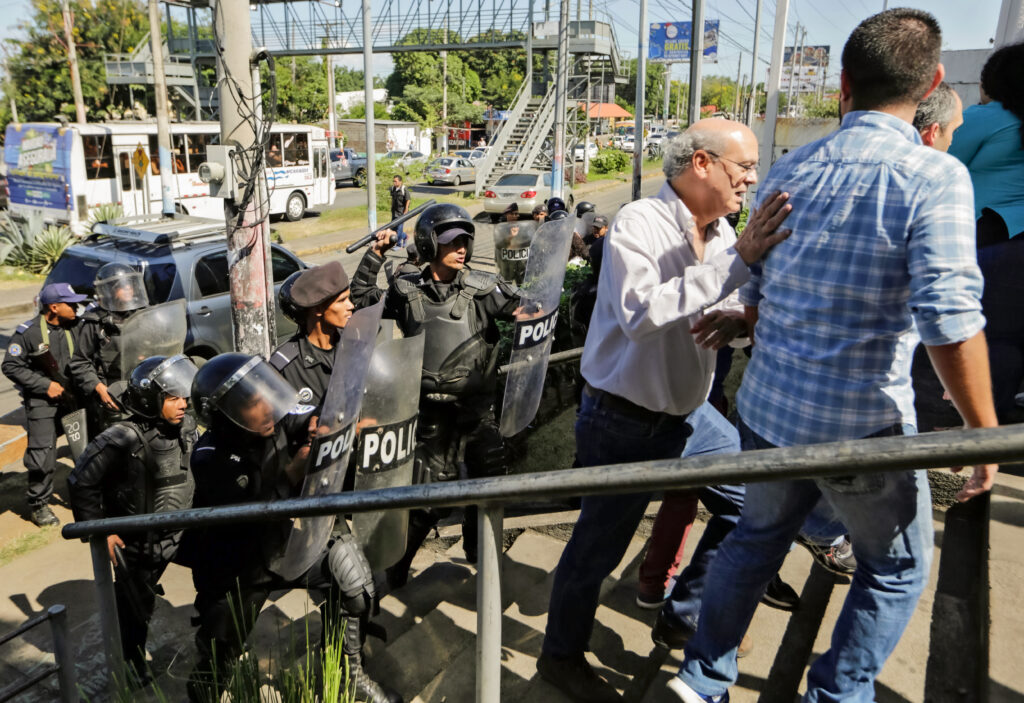
INTI OCON/AFP/Getty
Chamorro was born into one of Nicaragua’s most consequential political families. His father, Pedro Joaquín Chamorro Cardenal, edited La Prensa, considered the country’s only opposition paper, and was a leading critic of Anastasio Somoza Debayle’s dictatorship until 1978, when he was assassinated by three men who shot him 18 times. His mother, Violeta Barrios de Chamorro, later defeated Ortega in the 1990 election, becoming Nicaragua’s first female president and the first elected female president in the Americas. She passed away last year in Costa Rica. The family name carries the weight of a national saga: dictatorship, revolution, civil war, democratic transition, and return to authoritarian rule now on the shoulders of Ortega and Murillo.
While the Trump administration is not paying Nicaragua the same attention as Venezuela or Cuba, Chamorro believes the U.S. and the international community can help shape its future political course. “Taking into consideration that Nicaragua’s dictatorship is an anomaly in the continent—a family dynastic dictatorship—it should gather more rejection” from the international fora. Countries in the continent and beyond can do a lot to “empower the forces seeking a change in Nicaragua,” Chamorro argued.
That change may hinge on isolating the Ortega-Murillo regime. “A rupture of relations by all the Central American and Latin American countries will have an enormous impact—not much on Ortega or Murillo’s mentality—but on the generals controlling the army and other high-ranking officials.”
However, Chamorro said, neighboring countries have so far proven most reluctant and fearful to take such action. “I think it’s very unlikely that the government of Honduras would provoke such a rupture,” Chamorro added, highlighting the economic costs for both countries.
A second option, floated in recent years without much traction, could also inflict serious damage on the regime: excluding Nicaragua from the Dominican Republic-Central America Free Trade Agreement (CAFTA-DR), which enables the country to export most of its goods and services to the U.S. and neighboring countries. In this scenario, for example, Nicaraguan textile makers operating under preferential conditions would lose competitiveness almost overnight and would need to relocate elsewhere to remain active. The problem with isolating Nicaragua by taking this approach is that it may create massive layoffs, and people will be more likely to leave the country to seek new jobs. “This is something that the U.S. wants to avoid,” Chamorro said. “You have political and economic implications and probably something in between. It’s not easy. It’s complex, and that demands real leadership.”
Finding a solution to the protracted democratic erosion in Nicaragua boils down to the intention of the actors involved, and there lies the big catch, according to Chamorro. “I see no leadership, neither in the U.S. nor in the Americas, to make these types of decisions,” he said. Still, while Chamorro places great hope in the international community’s role in solving Nicaragua’s problems, he places greater weight on internal factors. “The solution is in Managua, and that solution needs a regime debilitated from its roots,” he said, mentioning the need for government employees, soldiers, and high-ranking officials to desert and join the pro-democratic movement.
That’s where information and keeping the public informed play an important role.
Journalism from exile
Today, Chamorro and 19 colleagues work from Costa Rica, the U.S. and other countries in the region, as well as Spain, maintaining a close but delicate communication with sources inside the country as the best possible conduit to monitor and hold the autocratic regime accountable.
“Governments can seize a newsroom and force journalists across a border, but they cannot so easily eliminate their ability to investigate and preserve an independent record of what is happening inside Nicaragua,” said Steven Hendrix, a former U.S. diplomat, highlighting the role of Chamorro and the work of Confidencial.
Founded in 1996 by Chamorro, Confidencial combines investigative reporting with political analysis, while the television programs “Esta Semana” and “Esta Noche” brought accountability journalism to a broader public. The project’s premise was straightforward but politically dangerous: no party, president or revolutionary myth should be exempt from scrutiny.
Over nearly three decades, Confidencial became one of the country’s most recognizable independent outlets. Its reporting and analysis gave Nicaraguans a way to understand the consolidation of power under Ortega and Murillo, especially after Ortega returned to the presidency in 2007. As institutions weakened and public debate narrowed, Chamorro’s newsroom became both a source of information and a target. “Carlos Fernando and his team at Confidencial incisively reported on Nicaragua’s perils, effectively piercing the regime’s narrative of exceptionalism, security, and political legitimacy,” said Gema Kloppe-Santamaría, a professor of Latin American history at Georgetown University, a lecturer of sociology at University College Cork, and a former columnist at the news outlet.
“Doing journalism from exile is particularly strenuous,” Chamorro said. “It has taken a toll on us as human beings, personally and as a family, as well as in terms of the enormous financial difficulties involved in making an operation like this sustainable.” Confidencial’s last reporters left the country in 2024, and the lack of boots on the ground requires more time to verify information and complicates communication with sources. Those willing to speak and share information need special protection to keep their identities confidential and avoid jeopardizing their safety and their families’. “It took us way more time to publish investigative stories on corruption, deportations, and the prosecution of the Catholic Church. Any event demands an additional effort of verification,” Chamorro told AQ.
The purge and a flame
“If Nicaragua is to overcome its troubled past and today’s stifling repression, conditions will have to be created to allow people like Carlos Fernando Chamorro to return home and to practice journalism free of threats and intimidation,” said Kevin Sullivan, the U.S. ambassador to Nicaragua from 2018 to 2023 and current vice president of the Council of the Americas, one of the organizations that publishes AQ. Sullivan praised Chamorro as a “tireless advocate” for the respect of human rights and the liberation of political prisoners in the country.
While a return to Nicaragua is not on the horizon, Chamorro and Confidencial continue to expose the regime’s machinations and moves to stay in power. One of the most prominent cases covered in recent years is what Chamorro calls the “Big Purge,” a process that has allowed co-president Murillo to remove several officials, judges, and government operators close to Ortega. In late August, Alba Luz Ramos was forced to resign as president of the nation’s supreme court (CSJ), joining nine judges who either left or opted for retirement since November 2025. For most analysts, with the purge, Murillo is building her own inner circle of acolytes and confidants for the next chapter of the dynastic dictatorship.
With all the elements in place, Chamorro acknowledges that the work of Confidencial and many other journalists in exile will not bring political change to Nicaragua. The real turning point in the country’s history will come from political leaders and society itself through civil resistance, working in tandem with help from the international community. “But journalism keeps the flame of freedom alive. A flame that allows our audience to navigate an obscure and uncertain world. And I believe that is our contribution to that change.”
ABOUT THE AUTHOR
José Enrique Arrioja
Reading Time: 6 minutesArrioja is the managing editor of Americas Quarterly and Senior Director of Policy at the Americas Society/Council of the Americas.
REACTION: Daniel Ortega Says No More Elections in Nicaragua
The country was scheduled to hold general elections in November 2027.
What Nicaragua Gains From Russia’s Embrace
A new agreement with Moscow signals that the Ortega-Murillo regime will continue to tighten its grip in Managua, an expert writes.