


This page was updated on June 8 as the vote count advanced.
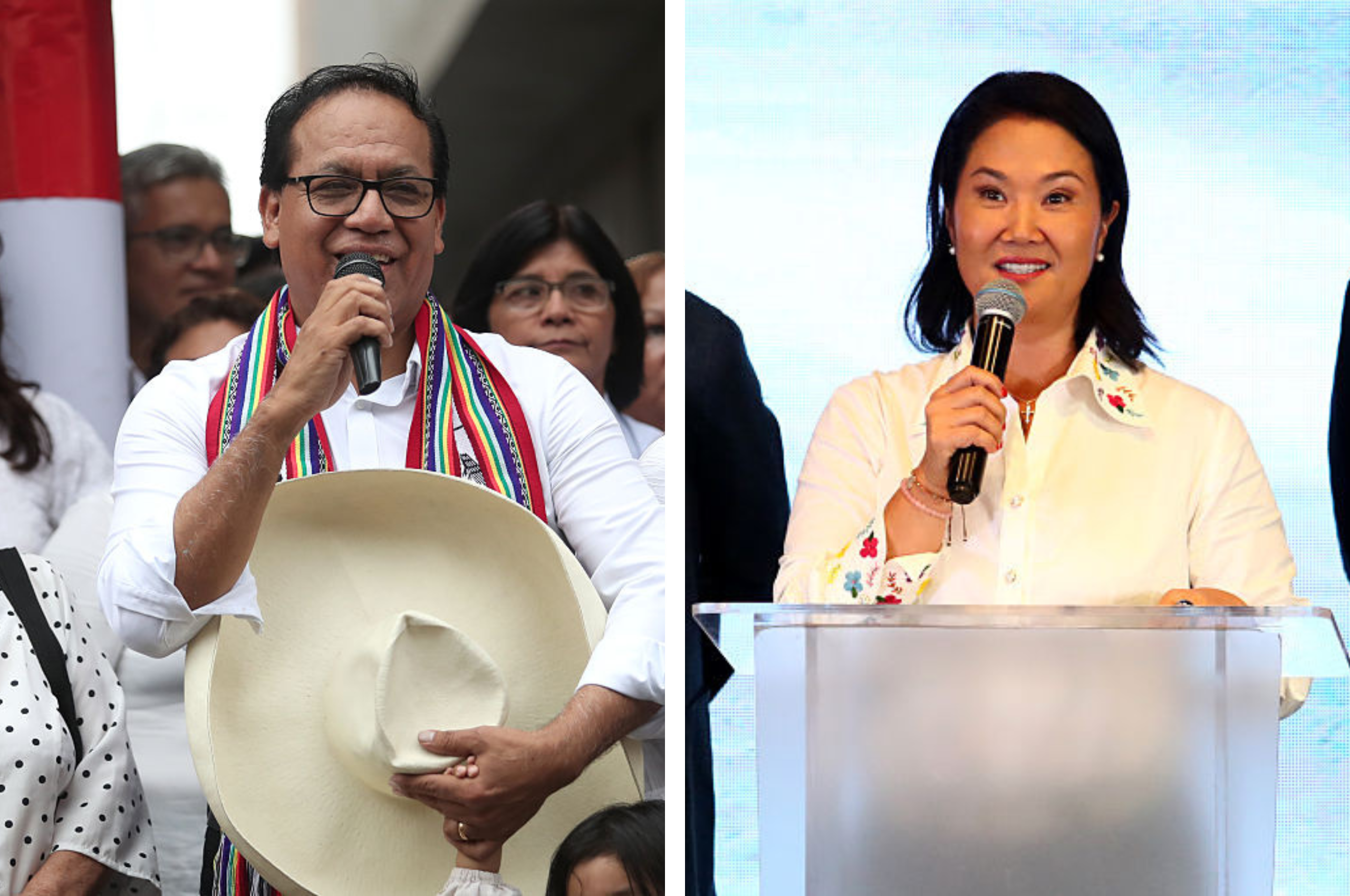
Peru’s presidential runoff appears headed for a razor-thin result that may take days or even weeks to define. With over 94% of the vote counted on Monday afternoon, the nation’s electoral authority, ONPE, showed leftist Roberto Sánchez with a slim lead over right-wing politician Keiko Fujimori, who had been leading earlier in the day.
A preliminary count by pollster Ipsos on Sunday night showed a statistical tie, with Sánchez very slightly ahead of Fujimori. Ipsos’ preliminary tallies have correctly identified the winner of every runoff since 2001, though its director said that with the margin so tight, a full count would be necessary to determine the winner.
After reporting a small number of irregularities, government election monitors announced that, after polls closed, they had found no evidence of fraud. ONPE said its full count would be completed by mid-July.
AQ asked analysts to share their reactions.

Jorge Morel
General Director, Instituto de Estudios Peruanos (IEP)
Voting in Peru’s second-round presidential election has concluded with a scenario that has become familiar to Peruvians since 2016: two candidates separated by mere fractions of a percentage point in the vote count. Once again, as in the two previous presidential elections, Peruvians will face demands for vote recounts, allegations of irregularities (and fraud), and, above all, the absence of a political pact that upholds the basic democratic principle of majority rule: the candidate with one more vote than the other wins. This will undoubtedly fuel a new political cycle marked by distrust, parliamentary obstructionism, and, even worse, attempts to remove the president from office.
With more than 92% of the vote counted, Fujimorismo—the Peruvian right-wing populist movement—is experiencing its strongest electoral performance since 2016. Faced with the possibility of being overtaken by emerging forces on the right—as has happened to other conservative parties across the region, from Bolsonaro’s movement in Brazil to Abelardo De La Espriella’s political rise in Colombia—Fujimorismo has managed to remain the country’s leading political force in 2026, both in the presidential vote and in terms of representation in both chambers of Congress.
Meanwhile, the coalition backing Roberto Sánchez—comprising several left-wing and center-left parties—has thus far secured a degree of initial stability in the event of a future administration. It appears capable of assembling a majority sufficient to prevent a presidential impeachment and of forming a broad-based executive coalition extending beyond those closely associated with former President Pedro Castillo’s political project.
However, a new post-electoral game will begin once the official results are certified. At that stage, campaign slogans will matter less, and negotiations among political groups in the new bicameral Congress could produce the least expected outcomes: from coalitions between former political adversaries to senators assuming the presidency of the republic. Everything remains to be seen—except for the prospect of five more years of political instability, which appears all but certain.

Cynthia Sanborn
Political science professor and director of the Center for China and Asia-Pacific at Peru’s Universidad del Pacífico, and working group member at the Boston University Center for Global Development Policy
Whatever the outcome, the winner will have to work with a more challenging, but hopefully more mature Congress, with two chambers rather than one. This implies a potential brake on executive power.
The stark choice between Fujimori and Sánchez does not reflect the preferences of this electorate. It is important to stress that 70% of Peruvians voted for other candidates in the first round, meaning that most voters did not want either candidate as head of state, with real fear about both options.
In terms of foreign policy, neither candidate would be fully aligned with either the Trump administration’s so-called “Donroe Doctrine” or the Chinese alternative. This may be why Trump did not endorse a candidate in this race despite Fujimori’s right-wing credentials and endorsements from other conservative Latin American leaders, along with the political baggage Fujimori brings.
Both Fujimori and Sánchez want Peru to remain open to trade and business with all global powers. Neither is likely to turn their back on China as a major trading partner, nor embrace the more hostile elements of Trump’s Latin American and immigration policies. Instead, both focus on Peru being a hub to the Pacific.
Another interesting fact is the large number of international observers who were involved in this second-round process. The European Union, the OAS, even U.S. embassy staff, led by U.S. Ambassador Bernie Navarro himself, were out there doing election monitoring. Crucially, it does not appear that the election and vote-counting process is the problem this time around. Instead, the uncertain outcome is the result of the fact that this country was deeply divided around which of these two “lesser evils” should be president.
Voters clearly considered this choice important, given that null and blank votes were relatively few. The U.S. did not take a side in this election but did seem to stand strongly for a clean and fair process. So, although the loser is likely to challenge the results given how close they are, and that’s a concern, it appears unlikely that there will be international support for those who cry fraud.
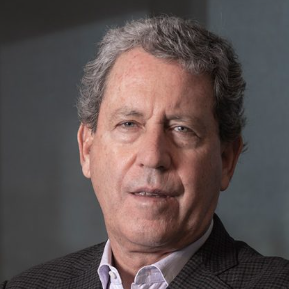
Alfredo Thorne
Principal director at Thorne & Associates, former finance and economy minister of Peru from 2016-17
Last night, voters cast their ballots to elect their new president and, once again, ONPE said the results were too close to call. This has become the norm rather than the exception in recent elections. Two key factors may explain this trend: the fact that Peru lacks well-established political parties that represent the population; and the socio-economic divide between those who live Lima and other coastal cities, and those who live in the Andes.
Unfortunately, this will mean a period of high uncertainty during which electoral authorities will have to count and recount all the votes to ensure a clean, transparent election. In anticipation of this outcome, both Keiko Fujimori and Roberto Sánchez placed party representatives as observers in most voting centers.
By the time the official tally reached 94.1% of voting records counted—about 87,270 out of 92,766—1,517 were “contested.” These will be sent to the Jurados Electorales Especiales (JEE, or special local juries) and, in a special assembly in front of the political parties’ representatives, the juries will recount the votes. During this process, party representatives and their lawyers will fight vote by vote.
Fortunately, the runoff has proceeded normally and there have been no irregularities like those in the first round. Hopefully, the losing candidate will acknowledge his or her defeat. Whoever wins, the country will be polarized. The victor would do well to appeal to the opposite camp of voters and attempt to build a consensus government. The new Congress now has more professional leaders, and neither candidate has even a simple majority, which may shape how the eventual winner decides to form his or her government. This is especially true given a positive result of this election: The public has voted out some of the political parties most associated with cronyism.

Gonzalo Alcalde
Public policy analyst and professor at Pontificia Universidad Católica del Perú
Despite the sharp contrast in the two candidates’ visions for the country, the runoff was preceded by a short campaign with very limited public debate on policy proposals, even by recent Peruvian standards. After the first-round vote on April 12, it wasn’t clear who would face Keiko Fujimori in the runoff until May 17.
Fujimori adopted a more conciliatory tone but opted not to change her message after winning the first round. It continued to focus on three major themes: a “tough on crime” approach to public safety, promoting private investment and economic growth, and (to a lesser extent) state modernization and deregulation. On economic policy in particular, Fujimori sought to present herself as the pro-market candidate, insisting on fiscal discipline, macroeconomic stability, and reducing bureaucracy, despite her party’s uneven track record on these issues while largely dominating Congress since 2016. She paid less attention than Roberto Sánchez to social policy, even as Peru’s poverty and food insecurity rates remain above pre-pandemic levels.
Sánchez, on the other hand, moderated his platform much more visibly. He introduced new advisors who were associated with different left and center parties ahead of the first-round vote, and distanced himself from controversial figures like Antauro Humala. Sánchez softened his discourse to appeal to centrist voters and reassure markets, appearing more pragmatic and committed to economic stability and Peru’s international commitments. He also pivoted to focus more on public safety, proposing legal and police reforms. However, the credibility of his new rhetoric seems strained by the fact that it is associated with newcomers to his campaign as opposed to his party’s lawmakers. Sánchez’s core themes, meanwhile, remained unchanged: constitutional reform, a stronger role for the state in economic development, and greater regulation of mining and natural resources.
For now, it seems that Sánchez’s changes to his messaging have resonated with voters more successfully than his opponent’s reaffirmation of her original platform. However, such fine tuning may be less significant than a recurring and much less subtle confrontation between the fear of “communism” and the fear of “fujimorismo,” two boogeymen that have haunted Peru’s recent elections and which reflect the country’s deep social and regional divisions.
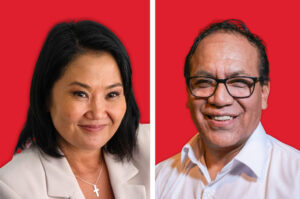
Peru: Meet the Candidates 2026
Keiko Fujimori and Roberto Sánchez will compete in a polarizing runoff on June 7, with crime and protracted political instability top of mind for voters.
Peru’s Chaotic Election — and Some Reasons for Hope
While the country's politics remain in poor shape, the June 7 runoff offers a new opportunity to rethink the future.