




Two weeks ago, voters in Texas, Georgia and Ohio—which together account for about 40% of planned U.S. data center capacity—elected governors who campaigned on restricting the development of data centers. Voters across the country overwhelmingly backed limits on data centers in local ballot measures, providing the most recent and clearest rejection thus far, rooted in concerns about rising electricity costs, environmental impact, and the livability of the communities involved. While the country leads the global race for AI supremacy, Americans are increasingly voicing a “not in my backyard” stance on the infrastructure powering it.
Before the elections, lawmakers in states including Georgia, Michigan, Pennsylvania, and Vermont proposed moratoriums on new data center developments, while a Virginia bill proposing a statewide pause on local approvals carried over to the 2027 legislative session. Around the U.S., communities are questioning the electricity, water, land, and infrastructure demands of these massive facilities, even as developers promise new jobs, tax revenues, and local infrastructure investments.
Could this growing opposition create an opportunity for Latin America?
The answer is yes, but success is far from guaranteed. Latin America has repeatedly struggled to convert its abundant natural resources into sustained investment and economic development. Bolivia’s once-booming gas industry and Venezuela’s now-diminished oil sector are recent examples of missed opportunities. This time, countries will need to transform their energy resources, available land, and geographic advantages into reliable electricity, predictable regulation, less red tape, and a compelling proposition for investors and local communities.
The scale of the opportunity is considerable. According to the International Energy Agency, global data center electricity consumption could more than double from approximately 415 terawatt-hours in 2024 to 945 TWh by 2030, approaching 3% of global electricity demand. In Latin America, this expansion will require enormous investments in power generation, transmission, distribution, storage, and digital infrastructure.
However, data center demand varies widely. AI model training, which involves processing vast amounts of information, may offer greater geographic flexibility than applications that require extremely low latency to serve U.S. users. Connectivity, data sovereignty, cybersecurity, technology restrictions, and customer requirements will also shape investment decisions.
Latin America’s opportunity is therefore less about relocating existing American facilities and more about capturing a meaningful share of future global investment. The maquila industry in the 80s and 90s was based on lower labor costs, favorable customs arrangements, and proximity to the U.S. For the data center ecosystem, affordable, reliable, and, in most cases, clean energy, along with high-quality connectivity and access to fiber-optic and multiple submarine cables, would bring more value than cheap labor alone.
Three priorities
As the region experiences an AI boom, with Chile and Brazil at the forefront, three priorities could determine its success. Delivering reliable power and connectivity is a critical first step. Abundant energy resources mean little if electricity cannot reach a data center when needed. AI campuses require exceptionally reliable power, often at scales that exceed the capabilities of existing local grids. Countries should identify locations where generation, transmission, connectivity, and land availability can be developed together, rather than treating each as a separate investment decision.
This is where Latin America’s energy resources could provide a competitive advantage. Natural gas can provide reliable generation, while abundant solar, wind and hydroelectric resources can support competitive electricity costs and reduce emissions. Battery energy storage systems can complement these resources, provide flexibility and improve grid reliability. The optimal mix will vary by country, but the objective should be the same: deliver reliable, competitively priced electricity while strengthening the broader power system.
Second, countries should establish predictable rules while protecting existing electricity customers. Data center developers need regulatory certainty, enforceable contracts, transparent permitting, and realistic infrastructure timelines. Governments must also ensure that the costs of serving these large new customers do not fall disproportionately on households and existing businesses.
Third, the region should create lasting benefits for local economies. The opportunity should extend well beyond construction spending and property taxes. Governments and developers can work together to strengthen local supply chains, train technical workers, support universities and research institutions, and expand access to computing infrastructure for local businesses.
Community engagement must begin early, with transparent discussions about water consumption, environmental impacts, land use and noise. Local communities should see measurable improvements in infrastructure, economic opportunities and public services.
The risks are already visible in the region. In Chile, residents’ objections and an environmental court ruling prompted Google to abandon an original design for the Cerrillos data center. In Brazil’s Ceará state, federal prosecutors filed a suit to prevent a data center from beginning operations until a consultation with the Anacé Indigenous people and an environmental impact study had been completed. In the state of Querétaro, Mexico, community groups have shown significant dissatisfaction with the data center boom and promised benefits that have yet to materialize.
Routes to competitiveness
Brazil combines a large domestic market, substantial renewable generation and an established digital economy, positioning it to serve both domestic demand and selected international computing workloads. Mexico benefits from proximity to the U.S., strong industrial integration and access to North American natural gas, although electricity and water constraints could limit development in some locations.
Argentina offers an intriguing combination of Vaca Muerta’s natural gas resources—255 trillion cubic feet of technically recoverable gas—renewable energy potential, and available land, particularly for large-scale AI computing facilities. However, regulatory predictability, financing conditions, and infrastructure execution will be decisive. Chile brings experience in renewable energy, battery storage, and attracting data center players, although transmission constraints and water availability require careful consideration.
Other markets, including Colombia, Panama, Paraguay, Uruguay and the Dominican Republic, could develop more targeted propositions based on connectivity, location, energy resources, or specific customer needs. Venezuela may eventually offer opportunities given its substantial energy resources, but significant institutional and infrastructure challenges remain.
Multilateral institutions such as the Inter-American Development Bank and CAF could help governments improve investment frameworks. IFC has financed ODATA’s expansion in Brazil, IDB Invest is considering providing up to $300 million for Scala Data Centers in Brazil, and CAF is exploring financing options for data center and technological infrastructure projects in Argentina.
Competing through certainty and reliability
Governments should act now to identify competitive locations, coordinate electricity and digital infrastructure investments, accelerate permitting, and establish clear rules to protect consumers and communities.
Some countries are already responding. The U.S. Department of State recently announced an agreement between Crusoe, a U.S. technology infrastructure company, and Araico, a Paraguayan developer, to build high-performance AI cloud computing infrastructure powered by hydroelectricity from the Itaipu dam. Brazil recently enacted tax incentives for data centers while considering additional rules on electricity infrastructure, environmental protection, and consumer costs. Mexico is debating requirements addressing electricity and water consumption, while Argentina is considering incentives for large AI infrastructure investments. These initiatives illustrate both the growing regional interest and the need to balance investment promotion with reliable infrastructure and public acceptance.
The region cannot afford to miss another investment opportunity because its natural advantages failed to translate into execution. More importantly, attracting data centers should not be the end goal. The goal is to use this wave of investment to modernize electricity grids, develop technological capabilities, and create lasting economic opportunities for its citizens.
If households pay higher electricity bills or communities bear disproportionate environmental costs, Latin America could quickly face the same backlash that is now creating an opening. The challenge is not merely to welcome the next generation of data centers but to ensure their arrival leaves the region stronger than before.
ABOUT THE AUTHOR

Francisco Morandi
Reading Time: 5 minutesMorandi is an energy strategist with prior leadership roles at AES Corporation, including strategic planning for AES Electricidad de Caracas.

How Latin America Is Climbing the High-Tech Value Chain
Early successes in microchips and data centers offer hope for a promising area of regional growth.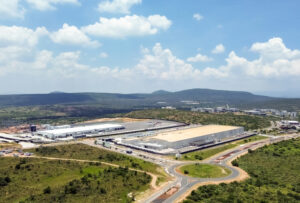
Can Latin America Become a Data Center Powerhouse?
An ongoing boom suggests major opportunities lie ahead, but only if the region invests in education and worker training.