



Stephen Corry on Protecting the Amazon’s Remaining Isolated Peoples
The only way to protect uncontacted tribal peoples is to ensure their lands are properly secured. If their territories are not invaded and stolen, they have a good chance of survival; when their lands are taken, they are unlikely to survive at all. There are many examples where territories have been protected, and Survival International … Read more
Mark J. Plotkin on Protecting the Amazon’s Remaining Isolated Peoples
The U.S. writer H.L. Mencken famously remarked, “There is always a well-known solution to every human problem — neat, plausible and wrong.” The question of how to protect the Amazon’s isolated tribes — which encompasses such difficult issues as human rights, rain forest conservation, preservation of cultural integrity, sustainable development, national sovereignty and addressing threats … Read more
La pobreza en Latinoamérica esta bajando, pero la violencia sube. ¿Por qué?
Versão em portuguêsRead in English Con la pobreza en América Latina y el Caribe en sus niveles más bajos en décadas, ¿por qué la violencia está disparada? Aunque algunos países están peor que los demás, la región cuenta con las tasas de homicidios más altas del mundo. Esta relación es desconcertante y contradictoria. Los investigaores … Read more
Colombia’s Next Challenge? A Psychologically Traumatized Society
Following a breakthrough in negotiations with FARC guerillas on Wednesday, President Juan Manuel Santos suggested that peace in Colombia was closer than ever. But even if a deal is signed, the task of coming to terms with the psychological effects of the decades-long conflict will remain. Colombian economist Andrés Moya is studying what that might … Read more
Puerto Rico’s Debt Debate Overlooks Human Costs
Imagine that you only have access to running water every three days. That’s not so bad, given the government’s plans in response to an extreme summer drought to shut down tap water completely for up to four days at a time. To add insult to injury, imagine you still have to pay for the tap water … Read more
In Ecuador, Broken Promises and Calls for an “Indigenous Uprising”
August 9 marks the International Day of the World’s Indigenous Peoples. In Ecuador, hundreds will mark the day in protest, as a march convened by CONAIE, the country’s chief Indigenous organization, is making its way to Quito from the far southwestern corner of the country. CONAIE, or the Confederation of Indigenous Nationalities of Ecuador, has … Read more
Jamaica’s Pride Week Is A Positive Step for the Caribbean
Correction appended below On Saturday, LGBT rights organizations kicked off PRiDE JA 2015, Jamaica’s first ever gay pride week. For a country that TIME magazine once called “the most homophobic place on earth,” the event is testament to a slowly improving climate for an often persecuted LGBT community. “Despite the realities, Jamaica is changing slowly … Read more
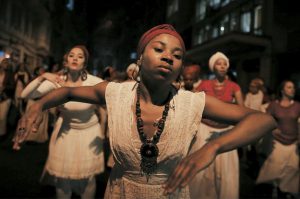
Behind the Numbers: Race and Ethnicity in Latin America
Throughout Latin America, race and ethnicity continue to be among the most important determinants of access to opportunity and economic advancement. Indigenous and Afro-descendant peoples in Latin America represent 40 percent of the total population—a sizeable share—yet they remain a disproportionate segment of the poorest of the poor. While a priority for social inclusion measures, … Read more

Marco Antonio Ramírez, Peru
“In Peru, blacks are soccer and volleyball players, musicians, dancers, or policemen, but they never become doctors, mayors or presidents,” says Marco Antonio Ramírez. “We need to change the mindset.” At just 23, Ramírez is the president of Ashanti— an Afro-Peruvian youth organization dedicated to combating racism and discrimination against Afro-descendants—and believes his community can … Read more
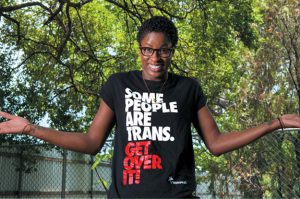
Latoya Nugent, Jamaica
Correction appended below A few years after publicly coming out as a lesbian, Latoya Nugent, 33, was defending the rights of lesbian, gay, bisexual, and transgender (LGBT) communities in Jamaica. In July 2013, she became the education and training manager at J-FLAG—the island’s leading LGBT rights organization. Those who knew her weren’t surprised. Though her … Read more

José Santos Caicedo, Colombia
Ethnicity is more than just an identity issue; it’s an ethical one. José Santos Caicedo, a national coordinator of the Proceso Nacional de Comunidades Negras (Black Communities Process— PCN)—an umbrella group of more than 110 Afro-Colombian grassroots organizations that seek to defend the territorial, cultural and human rights of Afro-Colombians—is a vivid example: “You do … Read more
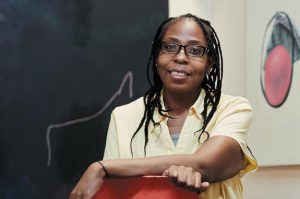
Gregoria Flores, United States
While many were surprised when tens of thousands of unaccompanied Central American children arrived at the U.S. southern border seeking asylum last year, it had a sadly familiar resonance for Gregoria Flores. “I know what it’s like to apply for asylum here when you have no one supporting you,” said Flores, 47, who arrived alone … Read more

Edgardo Ortuño, Uruguay
First black member of parliament, undersecretary and interim minister of industry and energy, champion of Afro-Uruguayan culture—those are Edgardo Ortuño’s historic achievements in a country where the marginalization of Afro-descendants, comprising approximately 10 percent of Uruguay’s population, remains a major challenge.1 Ortuño, 45, who grew up in a working- class neighborhood in Montevideo, leveraged his … Read more
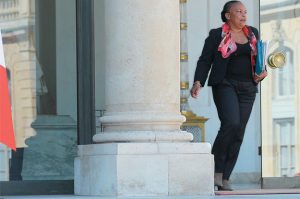
Christiane Taubira, French Guiana
Christiane Taubira has been France’s minister of justice since May 2012—a position that has turned her into a symbol for the left and a target for the right. She most famously made headlines during the heated debates in parliament and in the streets, leading to the legalization of same-sex marriage in France in May 2013. … Read more

PUBLISHED BY AMERICAS SOCIETY/ COUNCIL OF THE AMERICAS
680 Park Avenue
New York, NY 10065
Phone: (212) 249-8950