



Abuses Against Afro-Colombian Communities in Tumaco
Human Rights Watch released a report today that documents killings, disappearances and sexual violence against Afro-Colombian communities in Tumaco, a city in southwestern Nariño department. The abuses were reportedly committed by the Fuerzas Armadas Revolucionarias de Colombia (Revolutionary Armed Forces of Colombia–FARC). José Miguel Vivanco, Americas director at Human Rights Watch, said that “the FARC … Read more
Monday Memo: Mercosur Summit – General Hugo Carvajal – Gov. Jerry Brown – Mexican Energy Reform – Argentine Debt
This week’s likely top stories: Mercosur leaders meet in Caracas; former General Hugo Carvajal returns to Venezuela; California Governor Jerry Brown visits Mexico; Mexican Congress discusses energy reform; Argentina nears its debt deadline. Mercosur leaders to address Israel at Mercosur summit: Brazilian President Dilma Rousseff is expected to lead Mercosur leaders in condemning Israel’s military … Read more
Policy Updates
A snapshot of policy trends and successes in the region.
Venezuela: How Long Can This Go On?
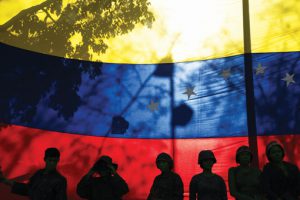
On April 10, Venezuelans stayed up past midnight to watch an event on TV that just a few weeks prior would have seemed incredible, almost miraculous: after three months of intense protests, headed by students in alliance with the most combative sectors of the opposition calling for President Nicolás Maduro’s departure, the government and the … Read more
Latin America at the Winter Olympics
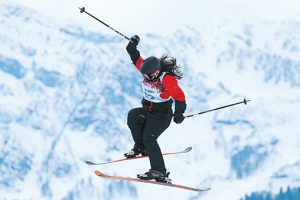
Latin American and Caribbean countries may not be as well-known for their winter sports as Canada, Russia or the United States, but the region does have a storied tradition at the Winter Olympic Games. Argentina, the first Latin American country to participate, sent a five-man bobsled team to the second-ever Winter Games in 1928. Chile … Read more

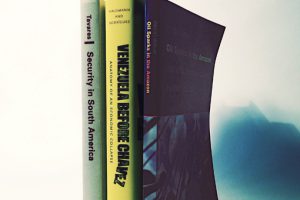
Venezuela Before Chávez: Anatomy of an Economic Collapse by Ricardo Hausmann and Francisco R. Rodríguez
During the 1970s, Venezuela was the richest country in Latin America. With the region’s highest growth rates and the lowest levels of inequality, it was also one of the most stable democracies in the Americas. But starting in the early 1980s, things fell apart. The nation endured three coup attempts and one presidential impeachment. Per … Read more
Protest U.
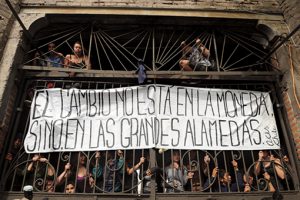
Millions of students have taken to the streets across Latin America in recent years in protests that reflect an unprecedentedly broad mobilization of popular opinion. Following massive demonstrations led by secondary school students in 2006 in Chile, university students launched a series of protests in May 2011. Powered by a coalition of public and private … Read more
Fresh Look Reviews
Fresh, unique perspectives on recent books from across the hemisphere originally published in English, Spanish and Portuguese.
The Future of Latin American Studies
The field of Latin American studies has been a target for critics ever since it became a prominent feature of the U.S. academic landscape in the 1960s. Earlier critiques were quite severe, often permeated by the premise that studying Latin America from the North (and even the very concept of “Latin America” as an object … Read more
Indigenous Enrollment
Since its formation in February 1971, the Consejo Regional Indígena del Cauca (Regional Indigenous Council of Cauca—CRIC) has made the education of young Indigenous Colombians one of its most important goals. The dream of creating an autonomous university for Indigenous youth was finally realized in November 2003—when the CRIC’s high council formally created the Universidad … Read more

Student Debt in the Americas
The promise of upward mobility for Latin America’s new middle classes has led to swelling university enrollment rates, but also to growing debt.1 In Colombia, high school graduates enrolling in higher education rose from 24.87 percent in 2002 to 45.02 percent in 2012.2 Meanwhile, in 2011, 23 percent of 25- to 34-year-old Mexicans had attained … Read more

Bridge Institutions in Higher Education
The United States and Latin America are both struggling to find ways to improve participation in quality education in the face of a labor-market skills gap. But all too often, policymakers, businesses and educators have looked to elite universities as a way of meeting those gaps. While important for high-end jobs, labor market and social … Read more
The Pull and Example of Science Education in the United States
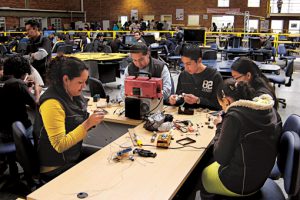
I expected high school biology students. Instead, I was facing 120 middle school students who were on an outing to Maloka, an innovative science museum in Bogotá. On the fly, I changed my presentation on how the brain works into a series of demonstrations. At the end, I was awed by the questions: “My mother … Read more
Higher Ed: Private Investors Get Into the Game
The combination of sustained economic growth in Latin America, a region-wide expansion of the middle class, and a newly competitive business environment has boosted demand for quality education, and stoked desires for alternatives. The alternatives are coming from a slew of new and lower-cost online courses. This innovation has produced a wave of private investment … Read more
From the Think Tanks
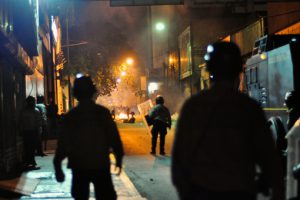
Human Rights Watch, Brookings Institution, Corporación de Estudios para Latinoamerica The Venezuelan government’s response to the protests that began on February 12, 2014, led to accusations of human rights abuses. In its report, “Punished for Protesting: Rights Violations in Venezuela’s Streets, Detention Centers, and Justice System,” Human Rights Watch analyzes 45 allegations of abuses perpetrated … Read more

PUBLISHED BY AMERICAS SOCIETY/ COUNCIL OF THE AMERICAS
680 Park Avenue
New York, NY 10065
Phone: (212) 249-8950