




The EU is engaged in a discussion that will yield no change in human rights conditions on the island. The U.S. would be wise not to follow the EU’s lead.
In March, the European Union (EU) and the Cuban government announced a renewal of bilateral talks on trade and investment. Lured by Cuba’s proposed social and economic reforms, including a new foreign investment law, the expansion of self-employment, and loosened travel restrictions, the EU agreed to return to the negotiating table for the first time … Read more
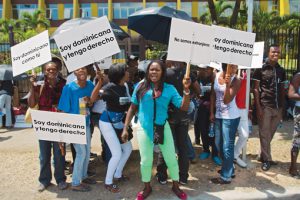
The Dominican Republic and Haiti: A Shared View from the Diaspora
In a landmark ruling, the Dominican Republic’s Constitutional Court last September stripped an estimated 210,000 individuals—most of whom are Dominicans born to Haitian sugar cane workers—of their citizenship, effectively leaving them stateless. The ensuing outcry from the international community has included Junot Díaz and Edwidge Danticat—two of the best-known contemporary authors from the island of … Read more

Bridge Institutions in Higher Education
The United States and Latin America are both struggling to find ways to improve participation in quality education in the face of a labor-market skills gap. But all too often, policymakers, businesses and educators have looked to elite universities as a way of meeting those gaps. While important for high-end jobs, labor market and social … Read more
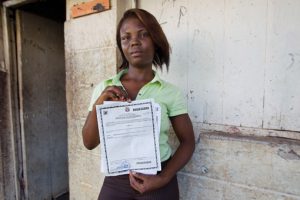
The Dominican Republic and Haiti: Shame
Juliana Deguis Pierre was born in 1984 in Los Jovillos, Dominican Republic, 72 miles (116 kilometers) west of Santo Domingo. Under the country’s constitutional recognition of birthright citizenship, Deguis—the daughter of two undocumented Haitian immigrants working in the sugar cane fields—was issued a birth certificate recognizing her Dominican nationality. Now 29 years old, she has … Read more

Higher Ed: Private Investors Get Into the Game
The combination of sustained economic growth in Latin America, a region-wide expansion of the middle class, and a newly competitive business environment has boosted demand for quality education, and stoked desires for alternatives. The alternatives are coming from a slew of new and lower-cost online courses. This innovation has produced a wave of private investment … Read more
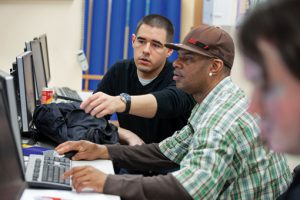
MOOCs in Development: Fad or Future?
Those following tech and continuing education news have been surprised by the rising popularity of Massive Open Online Courses (MOOCs).1 The basic promise for professionals in Latin America and the Caribbean is quite alluring: free online access to a world-class knowledge base. But questions remain. Will this new learning methodology last, or fade quickly once … Read more
Behind the Numbers: Insecurity and Marginalization in Central America
With 11 homicides per 100,000 inhabitants in 2012, Nicaragua stands out as a relatively fortunate exception in a region whose homicide rates rank among the world’s highest. Its northern neighbors all recorded rates at least three times greater: with Guatemala at 34.3 murders per 100,000 citizens; El Salvador at 41.5; and—at the top of this … Read more
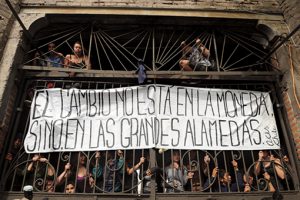
Protest U.
Millions of students have taken to the streets across Latin America in recent years in protests that reflect an unprecedentedly broad mobilization of popular opinion. Following massive demonstrations led by secondary school students in 2006 in Chile, university students launched a series of protests in May 2011. Powered by a coalition of public and private … Read more
Solving the Migration Crisis Requires a Shift in Foreign Policy
This Friday, presidents of the Northern Triangle countries of El Salvador, Guatemala and Honduras will meet with President Barack Obama in Washington DC to deal with the crisis of unaccompanied minors arriving in the U.S. from Central America. Migration between these countries is not new, and has been high on the multilateral agenda for … Read more
U.S. Ambassador Shannon Travels to Central America
U.S. Counselor of Department of State Thomas Shannon arrived in Honduras on Wednesday as part of a three-day trip to Central America to address the estimated 52,000 unaccompanied minors from the region entering the U.S. illegally. As part of his trip, Shannon visited repatriation centers and met with leaders of civic organizations and government officials. … Read more
Short and Long-term Solutions to Migration in Central America
During the past few months, the United States, Mexico and Central American governments have brought attention to the number of unaccompanied minors fleeing towards the U.S. from Honduras, El Salvador, Guatemala, and Mexico. A recent study by the Pew Research Center shows that the number of unaccompanied children ages 12 and younger caught at the … Read more
Visit Sparks Hope for Chinese Investment in Cuba
Chinese President Xi Jinping kicked off a two-day tour of Cuba last night, stirring hopes that the China will invest heavily in Cuba’s developing economy. President Xi will meet with President Raúl Castro today in Havana before flying to the eastern city of Santiago de Cuba. While China and Cuba are close political allies, instability … Read more
Monday Memo: Colombian Legislature – Argentine Debt – Peruvian Environmental Law – Deaths in Nicaragua – Bolivian Child Labor
This week’s likely top stories: Colombia inaugurates a new legislature; Argentina must pay its debt by July 30; Reforms to Peru’s environmental agency are criticized; Five Nicaraguans are killed after a Sandinista anniversary celebration; Bolivia allows those as young as 10 to work. Colombia installs new legislature: As Colombia’s new legislature was sworn in on … Read more
How Guatemala Is Tackling Its Social Issues
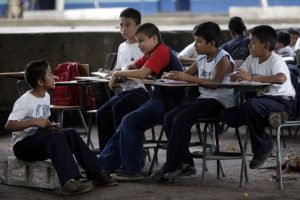
One year ago, Americas Quarterly’s 2013 Social Inclusion Index gave Guatemala the lowest total score of all countries evaluated, with a total of 14.8 points out of a possible 100. The index ranked 16 countries, including the United States and 15 countries from Latin America. The comments in the evaluation for Guatemala indicated that “Poverty … Read more
Dominican Republic and Haiti Resume Immigration Talks
Yesterday in the city of Juan Dolio in the Dominican Republic, the Dominican and Haitian governments began the third round of bilateral talks concerning the legalization of the thousands of Haitians that live in the Dominican Republic without legal documentation. In a press conference after the talks concluded, Haitian Prime Minister Laurent Lamothe said that … Read more

PUBLISHED BY AMERICAS SOCIETY/ COUNCIL OF THE AMERICAS
680 Park Avenue
New York, NY 10065
Phone: (212) 249-8950