


Over the past few months, the Trump administration has steadily ramped up pressure on Cuba: indicting senior Cuban officials including former president Raúl Castro, and sanctioning the state oil company and military-linked entities that control much of Cuba’s economy. Taken together, Washington’s measures, combined with the Cuban government’s own decades of economic mismanagement, have pushed the island near a breaking point, with crumbling infrastructure, dire fuel shortages, and chronic nationwide blackouts arriving just as the Caribbean summer heat settles in.
In a recent piece for Americas Quarterly, our experts lay out four scenarios for what could come next: humanitarian intervention, targeted coercive action, internal regime fractures, or negotiated concessions.
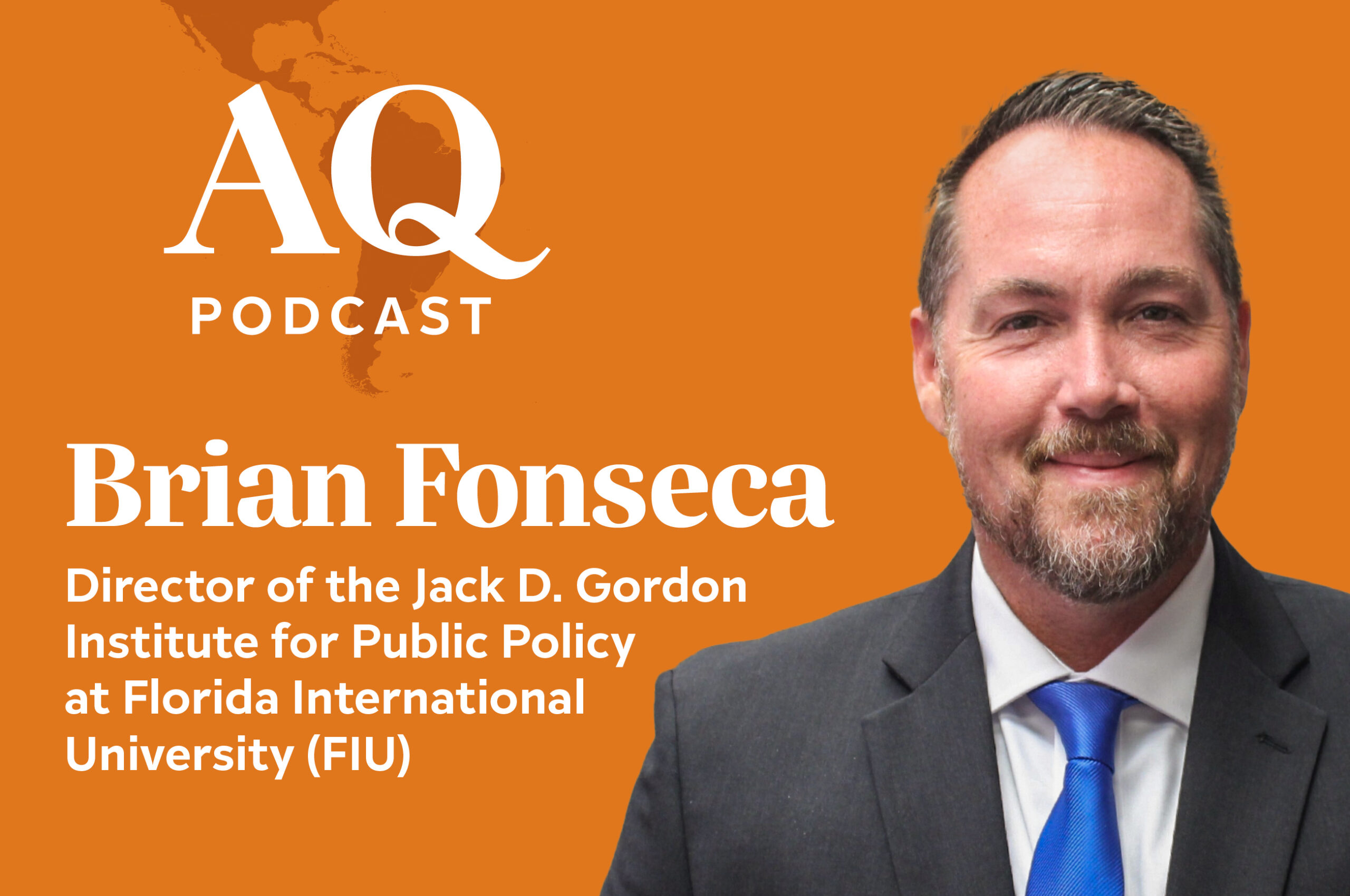
Today on the podcast, we walk through each: What they’d look like on the ground, what Havana’s room for maneuver might be, and whether the Cuban regime might once again elude expectations of change, as it has for the last 67 years. Our guest is Brian Fonseca, Vice Provost for Defense and National Security Research and Director of the Jack D. Gordon Institute for Public Policy at FIU.
Listen to this episode and subscribe to The Americas Quarterly Podcast on Apple, Spotify and other platforms
Guest:
Brian Fonseca is Vice Provost for Defense and National Security Research and Director of the Jack D. Gordon Institute for Public Policy at FIU.
Host:
Brian Winter is editor-in-chief of Americas Quarterly
If you would like to know more:
Cuba’s Crisis: Four Near-Term Scenarios by Brian Fonseca and Liany Diaz Gonzalez
Cuba’s Military: The Institution Washington Cannot Ignore by Brian Fonseca
AQ Podcast | Cuba on the Brink
CNN’s Havana bureau chief on the U.S. oil blockade, the crisis gripping Cuba, and what might come next for the island.