



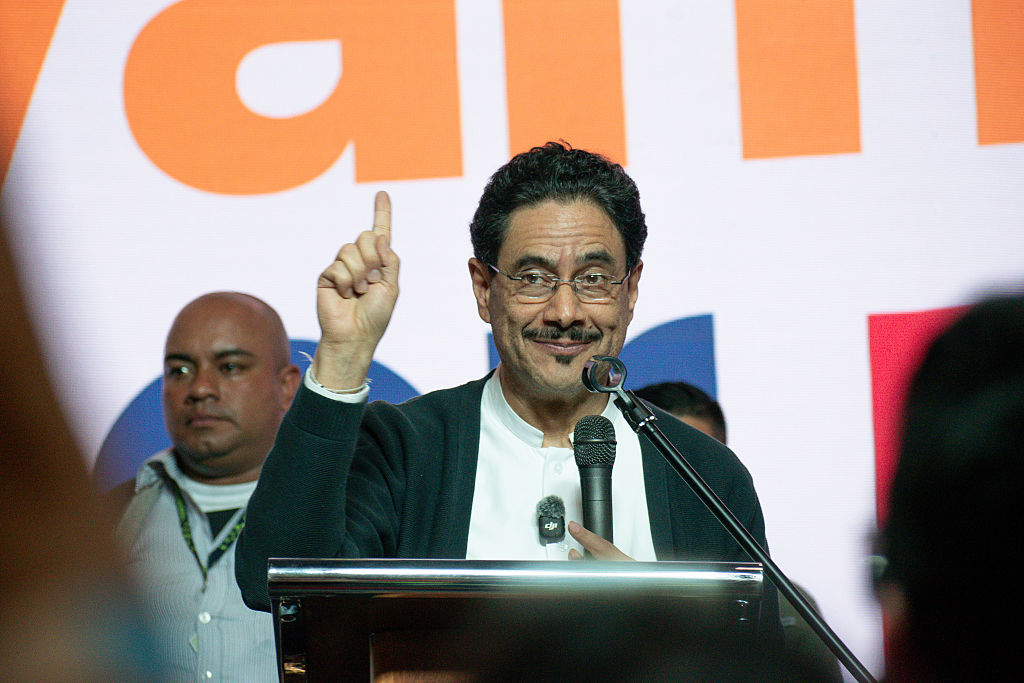
BOGOTÁ – This week, Abelardo De La Espriella, the controversial lawyer hoping to be elected the next president of Colombia, called out his fellow right-wing competitor, Paloma Valencia, for avoiding an open debate to discuss the country’s most pressing problems.
De La Espriella criticized Valencia for being part of the political establishment, while presenting himself as one of the many who have never had a role in defining the nation’s future. “Dear Paloma, the campaign is not for little games,” he pressed in a post on X.
The verbal feud between the two conservative candidates trying to differentiate themselves in voters’ eyes marks the latest confrontation in a two-track presidential race. De La Espriella and Valencia are making every possible effort to reduce the advantage held by Iván Cepeda, a left-wing senator running as part of the incumbent coalition Pacto Histórico.
Tensions are running high across the conservative political spectrum. With less than a month to go before the first round of elections on May 31, Cepeda, with the support of President Gustavo Petro and his political machinery, leads in every major poll. Support from conservative voters is split between De La Espriella and Valencia, and the other 10 candidates are far behind.
The outcome of this first round is crucial because the odds of Cepeda securing more than 50% of the vote, which is needed to avoid a runoff on June 21, are low. Four polls put him below 40%, and only one places him at 44%.
A few key factors explain this. First, there is a sizable number of hopefuls, ranging from well-known figures to newcomers to Colombia’s political landscape. Even those who receive a relatively low share of the vote will make it difficult for the winner to surpass 50%. Second, the relative stability of Cepeda’s numbers over the past three months has led some analysts to believe he has a ceiling among the more than 41 million eligible voters.
“We could end up seeing something similar to what happened in Chile last year, where the runner-up in the first round ends up winning in the second,” political analyst Leonardo García told AQ. José Antonio Kast placed second with 24% of the vote on November 16, but defeated first-round winner Jeannette Jara in the runoff held on December 14, winning the presidency with 58% of the vote.
For many, that potential scenario is central to Colombia’s electoral race as the country navigates a delicate moment. Concerns over political violence, rising crime, and the government’s failure to rein in armed insurgent groups are considered the top issues in this election, while coca production has risen in recent years.
Complicating the outlook is the incremental push for a Constitutional Assembly favored by Petro. On May 1, during a rally to celebrate International Workers’ Day, the president said he would deliver a text proposal by July 20, when the new Congress convenes. Cepeda supported the idea, which the other candidates rejected. This might become another contentious issue in the campaign.
Tensions between a “dove” and “the tiger”
As the election draws closer, the race between De La Espriella, nicknamed “the tiger,” and Valencia, whose first name means “dove” in Spanish, holds the key to the entire election. Even though they both hail from the right, their camps have accused each other of dirty tactics by using influencers and social media.
De La Espriella, described as the true outsider in the race and running as part of the Movimiento Salvación Nacional, leads Valencia in all polls. While Guarumo puts him one percentage point above Valencia—a technical tie—in the case of GAD3, the difference is eight percentage points.
However, according to the polls, Valencia has a better chance of beating Cepeda in a second round. That is why Cepeda’s campaign has targeted her more than De La Espriella. Moreover, her party, Centro Democrático, was founded by former President Álvaro Uribe, Cepeda’s archrival.
Despite issuing comprehensive proposals on public security, housing, employment, education, tertiary roads, and energy, Valencia’s initiatives have failed to capture the voters’ attention. She was heavily criticized on social media for suggesting that Uribe be nominated as her minister of defense, which annoyed non-uribista voters. After her running mate complained about the idea, she said she would choose her Cabinet herself.
Uribe ruled out serving as Valencia’s defense minister days later, but the damage was already done to her team’s unity and to the perception of her independence from her mentor. Some polls show that Valencia’s numbers, which had been increasing, dipped, and the gap with De La Espriella widened.
“Paloma (Valencia) is between a rock and a hard place,” political consultant Camilo Granada told AQ. “If she is seen as too soft, her uribista base will flee and embrace Abelardo, but if she is seen as too hard, she will annoy voters from the center and lose in the first round,” he added.
Until now, the animosity between De La Espriella and Valencia has made a political alliance unlikely, but things can change once the race evolves to a potential second round.
Cepeda’s advantage
As the leading candidate, Cepeda has continued with his strategy of holding large rallies where he reads speeches and tends to bore the audience. “It is clear he is not Gustavo Petro when addressing a crowd,” commented García, the political analyst.
But probably he doesn’t need to be. “We are seeing something that resembles what happened in Mexico, where Claudia Sheinbaum appeared to be a calm candidate, while Andrés Manuel López Obrador took care of steamrolling any opponent,” Luis Alberto Moreno, former minister and ex-president of the Inter-American Development Bank, commented in a recent interview with a local newspaper.
Observers have noted that, to boost Cepeda’s chances, the current government has increased spending to record levels and hiked the minimum wage by 24% effective January, more than four times the inflation rate. According to the Fiscal Rule Committee, an independent body financed by the national budget, current government expenses will increase 9% in 2026. At the same time, of the 650,000 new jobs created in Colombia between March 2025 and March 2026, 369,000 were added in the public service sectors, such as education, health care, and general administration.
With more government spending reaching voters, Cepeda looks hard to beat, especially if he faces De La Espriella, a controversial figure due to his past as a criminal defense lawyer. In that case, the second-round scenario of 2022—when Petro beat political newcomer Rodolfo Hernández—would be repeated: a left-leaning senator against an outsider from the extreme right.
Still an open contest
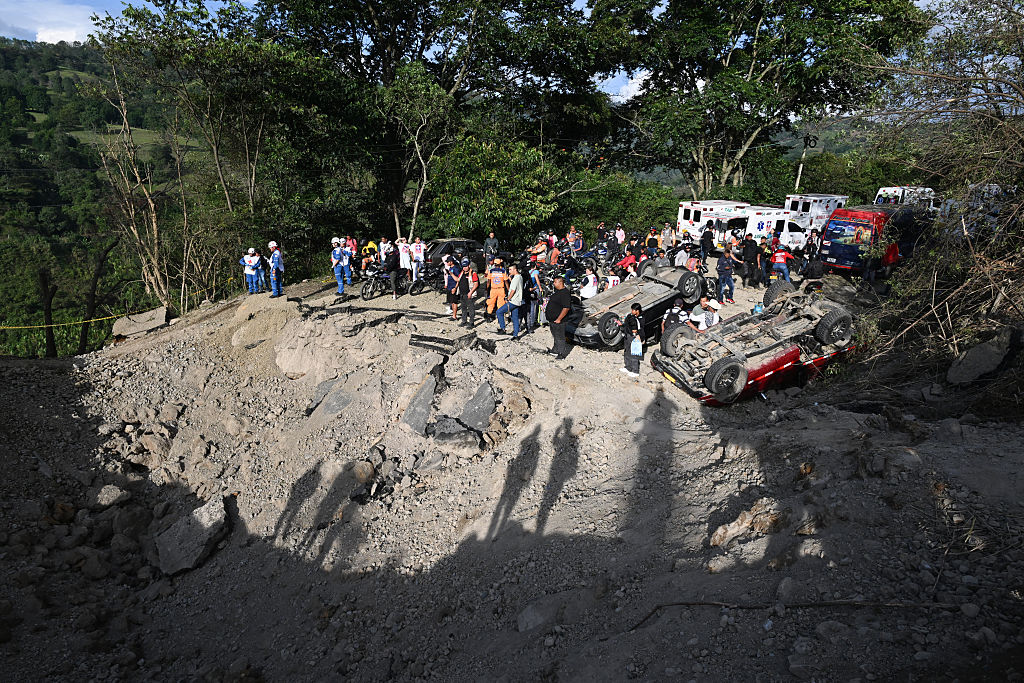
Nonetheless, some see weakness in the Pacto Histórico candidate. In addition to avoiding debates with his opponents and expressing some extreme views in a 433-page-long government plan, Cepeda is a firm believer in Petro’s “total peace” policy. After 20 people were killed in an attack on civilians in Cauca province at the end of April, public opinion might harden against those who offer an olive branch to radical groups.
Also, negative ratings matter. According to Guarumo, 42% of voters would never vote for Cepeda, while only 18% and 17% would never vote for De La Espriella and Valencia, respectively. The same poll indicates that 61% of voters have already decided, but more than one-fifth still don’t know who to vote for, and the other 16% might change their preferences or are split between two names.
The overall contest remains open, and in the final stretch, many things can happen, including unforced errors from the candidates. The threat of violence is present too, something that must be taken seriously after the assassination of the candidate and Senator Miguel Uribe last year.
All things considered, if nothing extraordinary takes place, everything points to a new three-week race starting on June 1, in which the frontrunner Cepeda will face either a dove or a tiger, marking a new polarized scenario between the left and the right.
If the race ends up as tight as it looks today, with political turmoil remaining the norm, the next president taking office on August 7 will be tasked with leading Colombia through a complex moment in its internal politics while facing a shifting global geopolitical landscape with little margin for error.
ABOUT THE AUTHOR

Ricardo Ávila
Reading Time: 5 minutesÁvila is a senior analyst at El Tiempo and a political consultant in Bogotá, Colombia.
The Resurgence of Gustavo Petro and the Colombian Left
Colombia’s president has seen his popularity rise, increasing the odds that the left could win May’s presidential election.
Colombia: Meet the Candidates 2026
The country is bracing for a polarizing runoff between right-wing firebrand Abelardo De La Espriella and leftist Iván Cepeda on June 21.