



This article is adapted from AQ‘s special report on Latin America’s space race
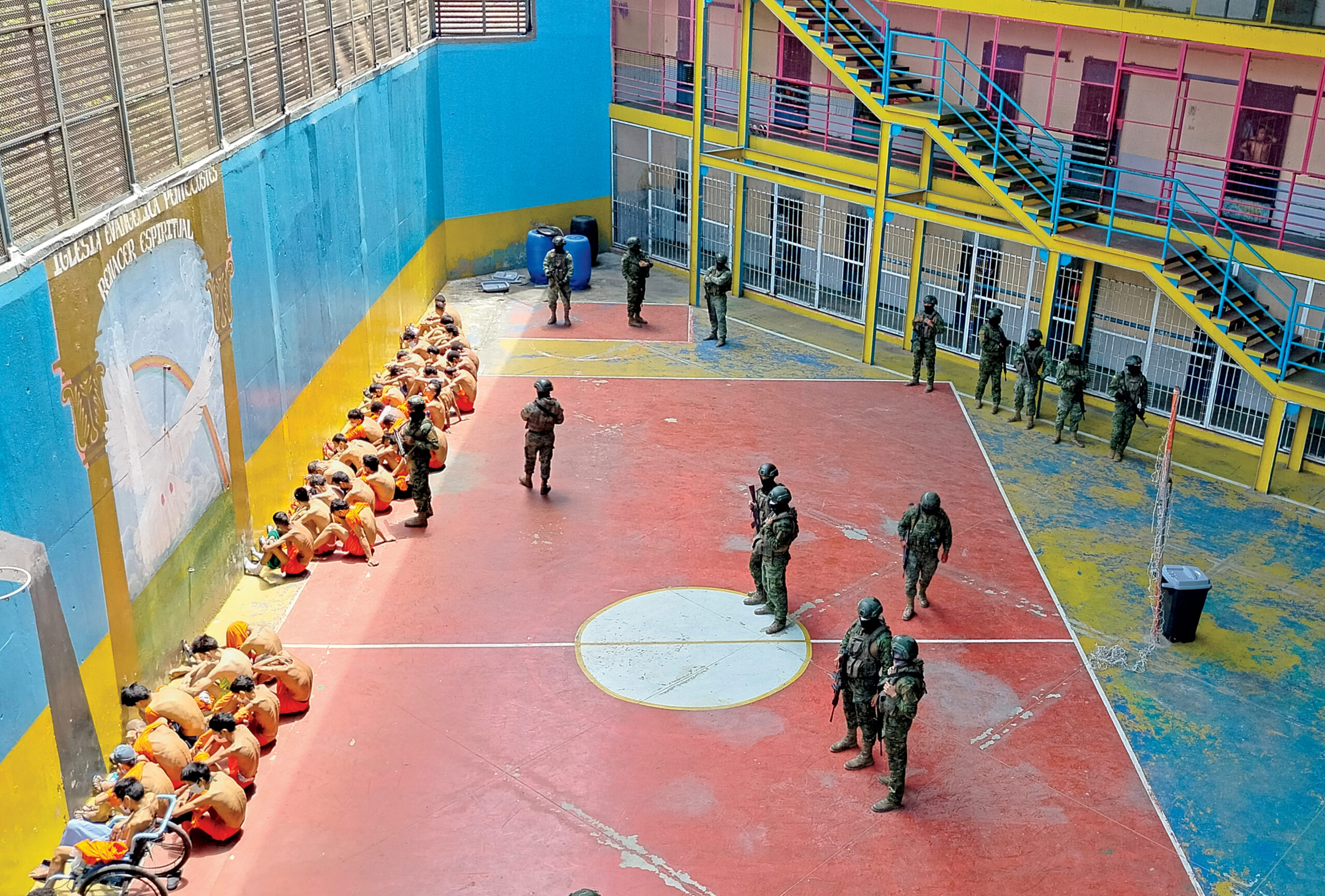
RIO DE JANEIRO—Smoke rose over the prison walls in Tuxpan, Veracruz, before dawn last August. Inmates had turned on Grupo Sombra, a Mexican criminal group accused of squeezing them and their families for protection money. The fight lasted 12 hours. Seven inmates died, 11 were injured, and soldiers eventually retook the building. Tuxpan held 778 people in a facility built for 735. Crowded, but unremarkable by regional standards. The riot was not about space. It was about who ran the prison.
Across Latin America and the Caribbean, prisons are not simply places where the state confines criminals. In many countries, they are places where criminal groups govern. Gangs use them to recruit, settle disputes, broker drug deals, extort families, and project power from the barrios to the borderlands. Some of the region’s most consequential criminal organizations were born in prison. Many still operate from there.
That reality has taken on new urgency as governments across the region increasingly embrace a model popularized by El Salvador’s President Nayib Bukele: building larger, more secure prisons and dramatically expanding incarceration. From Argentina and Ecuador to Honduras and Guatemala, leaders who were elected in part because of rising frustration over crime are investing billions in new facilities and promising tougher prison regimes. The assumption is straightforward: More prison space will translate into greater public security.
Yet the region’s experience suggests the relationship is not so simple.
Overcrowding is the most visible symptom of Latin America’s prison crisis. But the underlying diseases include the interaction of excessive pre-trial detention, weak penal institutions, systemic corruption, and criminal organizations that have adapted to confinement. Tough drug laws, longer sentences, emergency powers, and mano dura politics have filled prisons faster than states can manage them. In many cases, governments have expanded incarceration without expanding their capacity to govern what happens behind prison walls.
As a result, today’s leaders face a major risk: If their states incarcerate without building out other capabilities, new prisons may simply become recruitment centers, command hubs, and training grounds for criminal organizations that make crime even worse. The question is how they can best avoid this fate.
Alex Peña/Getty
Champions in incarceration
The Americas stand out for high incarceration, overcrowding, and unusually acute prison violence. According to the United Nations Office for Drugs and Crime, Central and South American and Caribbean prison populations exceeded 400 per 100,000 compared to below 200 per 100,000 in Western Europe, South Asia, and sub-Saharan Africa.
Brazil’s 2024 figures capture the scale: More than 663,000 people were held in a system built for fewer than 489,000. Meanwhile, countries in the Americas also reported over 17 prison homicides per 100,000 prisoners, against two in Europe, the next-highest region.
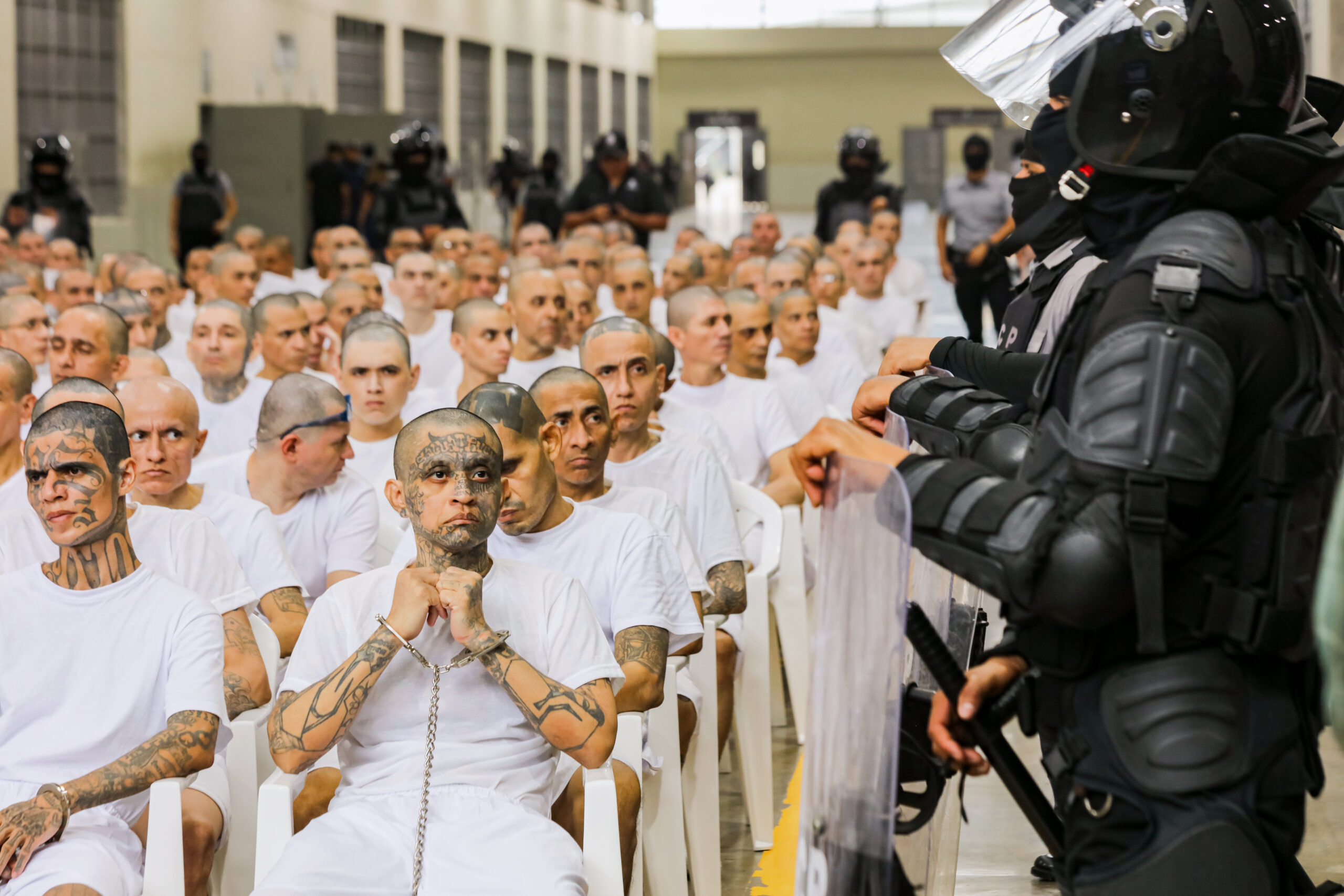
Today’s prison-building boom stands to send those numbers even higher. El Salvador’s 40,000-bed CECOT supermax prison is an emblem of the new penal politics: both a prison and a signal of state power. Costa Rica is planning a $35 million facility for over 5,000 inmates. Ecuador has developed high-security capacity in Santa Elena and announced plans for another prison in the Amazon. Argentina’s Santa Fe province is moving ahead with a supermax prison near Rosario, and Guatemala has broken ground on El Triunfo, a 2,000+ bed high-security prison in Izabal. And in 2024, Honduras announced plans to build a 20,000-bed megaprison.
There’s no doubt that governments are determined to show they can retake control. But are they succeeding?
The political incentives point in the wrong direction. In societies battered by homicide, robbery, and extortion, prison populism sells. Political leaders promise more arrests, harsher regimes, and longer sentences. Voters often reward them. But when
governments incarcerate faster than they can classify or supervise, they produce crime colleges. Petty offenders, drug users, and people awaiting trial are forced into close contact with seasoned gang members who can offer what the state often does not: food, credit, protection, legal help, and belonging.
Pre-trial detention accelerates the damage. It clogs the courts, fills prisons with people not convicted yet, and exposes low-risk detainees to criminal organizations. Once inside, the incentives shift quickly. A person who entered prison as a defendant leaves with gang debts, gang protection, and gang obligations. This is why reform is so difficult. Building new prisons without reducing inflow only creates more space to fill.
The hardest lesson is that even apparently sensible prison tactics can backfire. Faced with riots or scandals, governments often transfer leaders, segregate factions, or move prisoners to distant facilities. Sometimes this is unavoidable. But blind dispersal can strengthen the networks it is meant to weaken.
A transferred leader does not arrive as an ordinary inmate. Consider the case of José Adolfo Macías Villamar, alias “Fito,” the leader of Los Choneros in Ecuador. While serving a 34-year sentence in Guayaquil’s prison, he sent recorded messages to the authorities, flaunted privileges on social media, and even appeared in a narco-ballad reportedly filmed inside the complex. He escaped from the prison in 2024 and was recaptured a year later.
Brazil’s Primeiro Comando da Capital, or PCC, is the textbook case. Born in São Paulo’s prisons, it learned to use incarceration as an infrastructure. It developed rules, welfare mechanisms, internal records, and a national brand.
El Salvador offers a different warning. For years, segregating MS-13 and Barrio 18 prisoners reduced some direct clashes but gave gangs protected territory in which to consolidate leadership, discipline members, and coordinate street operations. President Bukele’s mass-incarceration model was a drastic reaction to that earlier failure. It sharply reduced visible gang control and lethal violence, but at major rule-of-law cost. By 2026, El Salvador’s prison population had risen to an estimated 118,000 detainees, more than double official capacity and roughly 1.9% of the country’s population. Human rights groups have documented at least 500 deaths in custody.
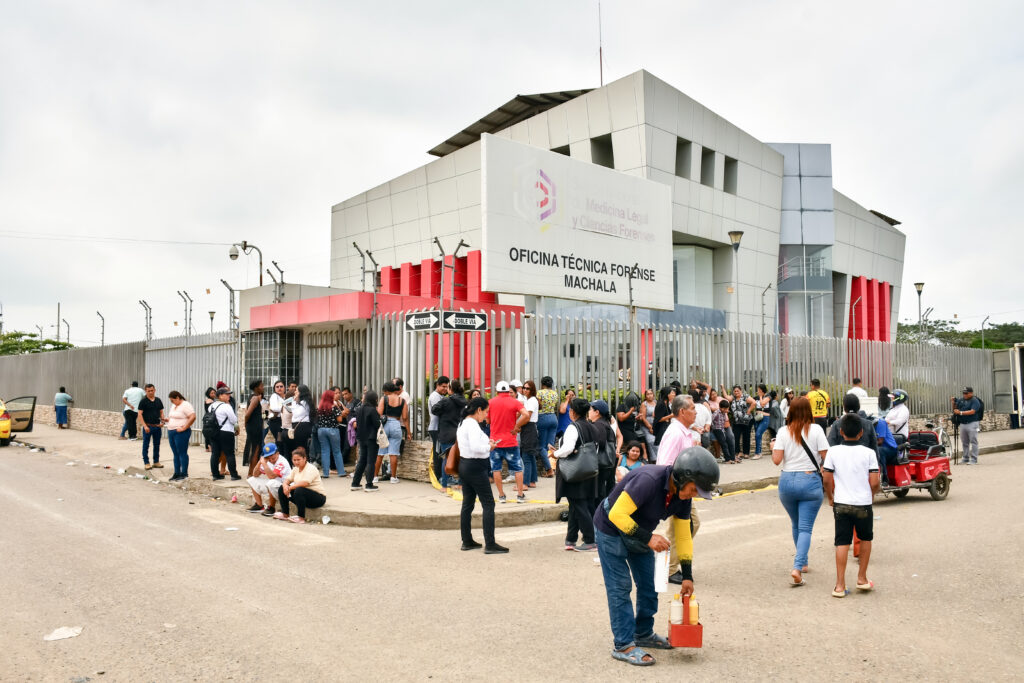
Ecuador shows what happens when prisons become extensions of transnational drug markets. Its facilities have been contested by groups linked to ports, cocaine routes and foreign criminal partners. Last November, at least 31 inmates were killed at Machala prison after violence erupted around transfers to a new maximum-security facility. Over 500 inmates have died in Ecuadorian prison riots since 2021.
Elena Matamoros/Agencia Press South/Getty
A state-capacity agenda
Repression alone is not the answer. Intelligence is. Governments need to know who gives orders, who moves money, who recruits, who controls phones, and who can be safely separated from whom. That means classifying prisoners by risk, role, and influence rather than by crude gang labels alone.
It also means reducing the recruitment pool. Pre-trial detention should be reserved for serious flight or violence risks, not used as a default response to weak investigations or slow courts. Low-level and non-violent offenders need credible alternatives to custody.
Ultimately, release must become a managed transition rather than an abrupt return to the same networks. Education, treatment, identity documents, housing, work, and supervision are not humanitarian add-ons. Without them, prisoners leave with fewer options, stronger gang ties, and obligations that follow them home.
There are successful prison models, though none is easy to replicate. Canada has adopted a more security-led approach to gangs by identifying affiliations and mapping influence to prevent gang leaders from enhancing their prestige in prisons. Spain’s módulos de respeto, first developed in León, encourage prisoners to accept routines, collective responsibility, and work.
There are also regional lessons. Brazil’s APAC units show promise in creating islands of order through training in life skills, employment, and family contact. Chile has also experimented with targeted reintegration, including programs that integrate sport, discipline, therapy, and post-release support. The Dominican Republic’s new penitentiary management seeks to replace militarized custody with civilian prison staff, treatment programs, and a human rights framework.
Latin America’s prison crisis is a public security crisis, a human rights crisis, and a crisis of state capacity. Governments that incarcerate too many people govern them with little intelligence. The region does not need softer prisons or harder prisons. It needs prisons that the state can actually run successfully.
ABOUT THE AUTHOR

Robert Muggah
Reading Time: 5 minutesMuggah is a co-founder and research director of the Igarapé Institute, a leading think tank in Brazil. He is also the co-founder of the SecDev Group and SecDev Foundation, digital security and risk analysis groups with global reach.

Biofuels’ Boom Meets Brazil’s Criminal Frontier
A series of recent irregularities calls for stricter governance and closer monitoring of a thriving sector, writes an expert.
AQ Podcast | A New Criminal Landscape in Latin America
InSight Crime's Jeremy McDermott on how criminal groups are adapting and whether the region's new leaders can stop them.