



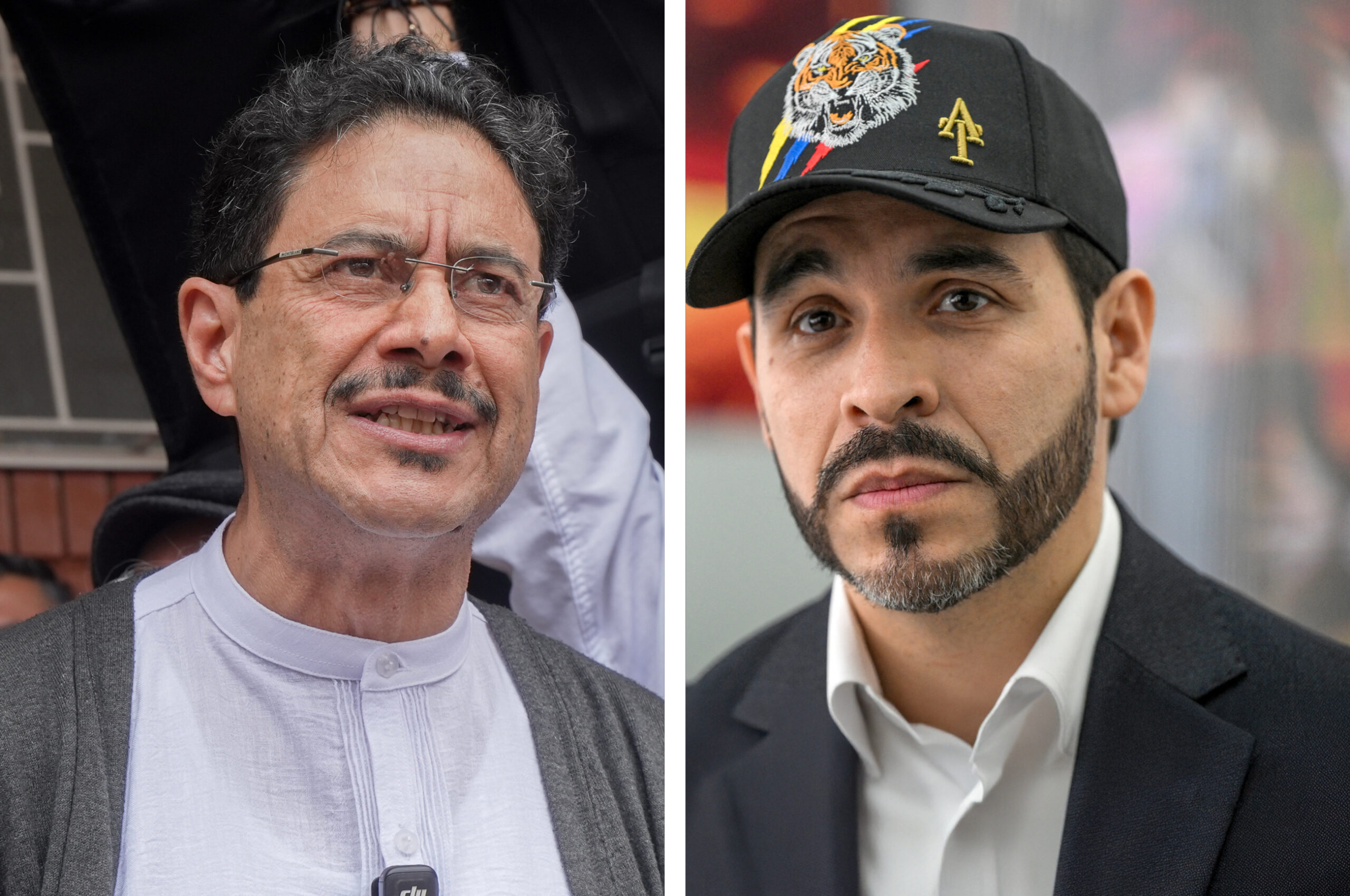
Right-wing outsider Abelardo De La Espriella won Colombia’s first-round election with 43.7% of the vote, while leftist Iván Cepeda finished second with 40.9%, according to Colombia’s official preliminary vote count. They will compete for the presidency in a runoff on June 21.
Mainstream conservative Paloma Valencia earned just 6.9% of the vote in a rebuke of Colombia’s traditional establishment and a reflection of the country’s polarized political landscape.
Cepeda and his close ally, President Gustavo Petro, cast doubt on the first-round results, alleging without evidence that hundreds of thousands of votes were questionable. Per usual, a slower vote count to confirm the preliminary results is underway.
AQ asked analysts to share their reactions and perspectives.

Laura Lizarazo
Associate director for the Andean region in Control Risks’ Global Risk Analysis practice
Sunday’s results mark not only a significant victory for Abelardo De La Espriella, who secured first place despite lacking political experience and a traditional party structure, but also a major setback for Pacto Histórico and its candidate Iván Cepeda.
De La Espriella—a far‑right lawyer and political outsider who has pledged to build mega‑prisons, shrink the state by 40%, and promote conservative values in education—secured 43.7% of the vote (10.3 million ballots). Cepeda, a left‑wing senator and civil rights activist running under President Gustavo Petro’s ruling Pacto Histórico coalition, obtained 40.9% (9.6 million votes). As the incumbent coalition, it campaigned for Cepeda using government communication platforms and resources, yet failed to beat De La Espriella.
The outcome reflects widespread rejection and disenchantment with Petro, whose confrontational rhetoric and governing style tested Colombia’s democratic institutions during the past four years. The runoff on June 21 will be highly contested, with centrist and undecided voters likely to tip the balance. Together they represent 3.5% of the electorate (877,000 ballots, about 190,000 more than the margin by which Petro defeated his rival in 2022).
Right-wing candidate Paloma Valencia, representing a more institutional conservative stance, finished third: Most of the 1.6 million votes she obtained are likely to transfer to Cepeda, as hardline right-wing voters who backed her at the beginning of the presidential race defected to De La Espriella when she chose openly gay centrist technocrat Juan Daniel Oviedo as her vice-presidential nominee.
Colombia is undergoing a profound political and social transformation that began in 2016 with a fragile, incomplete transition into a post‑conflict scenario. This process fractured society and the political landscape into two opposing blocs with seemingly irreconcilable visions of the country’s future. The first round of the 2026 presidential elections reflects this deep divide: One half of the electorate supports a more inclusive, egalitarian, and sustainable socioeconomic model alongside peace negotiations to end organized violence, while the other half favors a hardline crackdown on illegal groups, socially conservative values, and minimal state intervention in the economy.
Although these elections are not existential in the sense of choosing between democracy and dictatorship, since the rule of law and institutional guardrails that prevented democratic backsliding during Petro’s presidency will continue to check executive power regardless of the outcome, the country is nonetheless deciding the model of governance and development it will pursue over the next decade. The stakes are high.

Ernesto Revilla
Managing director and head of Latin American economics at Citigroup
The biggest takeaway from Sunday’s first-round presidential vote in Colombia is the collapse of the center and the further entrenchment of an anti-establishment wave already visible across Latin America and beyond. As sharp political analysts have said, today’s political contests are less about left versus right than about insiders versus outsiders, and Sunday’s results confirmed this.
Abelardo De La Espriella and Iván Cepeda advanced to the second round. The real story, however, was the implosion of the center: Paloma Valencia’s meager showing (~7%), alongside similarly weak results for Sergio Fajardo and Claudia López, underscores voters’ preference for candidates who promise decisive action on security and economic mobility over technocratic moderation.
Cepeda and President Petro cast doubt on the results, claiming, without evidence, that votes had been manipulated. These allegations are worth monitoring ahead of the June 21 runoff, though Colombia’s electoral institutions remain credible and widely trusted.
Prediction markets now assign roughly an 80% probability to a De La Espriella victory in the second round—a plausible assessment, given that Valencia’s voters, centrist supporters, and blank-ballot casters (around 400,000, or 1.7% of votes) are more likely to break his way than toward Cepeda.
For markets and the macroeconomy, the takeaway is thought-provoking. Polarization is deeply entrenched, as the combative victory speeches on both sides made plain. Governability will be difficult regardless of who wins. Colombia’s first economic priority is fiscal consolidation of roughly three percentage points of GDP, and a fractious political environment makes that harder to deliver. The current administration’s record—weakening institutions, undermining the central bank’s credibility, and depressing investor confidence—failed to dent Cepeda’s support, suggesting ideological loyalty still trumps economic performance at the ballot box.
Colombia’s institutions have provided a meaningful check on the executive, and the economy retains its potential for stronger growth. But the window for pro-growth and pro-stability reforms is narrowing, raising the stakes for elections that we know are now more contested and polarized. These constraints will outlast whoever takes office in August.

Brian Winter
Editor-in-Chief of Americas Quarterly
Abelardo de la Espriella is the favorite, but the runoff may be closer than the market believes. You cannot simply add the right’s votes together and assume they’ll all support him—the 2022 runoff, which Petro won despite having the same first-round vote share as Cepeda (40%), is a cautionary tale.
To win this race, De la Espriella will have to do more than vilify Petro and Cepeda. He will have to convince more moderate Colombians, including many who lean conservative, that he is more than a silver-tongued lawyer who represented drug traffickers and Nicolás Maduro’s alleged bag man. He must also strike a balancing act—embracing Alvaro Uribe’s endorsement without becoming the uribista candidate, given how polarizing the former president is. That will be harder than it sounds.
Of the three remaining Latin American elections this year, including Brazil and Peru, I believe Colombia is the most important. Two vastly different candidates, each of whom would have considerable power to implement their agendas, in a country facing huge security, fiscal and economic challenges. Whoever wins this vote will define the course of Colombia for the next 10 to 15 years.

Sergio Guzmán
Director of Colombia Risk Analysis, a political risk consulting firm based in Bogotá
The first-round results demonstrate high voter rejection of the current administration. De La Espriella achieved his first-place finish without prior public office experience or backing from traditional party structures, indicating a shift away from traditional machinery. However, because neither Cepeda nor De La Espriella has secured a definitive majority, both must now negotiate with traditional parties and mobilize undecided voters to cross the necessary threshold in the runoff. Following the publication of the results, right-wing leader Paloma Valencia announced her immediate endorsement of De La Espriella.
Conversely, the political center underperformed significantly; Sergio Fajardo obtained 1 million votes (4.2%) and Claudia López secured 224,000 votes (1%). Neither Fajardo nor López seem eager to take sides quickly, with many voters likely remaining undecided during the three weeks between the first round and the runoff. The center will fight to become relevant while the two campaigns still alive will pander heavily to their base. There seems to be little wiggle room for moderation.
While institutional logistics proved efficient and delivered the result quickly, the main risk to electoral legitimacy lies in potential fraud narratives. President Petro and Cepeda expressed doubts about the electoral process without providing any evidence to support their claim and have openly questioned the results. Although their calls will not affect the legitimacy of the election, they elevate the risk for social unrest. In his victory speech, De La Espriella pledged to defend democracy with whatever means necessary and called on the military to support him. If the runoff yields a tight margin, the losing faction is highly likely to challenge the results, potentially triggering civil unrest.
Geopolitics will play a decisive role in the final weeks of the campaign. The Trump administration in the U.S. strongly favors a De La Espriella victory. Washington is expected to deploy political and economic leverage, including strategic extradition requests and threats of immigration tightening or new tariffs, to weaken Cepeda’s prospects. A Cepeda victory represents the least preferred outcome for the White House, risking diplomatic friction, continued decertification threats, and disrupted bilateral security cooperation.
De La Espriella has momentum on his side, the support of traditional parties and opposition figures, and a disciplined campaign strategy. He is slightly favored to win the competitive runoff. While the majority of Colombians voted against the continuity of the Petro administration, many things can still happen between the first and second round. These include, but are not limited to, Petro issuing additional economic emergency decrees to support Cepeda’s campaign, violence targeting candidates or their running mates, or foreign intervention that could potentially distort the final result.

In Colombia’s Election, Two Conservatives Fight to Face Cepeda
The race between De La Espriella and Valencia will likely define a potential presidential runoff.
The Resurgence of Gustavo Petro and the Colombian Left
Colombia’s president has seen his popularity rise, increasing the odds that the left could win May’s presidential election.