



Recent events in Venezuela, including the unprecedented U.S. military buildup in the Caribbean, strikes against alleged narco-vessels, and last week’s seizure of a sanctioned oil tanker by the U.S., are raising hopes that a transition in government may be in the cards. While some observers have cited Iraq and Libya as cautionary tales, those cases have little in common with Venezuela, a country with a recognized president-elect, a long pre-Hugo Chávez history of democratic government, and none of the major ethnic cleavages evident in other cases. Moreover, the status quo of the repressive, criminal Maduro regime in the heart of the Western Hemisphere is far worse than the risks inherent in the push for change for which the Venezuelan people already voted.
It is clear, however, that any transition from the iron grip of an authoritarian regime presents risks that must be mitigated by thorough and comprehensive planning and policy actions. If Venezuela regains its democracy and freedom, it is fundamentally in the U.S.’s interest that the rightful government, led by President-elect Edmundo González Urrutia, succeed and deliver on the promise of the July 28, 2024, election.
The good news is that planning for a post-Maduro Venezuela has commenced already—mostly by the country’s opposition, but now also by the Trump administration. The opposition, led by Nobel Peace Prize laureate Maria Corina Machado, has sent its detailed blueprint for the first 100 hours and first 100 days to the Trump administration. Significant transition planning was also done during President Trump’s first administration, and much of it is still applicable to the current context. This material could be retrieved from archives and updated to reflect the current circumstances.
There are several steps the U.S. should be prepared to take to assist in Venezuela’s economic recovery, safeguard national interests, and box out authoritarian spoilers in a return-to-democracy scenario. The U.S. already provides humanitarian support for the country and remains the single largest donor of humanitarian aid to its citizens. This support will need to continue in the immediate aftermath of a transition to ensure that essential services flow and that Venezuelan suffering is reduced quickly. To ensure proper cost-sharing, the U.S. could convene an international donors’ conference to secure Venezuela’s freedom and coordinate support from allies around the world. Planning for this can start now.
The economic revival
The Trump administration will, of course, want to see the private sector—led by U.S. companies—at the forefront of Venezuela’s rebuilding. The expeditious lifting of many of the U.S. economic sanctions on a newly free Venezuela would be only the beginning. The U.S. should expand its ambition and, immediately upon transition, pursue a bilateral investment treaty. This could take many forms, but it should define the rules of trade and investment and ensure stability and robust protections for investors and their investments. Bilateral trade between the U.S. and Venezuela is an area with potential for rapid growth: Venezuela currently imports most of its food, and the market could expand quickly for U.S. agricultural exporters, to start. Before Venezuela’s dramatic collapse, it was one of the top three destinations for U.S. agricultural exports in Latin America, importing corn, wheat, rice, poultry, and dairy.
Venezuela’s vast resource wealth, which includes one of the largest oil reserves—roughly 17% of the world’s reserves—natural gas, and abundant mineral endowments, can serve as the economic driver of Venezuela’s rebuilding. However, extractive industries are also capital-intensive and have suffered expropriations in the country over many years. Without a quickly finalized bilateral investment treaty that includes credible guarantees for stability, this foreign investment may be slow off the mark.
The judicial framework
Relatedly, Venezuela’s judicial system has been captured and subverted by Chavismo and turned into one of the Maduro regime’s main weapons against the opposition and the private sector alike. Confidence in a post-Chavismo judicial system will be nonexistent, and judicial reform is neither easy nor fast.
One way of quickly recovering investor confidence would be for Venezuela to return to the International Centre for Settlement of Investment Disputes (ICSID), the international arbitration body housed at the World Bank. Venezuela denounced and withdrew from ICSID in 2012, with the Chávez government arguing that ICSID violated the country’s constitution, which gave domestic courts the right to decide these matters and expressly prohibited anything that could give “rise to foreign claims,” such as an international appellate body.
Another positive step would be a structured, rule-of-law-based process to restitute the property and investments unlawfully taken by Chávez and Maduro, followed by a potential reestablishment of the terms of the original contracts. As a member of Venezuela’s National Assembly, opposition leader Machado famously challenged Chávez’s expropriations and denounced them as “theft.” Few moves would be a more powerful symbol of a post-Chavismo Venezuela than reversing these expropriations and enforcing property rights.
Multilateral development banks such as the International Monetary Fund, the Inter-American Development Bank, and the World Bank will play critical roles, and the U.S. should encourage lending in these venues. These lenders will need to stand up programs dedicated to financing infrastructure projects and rebuilding across the many sectors Chavismo looted and permitted to deteriorate. The country would likely need a rapid financing package for humanitarian relief, macro stabilization, and the rebuilding of decrepit health and education systems. Addressing the country’s enormous social needs will have to be a top, immediate priority. Additionally, the U.S. International Development Finance Corporation (DFC) should stand up and fully staff a unit dedicated to Venezuela’s post-transition success. As the Trump administration has been able to do in many areas, the DFC needs to cut red tape and accelerate its processes to finance projects in the U.S.’s interest, aligned with the new Venezuelan government’s recovery plans. The Congress should support an expedited timeline for Venezuela project notification and should signal clearly to the DFC that it has a mandate to be forward-leaning on projects that support the U.S. interest in Venezuela’s reconstruction.
The role of diplomacy
The U.S. Embassy in Caracas remains shuttered, with the U.S. interests section currently run out of Bogotá, Colombia. The U.S. Embassy will need to be reopened and re-staffed as quickly as possible to show confidence in a new Venezuela.
Transition planning here will need to include adequate security for returning personnel, but the Trump administration should go above and beyond traditional planning. It would be wise to focus the immediate reopening on standing up a well-staffed commercial affairs section to assist the private sector and deter great-power adversaries like China and Russia, which have been present in Venezuela for years and could attempt to play spoiler roles.
The U.S. Embassy would also benefit from having a Treasury attaché on the ground to assist with post-transition stabilization of Venezuela’s central bank and to monitor IMF and other international financial institution programming. Trump’s national security strategy rightly noted that advocating for U.S. private sector companies overseas is a core function of U.S. diplomacy—a transition away from the Maduro regime in Venezuela will test the limits of this tenet of U.S. national security policy.
Ultimately, it will be up to Venezuela and Venezuelans to chart their future. Nevertheless, the U.S. can and should pursue its interests by supporting the country’s democratic actors and rebuilding its institutions.
For decades, María Corina Machado has shown support for markets, has long defended property rights, and talked of increasing foreign direct investment. The U.S. should do all it can, even now, to be ready for a new day in Venezuela. While a post-Chavismo transition would be neither seamless nor risk-free, planning now for the country’s economic recovery will help augur success. The U.S. should go big.
ABOUT THE AUTHORS
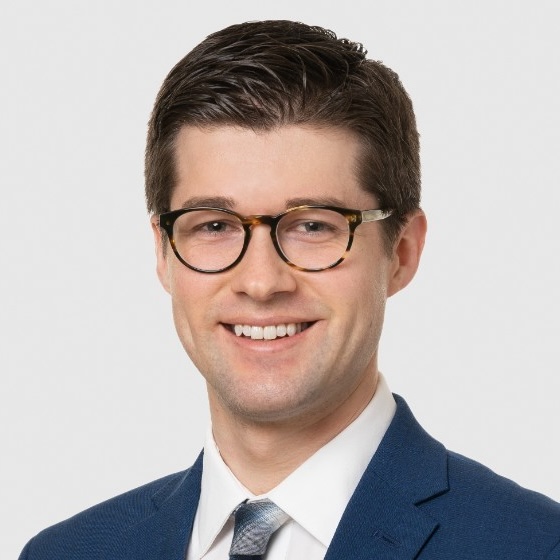
Ryan Berg
Reading Time: 5 minutesBerg is director of the Americas Program and head of the Future of Venezuela Initiative at the Center for Strategic and International Studies (CSIS).
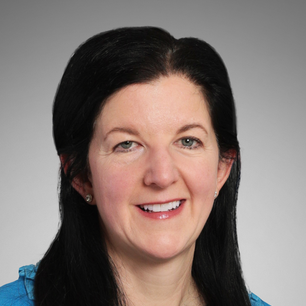
Kimberly Breier
Reading Time: 5 minutesBreier served as Assistant Secretary of State for Western Hemisphere affairs in Trump’s first term. She is also a Senior Adviser at the Americas Program at CSIS.
What Will Venezuela’s Military Do? History Offers Hints
Previous transitions out of dictatorships in Brazil and Chile may provide a roadmap if U.S. pressure prompts Venezuelan generals to act.
Venezuela’s Possible Turning Point
Maduro’s repression is escalating alongside unprecedented U.S. military activity. The situation on the ground shows two likely paths forward.